Work
The Misunderstanding
A tragedy of exile, silence and failed recognition that turns a hoped-for family return into catastrophe.
- Composition
- 1944
Sources and precision
Sorting follows the acquired carrier's first publication.
Confidence A · direct evidence
- Prokopton42 corpus manifestation manifests
- Tradition
- Modern and contemporary philosophy
- Period
- Contemporary era
- Languages
- French · English
- Extent
- 3 passages · 13,949 words
Before reading
What you will learn
Observe how what remains unsaid turns a hoped-for return into an irreversible chain.
Short summary
A tragedy of exile, silence and failed recognition that turns a hoped-for family return into catastrophe.
Long summary
A tragedy of exile, silence and failed recognition within a family. The French carrier's canonical divisions are preserved. The English representation is a non-official AI translation, automatically reviewed and excluded from direct quotation.
Inside this work
The table of contents follows the divisions actually carried by the corpus.
Work › Act
Concepts covered
Historical context
The world around the text
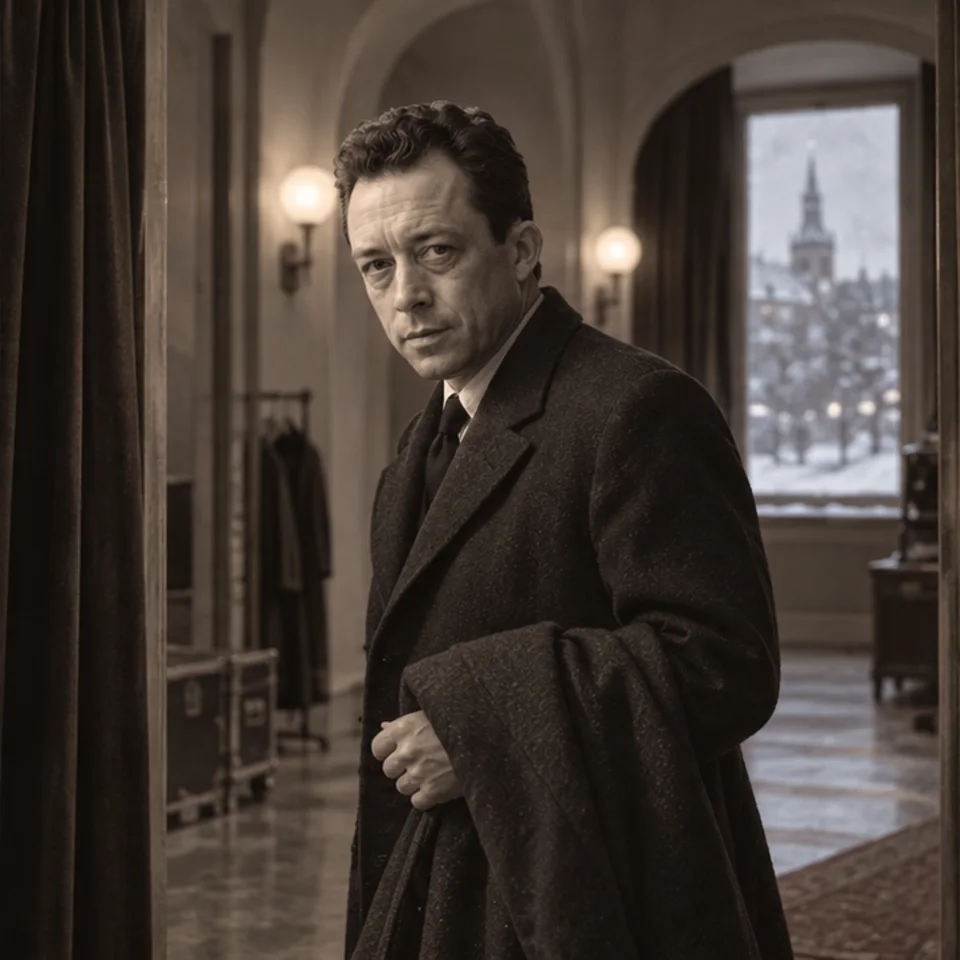
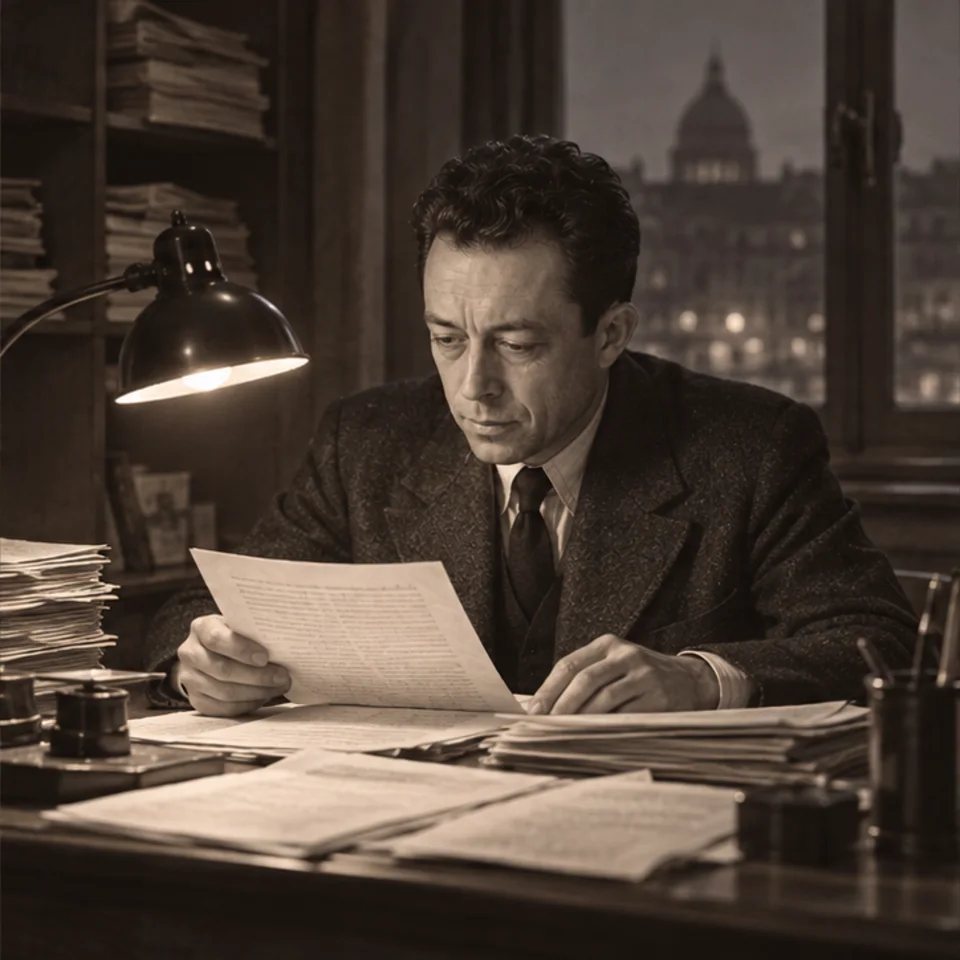
The corpus manifests do not yet establish the precise place and circumstances of composition. The images below document the author’s world or the text’s transmission. They do not claim to show the exact scene of writing.
These are modern reconstructions. They situate a documented place, practice, or transmission and are not period documents.
What the world looked like
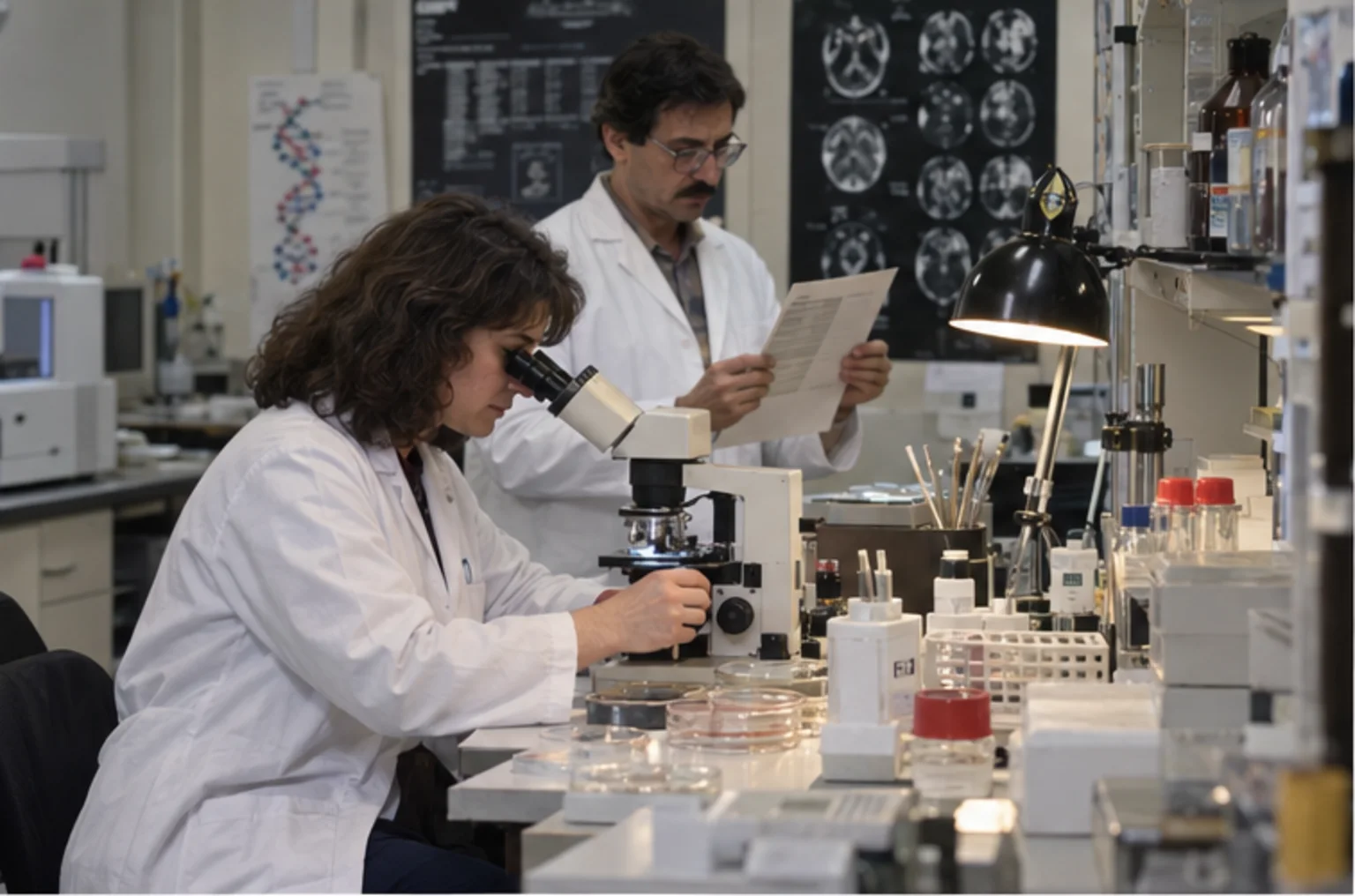
World of 1989
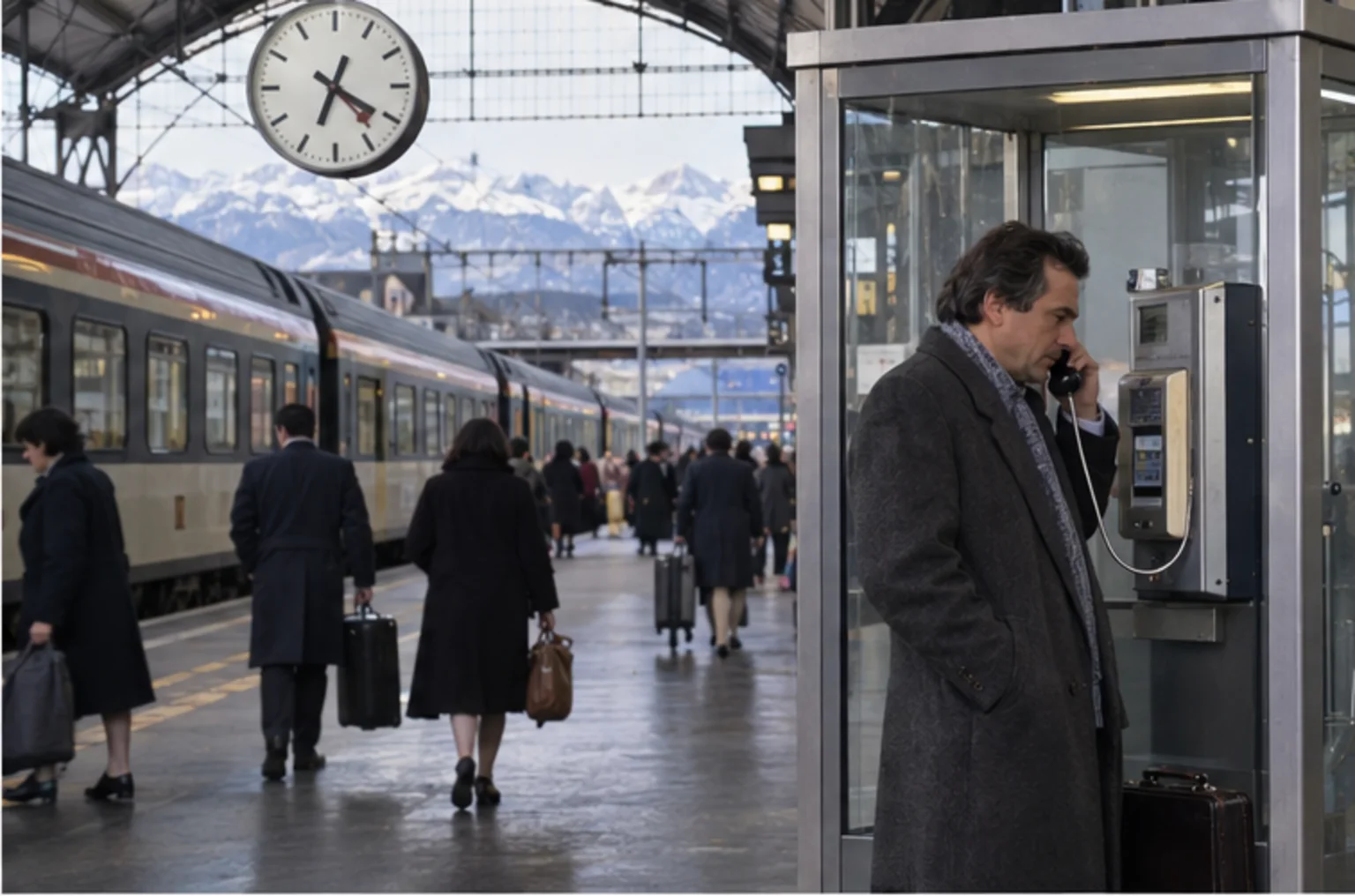
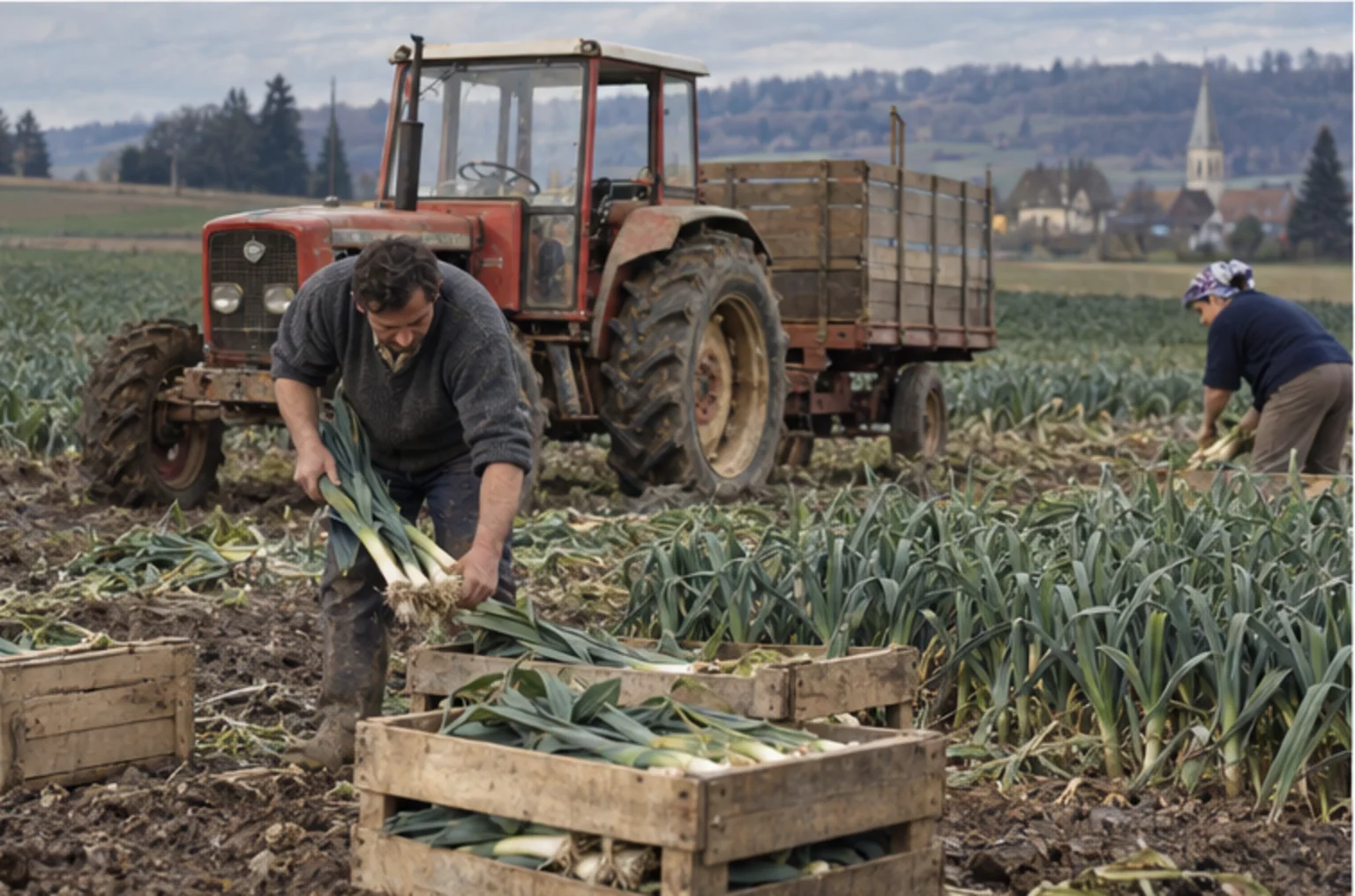
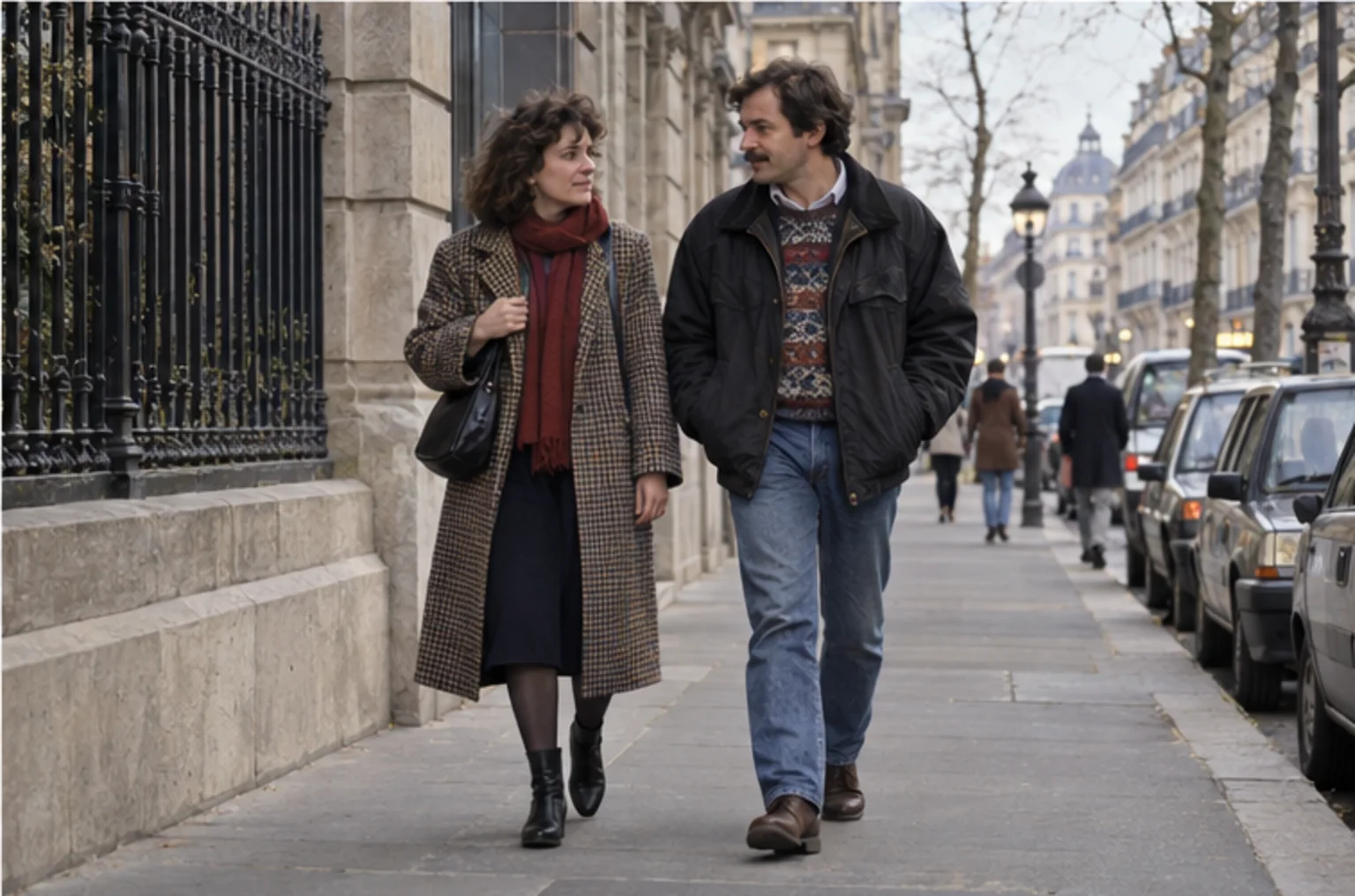
- State of technology
- Personal computers, satellites, video, industrial robots, and expensive mobile phones exist, but the public Web does not yet.
- Science and knowledge
- Computing, genetics, climate science, cosmology, and medical imaging produce growing data and international collaboration.
- Medicine and care
- CT, MRI, transplantation, vaccines, and intensive care advance; the AIDS epidemic exposes both medical capacity and its limits.
- Transport
- Cars, high-speed rail, metros, aircraft, and containers globalize people and goods.
- Agriculture and food
- Machinery, chemical inputs, breeding, and cold chains support high yields with increasingly debated social and environmental costs.
- Communication
- Fixed telephones, fax, television, radio, and newspapers predominate. Email and computer networks remain mainly professional or academic.
- Clothing and fashion
- Loose suits, jeans, trainers, women’s power suits, sportswear, and urban subcultures create highly varied silhouettes.
Editions, translations, and provenance
The following carriers represent the text. They do not create new passage identities.
- French
- English AI-generated translation, non-officialCodex gpt-5.6-sol · Non-official working translation · 2026-09-30
Source manifests: albert_camus.le_malentendu
Reader
Read page by page
Noon. The common room of the inn. It is clean and bright. Everything is neat.
SCENE ONE
THE MOTHER
He will come back.
MARTHA
Did he tell you so?
THE MOTHER
Yes. When you went out.
MARTHA
Will he come back alone?
THE MOTHER
I don't know.
MARTHA
Is he rich?
THE MOTHER
He showed no concern about the price.
MARTHA
If he is rich, so much the better. But he must also be alone.
THE MOTHER, wearily.
Alone and rich, yes. And then we shall have to begin again.
MARTHA
We shall begin again, indeed. But we shall be rewarded for our trouble.
A silence. Martha looks at her mother.
Mother, you are behaving strangely. I have hardly recognized you lately.
THE MOTHER
I am tired, my daughter, nothing more. I should like to rest.
MARTHA
I can take upon myself whatever you still have to do around the house. Then all your days will be free.
THE MOTHER
That is not exactly the kind of rest I mean. No, it is an old woman's dream. I long only for peace, for a little surrender. (She laughs faintly.) It is foolish to say so, Martha, but there are evenings when I almost feel drawn to religion.
MARTHA
You are not so old, Mother, that you need to come to that. You have better things to do.
THE MOTHER
You know very well that I am joking. But still! At the end of a life, one may surely let oneself go. One cannot always brace and harden oneself as you do, Martha. That is not right for your age either. And I know many girls born in the same year as you who think of nothing but foolish pleasures.
MARTHA
Their foolish pleasures are nothing beside ours, as you well know.
THE MOTHER
Let us leave that.
MARTHA, slowly.
One would think there are words now that burn your mouth.
THE MOTHER
What does that matter to you, if I do not shrink from the deeds? But never mind! I meant only that I should sometimes like to see you smile.
MARTHA
I do smile, I swear to you.
THE MOTHER
I have never seen you do so.
MARTHA
That is because I smile in my room, when I am alone.
THE MOTHER, looking at her intently.
What a hard face you have, Martha!
MARTHA, approaching her calmly.
Do you not love it, then?
THE MOTHER, still looking at her, after a silence.
I believe I do, even so.
MARTHA, agitated.
Ah, Mother! When we have amassed a great deal of money and can leave these lands with no horizon, when we leave behind us this inn and this rainy town, and when we forget this country of shadows, on the day when at last we stand before the sea of which I have dreamed so much, on that day you will see me smile. But one needs a great deal of money to live by the sea. That is why we must not be afraid of words. That is why we must attend to the man who is to come. If he is rich enough, my freedom may begin with him. Did he speak to you at length, Mother?
THE MOTHER
No. Two sentences in all.
MARTHA
What was his manner when he asked you for a room?
THE MOTHER
I don't know. My sight is poor, and I did not look at him closely. I know from experience that it is better not to look at them. It is easier to kill what one does not know. (A pause.) Be glad, I am not afraid of words now.
MARTHA
That is better. I do not like allusions. A crime is a crime; one must know what one wants. And it seems to me that you knew a moment ago, since you thought of it when you answered the traveler.
THE MOTHER
I did not think of it. I answered out of habit.
MARTHA
Habit? And yet you know that the opportunities have been rare!
THE MOTHER
No doubt. But habit begins with the second crime. With the first, nothing begins; something ends. And besides, if the opportunities have been rare, they have been spread over many years, and habit has been strengthened by memory. Yes, it was indeed habit that prompted me to answer, that warned me not to look at this man, and assured me that he had the face of a victim.
MARTHA
Mother, we shall have to kill him.
THE MOTHER, more quietly.
No doubt, we shall have to kill him.
MARTHA
You say that in a strange way.
THE MOTHER
I am weary, indeed, and I should like this one, at least, to be the last. Killing is terribly tiring. I care little whether I die beside the sea or in the midst of our plains, but I should like us to leave together afterward.
MARTHA
We shall leave, and it will be a great moment! Straighten up, Mother, there is little to do. You know very well that it is not even a matter of killing. He will drink his tea, he will sleep, and while he is still alive, we shall carry him to the river. He will be found long afterward, pressed against a dam, with others who will not have had his good fortune and who will have thrown themselves into the water with their eyes open. On the day when we watched the dam being cleared, you told me, Mother, that ours suffer least; life is crueler than we are. Straighten up, you will find your rest, and at last we shall flee from here.
THE MOTHER
Yes, I shall straighten up. Sometimes, indeed, I am glad at the thought that ours have never suffered. It is scarcely a crime, merely an intervention, a slight nudge given to unknown lives. And it is true that, apparently, life is crueler than we are. Perhaps that is why I find it difficult to feel guilty.
The old servant enters. He goes to sit behind the counter without a word. He will not move until the end of the scene.
MARTHA
Which room shall we put him in?
THE MOTHER
Any one, provided it is on the first floor.
MARTHA
Yes; we struggled too much last time, over those two flights. (She sits down for the first time.) Mother, is it true that over there the sand on the beaches burns one's feet?
THE MOTHER
I have not been there, as you know. But I have been told that the sun devoured everything.
MARTHA
I read in a book that it consumed even souls and made bodies radiant, but hollowed out within.
THE MOTHER
Is that what makes you dream, Martha?
MARTHA
Yes, I am tired of always carrying my soul; I long to find that country where the sun kills all questions. My home is not here.
THE MOTHER
Before that, alas, we have much to do. If all goes well, I shall go with you, of course. But I shall not feel that I am going toward my home. At a certain age, there is no home where rest is possible, and it is already something if one has been able to make for oneself this derisory brick house, furnished with memories, where one sometimes manages to fall asleep. But naturally, it would also be something if I found both sleep and oblivion.
She rises and goes toward the door.
Prepare everything, Martha. (A pause.) If it is truly worth the trouble.
Martha watches her leave. She herself exits through another door.
SCENE TWO
The old servant goes to the window, catches sight of Jan and Maria, then conceals himself. The old man remains onstage alone for a few seconds. Jan enters. He stops, looks around the room, and sees the old man behind the window.
JAN
Is no one here?
The old man looks at him, crosses the stage, and leaves.
SCENE THREE
Maria enters. Jan turns abruptly toward her.
JAN
You followed me.
MARIA
Forgive me, I could not help it. Perhaps I shall leave in a moment. But let me see the place where I am leaving you.
JAN
Someone may come, and then what I want to do will no longer be possible.
MARIA
Let us at least take the chance that someone will come and that I shall make you reveal yourself in spite of yourself.
He turns away. A pause.
MARIA, looking around her.
Is this the place?
JAN
Yes, this is the place. I went through that door twenty years ago. My sister was a little girl. She was playing in that corner. My mother did not come to kiss me. I thought then that I did not care.
MARIA
Jan, I cannot believe that they did not recognize you just now. A mother always recognizes her son.
JAN
She has not seen me for twenty years. I was an adolescent, almost a boy. My mother has grown old; her sight has weakened. Even I scarcely recognized her.
MARIA, impatiently.
I know: you went in, you said, "Good morning," you sat down. You recognized nothing.
JAN
My memory was inaccurate. They received me without a word. They served me the beer I asked for. They looked at me, but they did not see me. Everything was more difficult than I had thought.
MARIA
You know very well that it was not difficult and that you only had to speak. In such cases one says, "It is I," and everything falls into place.
JAN
Yes, but my head was full of imaginings. And I, who was half expecting the prodigal's feast, was given beer in exchange for my money. I was overcome; I could not speak.
MARIA
One word would have been enough.
JAN
I did not find it. But still, I am not in such a hurry. I came here to bring my fortune and, if I can, happiness. When I learned of my father's death, I understood that I had responsibilities toward them both and, having understood it, I am doing what must be done. But I suppose it is not as easy as people say to return home, and that it takes a little time to turn a stranger into a son.
MARIA
But why did you not announce your arrival? There are times when one is obliged to do what everyone else does. When one wishes to be recognized, one gives one's name; it is perfectly obvious. One ends up confusing everything by pretending to be what one is not. How could you fail to be treated as a stranger in a house where you present yourself as a stranger? No, no, none of this is wholesome.
JAN
Come now, Maria, it is not so serious. And besides, it serves my plans. I shall take advantage of the opportunity to observe them for a while from the outside. I shall see more clearly what will make them happy. Then I shall devise a way to make them recognize me. In short, I need only find the right words.
MARIA
There is only one way. It is to do what anyone would do, to say, "Here I am," and to let your heart speak.
JAN
The heart is not so simple.
MARIA
But it uses only simple words. And it was not very difficult to say, "I am your son; here is my wife. I lived with her in a country we loved, beside the sea and beneath the sun. But I was not happy enough, and today I need you."
JAN
Do not be unfair, Maria. I do not need them, but I understood that they must need me and that a man is never alone.
A pause. Maria turns away.
MARIA
Perhaps you are right; forgive me. But I have distrusted everything since I entered this country, where I search in vain for a happy face. This Europe is so sad. Since we arrived, I have not heard you laugh, and I am growing suspicious. Oh, why did you make me leave my country? Let us go, Jan; we shall not find happiness here.
JAN
It is not happiness that we came to seek. Happiness, we already have.
MARIA, vehemently.
Why not be content with it?
JAN
Happiness is not everything, and men have their duty. Mine is to find my mother again, a homeland...
Maria makes a gesture. Jan stops her: footsteps are heard. The old man passes before the window.
JAN
Someone is coming. Go, Maria, please.
MARIA
Not like this; it is not possible.
JAN, as the footsteps draw nearer.
Stand there.
He pushes her behind the rear door.
SCENE FOUR
The rear door opens. The old man crosses the room without seeing Maria and exits through the outside door.
JAN
And now, go quickly. You see, luck is with me.
MARIA
I want to stay. I shall be silent and wait beside you until you are recognized.
JAN
No, you would give me away.
She turns away, then comes back to him and looks him in the face.
MARIA
Jan, we have been married for five years.
JAN
It will soon be five years.
MARIA, lowering her head.
Tonight is the first night we shall spend apart.
He says nothing; she looks at him again.
I have always loved everything in you, even what I did not understand, and I can see that, deep down, I would not want you to be different. I am not a very troublesome wife. But here, I am afraid of the empty bed to which you are sending me back, and I am also afraid that you will abandon me.
JAN
You must not doubt my love.
MARIA
Oh, I do not doubt it. But there is your love, and there are your dreams, or your duties, which are the same thing. You escape me so often. At such times it is as though you were taking a rest from me. But I cannot take a rest from you, and tonight (she throws herself against him, weeping), tonight I shall not be able to bear it.
JAN, holding her close.
This is childish.
MARIA
Of course it is childish. But we were so happy over there, and it is not my fault if the evenings in this country frighten me. I do not want you to leave me alone in it.
JAN
I shall not leave you for long. You must understand, Maria, that I have a promise to keep.
MARIA
What promise?
JAN
The one I made to myself on the day when I understood that my mother needed me.
MARIA
You have another promise to keep.
JAN
Which one?
MARIA
The one you gave me on the day when you promised to live with me.
JAN
I think I can reconcile everything. What I ask of you is very little. It is not a whim. One evening and one night in which I shall try to find my bearings, to know better those I love, and to learn how to make them happy.
MARIA, shaking her head.
Separation always means something to those who love as they should.
JAN
You wild creature, you know very well that I love you as I should.
MARIA
No, men never know how they should love. Nothing satisfies them. All they know is how to dream, invent new duties, seek new countries and new homes. Whereas we know that we must hurry to love, share the same bed, hold hands, fear absence. When one loves, one dreams of nothing.
JAN
Why bring that into it? It is only a matter of finding my mother again, helping her, and making her happy. As for my dreams or my duties, they must be taken as they are. I would be nothing without them, and you would love me less if I did not have them.
MARIA, abruptly turning her back on him.
I know that your reasons are always sound and that you can convince me. But I am no longer listening to you; I stop my ears when you assume the voice I know so well. It is the voice of your solitude, not the voice of love.
JAN, standing behind her.
Let us leave it, Maria. I want you to leave me alone here so that I may see more clearly. It is not so terrible, and sleeping under the same roof as one's mother is no great matter. God will take care of the rest. But God also knows that I do not forget you in all this. It is simply that one cannot be happy in exile or in oblivion. One cannot always remain a stranger. I want to find my country again, to make everyone I love happy. I look no farther than that.
MARIA
You could do all that by using plain language. But your method is not the right one.
JAN
It is the right one because through it I shall learn whether or not I am right to have these dreams.
MARIA
I hope the answer is yes, and that you are right. But I have no dream other than that country where we were happy, no duty other than you.
JAN, drawing her against him.
Let me go. In the end I shall find the words that will put everything right.
MARIA, yielding.
Oh, go on dreaming. What does it matter, if I keep your love! Usually I refuse to be unhappy when I am close to you. I am patient; I wait for you to tire of your clouds, and then my time begins. If I am unhappy today, it is because I am quite sure of your love and yet certain that you are going to send me away. That is why the love of men is a heartbreak. They cannot keep themselves from leaving what they love best.
JAN takes her face in his hands and smiles.
That is true, Maria. But still, look at me: I am not in such danger. I do what I wish, and my heart is at peace. You entrust me for one night to my mother and my sister; that is not so dreadful.
MARIA, drawing away from him.
Then farewell, and may my love protect you.
She walks toward the door, where she stops and shows him her empty hands.
But see how helpless I am. You set out to explore, and you leave me waiting.
She hesitates. She leaves.
SCENE FIVE
Jan sits down. The old servant enters, holding the door open to let Martha pass, and then exits.
JAN
Good morning. I have come for the room.
MARTHA
I know. It is being prepared. I must enter you in our register.
She goes to fetch her register and returns.
JAN
You have a strange servant.
MARTHA
That is the first time anyone has found fault with him. He always does exactly what he is supposed to do.
JAN
Oh, it is not a reproach. He is unlike other people, that is all. Is he mute?
MARTHA
That is not it.
JAN
So he speaks?
MARTHA
As little as possible, and only when necessary.
JAN
In any case, he does not seem to hear what people say to him.
MARTHA
One cannot say that he does not hear. It is only that he is hard of hearing. But I must ask you for your surname and given names.
JAN
Hasek, Karl.
MARTHA
Karl, is that all?
JAN
That is all.
MARTHA
Date and place of birth?
JAN
I am thirty-eight years old.
MARTHA
Where were you born?
JAN, hesitating.
In Bohemia.
MARTHA
Occupation?
JAN
None.
MARTHA
One must be very rich or very poor to live without a trade.
JAN, smiling.
I am not very poor and, for many reasons, I am glad of it.
MARTHA, in another tone.
You are Czech, naturally?
JAN
Naturally.
MARTHA
Usual place of residence?
JAN
Bohemia.
MARTHA
Have you come from there?
JAN
No, I have come from Africa. (She appears not to understand.) On the other side of the sea.
MARTHA
I know. (A pause.) Do you go there often?
JAN
Fairly often.
MARTHA dreams for a moment, then resumes.
What is your destination?
JAN
I don't know. It will depend on many things.
MARTHA
Do you intend to settle here?
JAN
I don't know. It depends on what I find here.
MARTHA
That does not matter. But no one is expecting you?
JAN
No one, in principle.
MARTHA
I suppose you have an identity document?
JAN
Yes, I can show it to you.
MARTHA
There is no need. I only have to indicate whether it is a passport or an identity card.
JAN, hesitating.
A passport. Here it is. Would you like to see it?
She takes it in her hands and is about to read it, but the old servant appears in the doorway.
MARTHA
No, I did not call you. (He exits. Martha returns the passport to Jan without reading it, with a kind of distraction.) When you go over there, do you live near the sea?
JAN
Yes.
She rises, makes as if to put away her register, then changes her mind and holds it open before her.
MARTHA, with sudden harshness.
Ah, I forgot! Do you have a family?
JAN
I did. But I left it a long time ago.
MARTHA
No, I mean, "Are you married?"
JAN
Why do you ask me that? I have not been asked that question in any other hotel.
MARTHA
It appears on the questionnaire issued to us by the cantonal administration.
JAN
That is strange. Yes, I am married. Besides, you must have seen my wedding ring.
MARTHA
I did not see it. Can you give me your wife's address?
JAN
She remained in her country.
MARTHA
Ah, perfect. (She closes her register.) Shall I serve you something to drink while your room is being prepared?
JAN
No, I shall wait here. I hope I shall not be in your way.
MARTHA
Why would you be in my way? This room is meant to receive guests.
JAN
Yes, but a guest all by himself is sometimes more troublesome than a great crowd.
MARTHA, tidying the room.
Why? I suppose you have no intention of telling me tales. I can give nothing to those who come here looking for amusement. People in this region understood that long ago. And you will soon see that you have chosen a quiet inn. Hardly anyone comes here.
JAN
That cannot be good for your business.
MARTHA
We have lost some income by it, but gained our peace. And one can never pay too high a price for peace. Besides, one good guest is worth more than noisy clientele. What we are looking for is precisely the good guest.
JAN
But... (he hesitates), sometimes, life cannot be very cheerful for you? Do you not feel very lonely?
MARTHA, turning abruptly to face him.
Listen, I see that I must give you a warning. Here it is. When you enter this place, you have only the rights of a guest. In return, you receive them all. You will be well served, and I do not think that you will ever have cause to complain about our welcome. But you need not concern yourself with our loneliness, just as you must not worry about troubling us, about being unwelcome or not being so. Take up all the room a guest may claim; it is yours by right. But take no more than that.
JAN
I beg your pardon. I wanted to show you my sympathy, and I did not intend to make you angry. It simply seemed to me that we were not such complete strangers to each other.
MARTHA
I see that I must repeat that there can be no question of making me angry or not making me angry. It seems to me that you persist in adopting a tone that should not be yours, and I am trying to show you that. I assure you that I am doing so without anger. Is it not to the advantage of us both to keep our distance? If you continued not to speak as a guest should, it would be very simple: we would refuse to receive you. But if, as I believe, you are willing to understand that two women who rent you a room are not obliged, in addition, to admit you into their private lives, then all will be well.
JAN
That is obvious. I am inexcusable for having allowed you to think that I could be mistaken about it.
MARTHA
There is no harm done. You are not the first to have tried to adopt that tone. But I have always spoken clearly enough to make any misunderstanding impossible.
JAN
You do speak clearly, indeed, and I admit that I have nothing more to say... for the moment...
MARTHA
Why? Nothing prevents you from speaking as guests do.
JAN
And how do they speak?
MARTHA
Most of them spoke to us about everything, about their travels or politics, but never about us. That is what we ask. Some have even spoken to us about their own lives and what sort of men they were. That was quite proper. After all, among the duties for which we are paid is the duty to listen. But, of course, the price of lodging cannot include an obligation for the innkeeper to answer questions. My mother sometimes does so out of indifference; I refuse on principle. If you have understood that clearly, not only shall we be in agreement, but you will realize that you still have many things to tell us, and you will discover that there is sometimes pleasure in being listened to when one speaks about oneself.
JAN
Unfortunately, I shall not know very well how to speak about myself. But, after all, that is not necessary. If I stay only a short while, you will not need to know me. And if I remain a long time, you will have ample opportunity, without my speaking, to learn who I am.
MARTHA
I only hope that you will not bear me an unnecessary grudge for what I have just said. I have always found it best to show things as they are, and I could not let you continue in a tone that would eventually have spoiled our relations. What I say is reasonable. Since, before today, there was nothing in common between us, there really is no reason why, all at once, we should find ourselves on intimate terms.
JAN
I have already forgiven you. I know, indeed, that intimacy cannot be improvised. One must give it time. If everything now seems clear to you between us, then I can only be glad of it.
The mother enters.
SCENE SIX
THE MOTHER
Good day, sir. Your room is ready.
JAN
Thank you very much, madam.
The mother sits down.
THE MOTHER, to Martha.
Have you filled in the form?
MARTHA
Yes.
THE MOTHER
May I see it? You must excuse me, sir, but the police are strict. Look here, for instance, my daughter has neglected to note whether you came here for reasons of health, for your work, or as a tourist.
JAN
I suppose it is tourism.
THE MOTHER
Because of the cloister, no doubt? People speak very highly of our cloister.
JAN
I had heard of it, indeed. I also wanted to see again this region that I once knew, and of which I had kept the fondest memory.
MARTHA
Did you live here?
JAN
No, but a very long time ago, I had occasion to pass through here. I have not forgotten it.
THE MOTHER
And yet ours is a very small village.
JAN
That is true. But I like it very much. And since I arrived, I have felt somewhat at home.
THE MOTHER
Are you going to stay long?
JAN
I do not know. That must seem strange to you, no doubt. But truly, I do not know. To remain in a place, one must have one's reasons: friendships, the affection of a few people. Otherwise, there is no reason to stay there rather than elsewhere. And since it is difficult to know whether one will be well received, it is natural that I still do not know what I shall do.
MARTHA
That does not mean very much.
JAN
Yes, but I do not know how to express myself any better.
THE MOTHER
Come now, you will soon grow tired of it.
JAN
No, my heart is faithful, and I quickly form memories when I am given the opportunity.
MARTHA, impatiently.
The heart has no place here.
JAN, appearing not to have heard, to the mother.
You seem thoroughly disillusioned. Have you lived in this hotel for so long, then?
THE MOTHER
It has been years and years. So many years that I no longer know when they began and I have forgotten what I was then. This is my daughter.
MARTHA
Mother, you have no reason to tell him these things.
THE MOTHER
That is true, Martha.
JAN, very quickly.
Let her be. I understand your feelings so well, madam. They are what one feels at the end of a life of work. But perhaps everything would have been different if you had been helped as every woman should be and if you had received the support of a man's arm.
THE MOTHER
Oh! I had that once, but there was too much to do. My husband and I could scarcely manage it. We did not even have time to think of each other and, even before he died, I believe I had forgotten him.
JAN
Yes, I understand that. But... (after a moment of hesitation) a son who had lent you his arm, perhaps you would not have forgotten him?
MARTHA
Mother, you know that we have a great deal to do.
THE MOTHER
A son! Oh! I am far too old a woman! Old women even forget how to love their sons. The heart wears out, sir.
JAN
That is true. But I know that it never forgets.
MARTHA, stepping between them with determination.
A son entering here would find what any guest is assured of finding: benevolent indifference. All the men we have received have made do with it. They paid for their room and received a key. They did not speak about their hearts. (A pause.) It made our work simpler.
THE MOTHER
Let it be.
JAN, thoughtfully.
And did they remain that way for long?
MARTHA
Some for a very long time. We did what was necessary to make them stay. Others, who were less wealthy, left the next day. We did nothing for them.
JAN
I have a great deal of money, and I wish to stay for a while in this hotel, if you will accept me. I forgot to tell you that I could pay in advance.
THE MOTHER
Oh! That is not what we are asking!
MARTHA
If you are rich, that is good. But do not speak of your heart again. We can do nothing for it. I nearly asked you to leave, your tone wearied me so. Take your key and inspect your room. But know that you are in a house with no resources for the heart. Too many grey years have passed over this little village and over us. Little by little they have chilled this house. They have taken away our taste for sympathy. I tell you again, you will find nothing here resembling intimacy. You will have what we always reserve for our rare travelers, and what we reserve for them has nothing to do with the passions of the heart. Take your key (she holds it out to him), and do not forget this: we welcome you calmly, out of self-interest, and if we keep you here, it will be calmly, out of self-interest.
He takes the key; she leaves; he watches her go.
THE MOTHER
Do not pay too much attention to her, sir. But it is true that there are subjects she has never been able to bear.
She rises, and he tries to help her.
Don't, my son, I am not infirm. Look at these hands, which are still strong. They could hold a man's legs fast.
A pause. He looks at his key.
Is it what I said that has given you food for thought?
JAN
No, forgive me, I scarcely heard you. But why did you call me "my son"?
THE MOTHER
Oh! I am embarrassed! It was not out of familiarity, believe me. It was merely a manner of speaking.
JAN
I understand. (A pause.) May I go up to my room?
THE MOTHER
Go, sir. The old servant is waiting for you in the corridor.
He looks at her and tries to speak.
Do you need anything?
JAN, hesitating.
No, madam. But... I thank you for your welcome.
SCENE SEVEN
The mother is alone. She sits down again, places her hands on the table, and gazes at them.
THE MOTHER
Why did I speak to him about my hands? If only he had looked at them, perhaps he would have understood what Martha was telling him.
He would have understood, he would have left. But he does not understand. But he wants to die. And I only wish he would go away so that I might go to bed and sleep again tonight. Too old! I am too old to close my hands once more around his ankles and restrain the swaying of his body all along the road that leads to the river. I am too old for that final effort that will cast him into the water and leave my arms hanging limp, my breath cut short and my muscles knotted, without the strength to wipe from my face the water that will have splashed up beneath the weight of the sleeper. I am too old! Come, come! The victim is perfect. I must give him the sleep I desired for my own night. And it is...
Martha enters abruptly.
SCENE EIGHT
MARTHA
What are you daydreaming about now? You know that we have a great deal to do.
THE MOTHER
I was thinking about that man. Or rather, I was thinking about myself.
MARTHA
It is better to think about tomorrow. Be practical.
THE MOTHER
That is your father's word, Martha, I recognize it. But I should like to be sure that this is the last time we shall be obliged to be practical. Strange! He said it to drive away his fear of the policeman, and you use it only to dispel the little desire for honesty that has just come over me.
MARTHA
What you call a desire for honesty is merely a desire to sleep. Put off your weariness until tomorrow, and afterward you may let yourself go.
THE MOTHER
I know that you are right. But admit that this traveler is not like the others.
MARTHA
Yes, he is too absent-minded; he overdoes the air of innocence. What would become of the world if condemned men began confiding their heartaches to the executioner? That is not a sound principle. And besides, his indiscretion irritates me. I want to be done with it.
THE MOTHER
That is what is not right. Before, we brought neither anger nor compassion to our work; we had the indifference that was needed. Today, I am weary, and now you are irritated. Must we persist when things are going badly and override everything for a little more money?
MARTHA
No, not for the money, but to forget this country and for a house by the sea. If you are weary of your life, I am sick to death of this closed horizon, and I feel that I could not live here for one more month. We are both utterly weary of this inn, and you, who are old, wish only to close your eyes and forget. But I, who still feel in my heart some of the desires I had at twenty, want to make sure I leave them behind forever, even if, to do so, I must venture a little farther into the life we wish to desert. And you must help me do it, you who brought me into the world in a land of clouds and not in a land of sunshine!
THE MOTHER
I do not know, Martha, whether, in a way, it might not be better for me to be forgotten as I was by your brother than to hear myself spoken to in that tone.
MARTHA
You know very well that I did not mean to hurt you. (A pause, then fiercely.) What would I do without you beside me, what would become of me far from you? At least I would not know how to forget you, and if the weight of this life sometimes causes me to fail in the respect I owe you, I beg your forgiveness.
THE MOTHER
You are a good daughter, and I also imagine that an old woman is sometimes difficult to understand. But I want to take advantage of this moment to tell you what I have been trying to tell you for some time: not tonight...
MARTHA
What! Shall we wait until tomorrow? You know very well that we have never proceeded that way, that we must not give him time to see anyone, and that we must act while we have him at hand.
THE MOTHER
I do not know. But not tonight. Let him have this night. Let us grant ourselves this reprieve. Perhaps through it we shall save ourselves.
MARTHA
We have no need to be saved; such talk is ridiculous. All you can hope for is to earn, by working tonight, the right to fall asleep afterward.
THE MOTHER
That is what I called being saved: sleeping.
MARTHA
Then, I swear to you, that salvation is in our hands. Mother, we must decide. It will be tonight, or it will not happen.
Curtain