Prokopton42 προκόπτων
Why Prokopton42?
Where does this strange name come from? What is this site for? Why was it created? By whom?
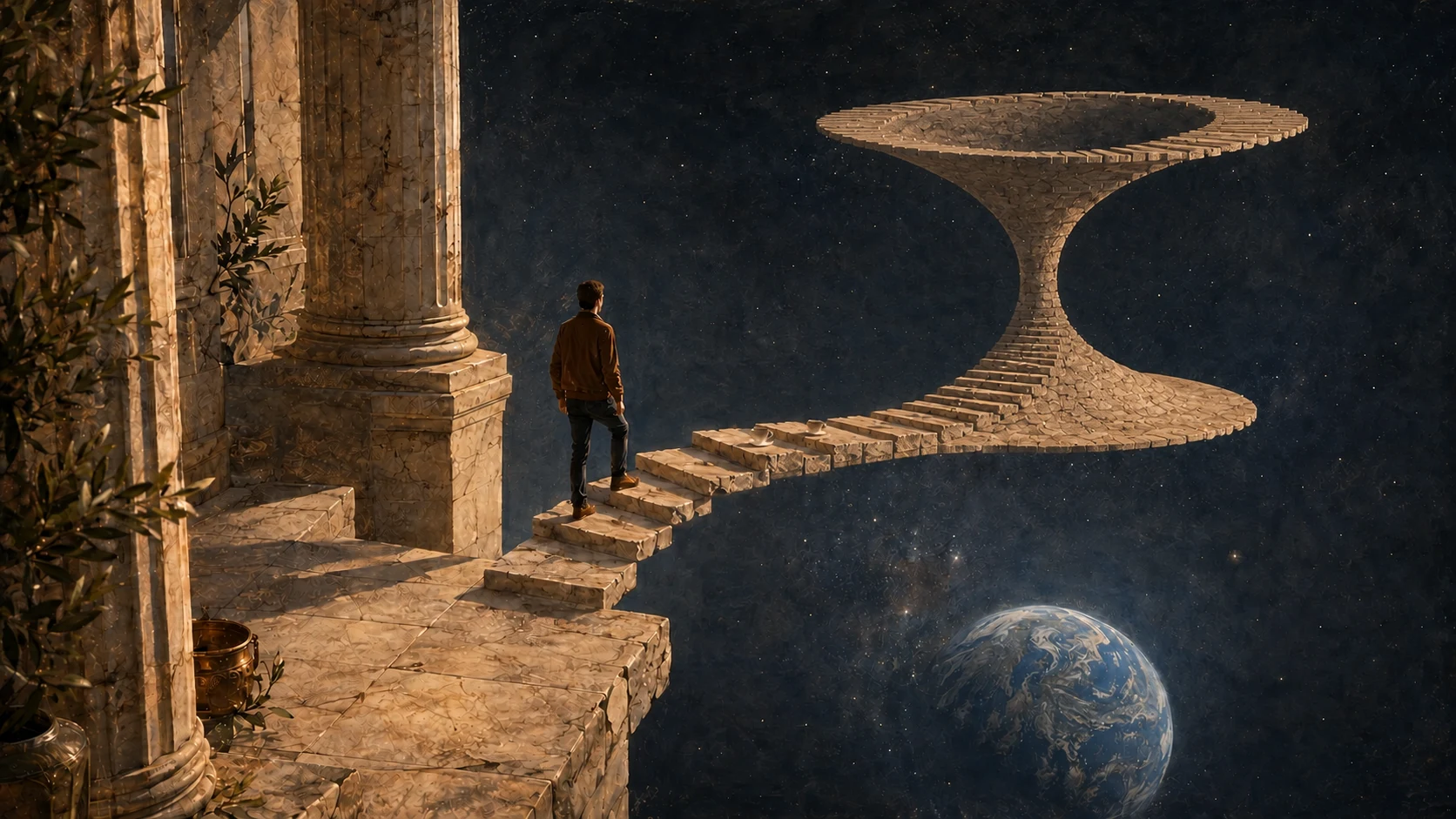
Prokoptôn: the person making progress
What does Prokoptôn mean? It is a Greek word (προκόπτων), the present participle of the verb prokoptô, προκόπτω, meaning “to make progress.” Pro means “forward.” Koptô means “to strike,” “cut,” or “hew.” Literally, it means “to clear a path by cutting forward,” in other words, “to advance, to make progress.”
For the Stoics, the prokoptôn is someone progressing towards wisdom (sophia) and virtue (aretē) without yet being a Sage (sophos). Put more simply, this is how every Stoic practitioner may describe themselves throughout life: an aspiring Stoic making progress in the practice of virtue.
A Padawan is what Yoda would call such a person, with one difference: a Stoic will never become a Jedi (or a sage), because the sage is an unattainable ideal in this school of thought.
And what does 42 mean?
It’s a geek reference. Ask a geek an impossible question and they will answer 42. If they try to catch you out with a question, answer 42.
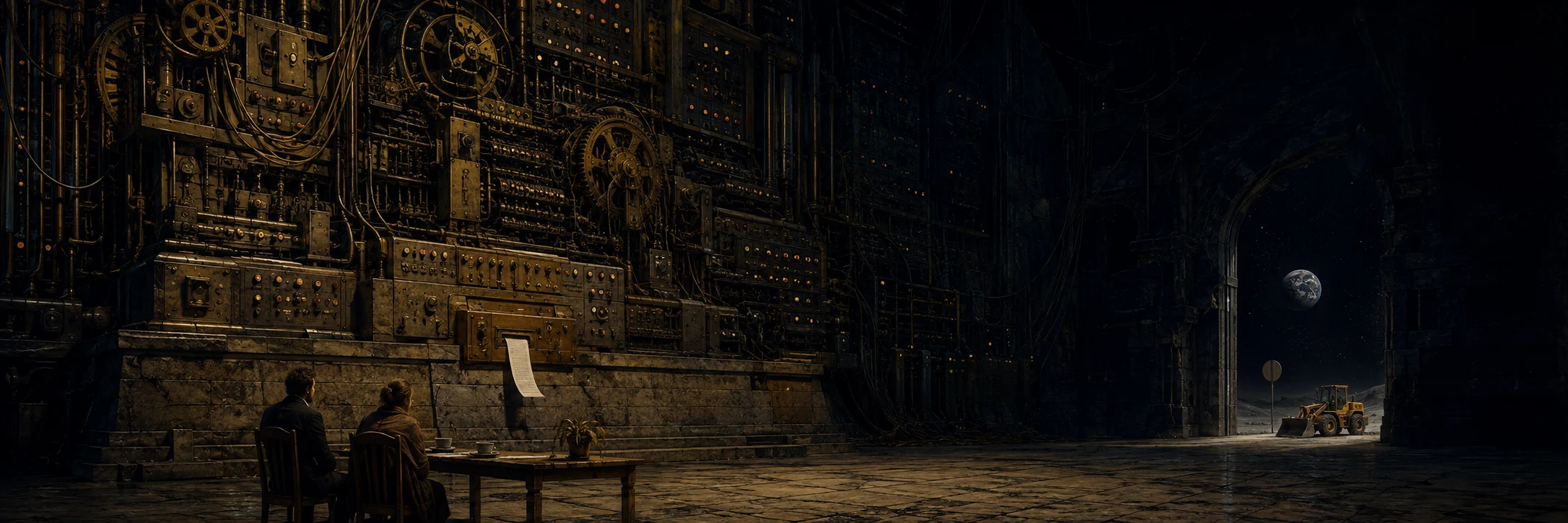
If the reference is new to you, 42 first comes from a work of science fiction by Douglas Adams: The Hitchhiker’s Guide to the Galaxy. Adams imagines beings clever enough to build Deep Thought, a computer charged with answering the Ultimate Question of Life, the Universe, and Everything. The machine asks for seven and a half million years to think. Its creators grant it the time.
Seven and a half million years later, the computer finally answers. The answer? 42. It has checked: that is exactly right. The difficulty, it explains to its creators, is that they never really knew what the question was.
Another computer must therefore be built to find it. That computer will be Earth, with its living inhabitants taking part in the calculation. Ten million years of computation this time.
Once again, its creators wait. But after almost ten million years, with barely five minutes left before the result, the Vogons (an alien species) demolish the planet to make room for a hyperspace bypass. The search for the meaning of life had neglected to check the planning notices.
The bottom line: 42 is the Ultimate Answer, but no one knows the question.
The author explained much later that he had chosen an ordinary number for the joke.
So I chose 42 to complete the word “Prokopton.” I thought it could take some of the drama out of our search for meaning (as prokoptons) and bring a touch of geek humour to this philosophy project.
The 42 in the name also stands for what happens between a question and its answer. We read, object, accept, or reject the supposed truth of that answer. Sometimes the effort reveals that, while speaking about freedom, for example, we were really seeking other people’s approval. The question has changed, and we have learned something about ourselves.
The story of 42 therefore invites us to keep some doubt in reserve when an answer claims to settle everything, especially when it is an answer we want to hear.
That applies, of course, to this website and especially to the chat, which uses complex AI systems to try to answer your questions or prompts. Put simply: do not take any answer as absolute truth.
Do the same beyond this site with your mentors, parents, friends, and teachers. The only guide to your life is you: the way you perceive the world and respond to the events your senses, body, and mind take in. Each of us therefore sees a different world.
Is Prokopton42 only a philosophical project?
Is it just for Stoics?
Philosophia, φιλοσοφία, joins philo, love or friendship, with sophia, wisdom. Philosophy is therefore, literally, the love and pursuit of wisdom. A philosopher may desire wisdom throughout life without ever claiming to possess it.
So yes, Prokopton42.com grew out of my personal practice of Stoic philosophy and my geek chromosomes. But this project is not reserved for seasoned Stoics. It is open and dedicated to every human being who wonders about the meaning of life, asks questions about one school of thought or another or, more broadly, wants to live a happy life.
It therefore speaks to philosophers and Stoics, to believers of every faith and to atheists. Prokopton42 places the practice of your chosen philosophies at the centre. Practice matters, whatever your philosophy or beliefs.
In antiquity, Hellenistic philosophies were ways of life. Stoics, Epicureans, Cynics, and Sceptics vigorously exchanged their different views of happiness, desire, and certainty, and their answers shaped their conduct. In our modern third-millennium world, studying those disagreements also gives us a way to examine our own habits: what we pursue, what we fear, and what we accept without thinking. It gives us access to 2,500 years of human thought.
Look to religions and the texts they hold sacred, and the same demand appears in a religion that must be lived: prayer, ritual, hospitality, and forgiveness must be practised. Otherwise, we are left with theology or academic and historical work. Philology, intellectual history, exegesis, and theology certainly help us understand what we have received from the past. But each of us must then answer the difficult question: what will I do with this knowledge? How will I apply it in my life? How will I use it with those close to me and the other souls I meet along the way?

N=1. This life, yours.
A book we put down at twenty may become necessary at forty. A sentence about grief reads differently after someone we love has died. We come to books with a body, a history, and responsibilities. That is where they meet us.
N=1 names the particular life in which a thought will be put to the test. You may follow a philosophy, a religion, several traditions, or still be looking. No formula on this site can decide how you are going to live.
N=1 does not mean “anything goes.” Our convictions have reasons that others can question, and consequences they may have to bear. We need to be able to examine those convictions, revise them, and answer for them. The freedom to search asks that much of us.
A name to keep going with.
Prokopton for the effort of learning. 42 for the smile when our certainties grow a little too grand. I want to keep both: the seriousness of trying to live well, and the ability to laugh at ourselves while we try.
I would like us to leave here with an idea specific enough to try tomorrow. A question to ask before judging. A conversation we will stop avoiding. Something, however small, that made it worth opening a book and arguing with it.
Start with the question that has been on your mind today. Open the library. Enter the Stoa and ask your question.