Traceable Library

Explore the corpus of thinkers on prokopton42.com

We do not always look for a work, a text, or a passage in the same way. Browse by work as you would in a traditional library, travel through time, follow a semantic concept, or go straight to a precise excerpt. This Library exists to support practice and deeper study by bringing old texts into contact with daily experience and present questions.

Works
305
Authors
94
Passages
89,767
See more statistics
Corpus works
259
Private works
46
Private records
56
Private excerpts
20,006
Text representations
223,819
Editions and translations
849
Languages
17
Works in French and English
259
Multilingual works
259
Tracked concepts
9
Estimated sentences
1,456,557
Words
27,541,029

A representation is one language version of a canonical passage. Private excerpts come from source files. Sentence count is estimated from punctuation.

By work5
Diogenes of Sinope

Works

Books, collections and works from the Private collection share this shelf. Each card keeps its editions and sources.

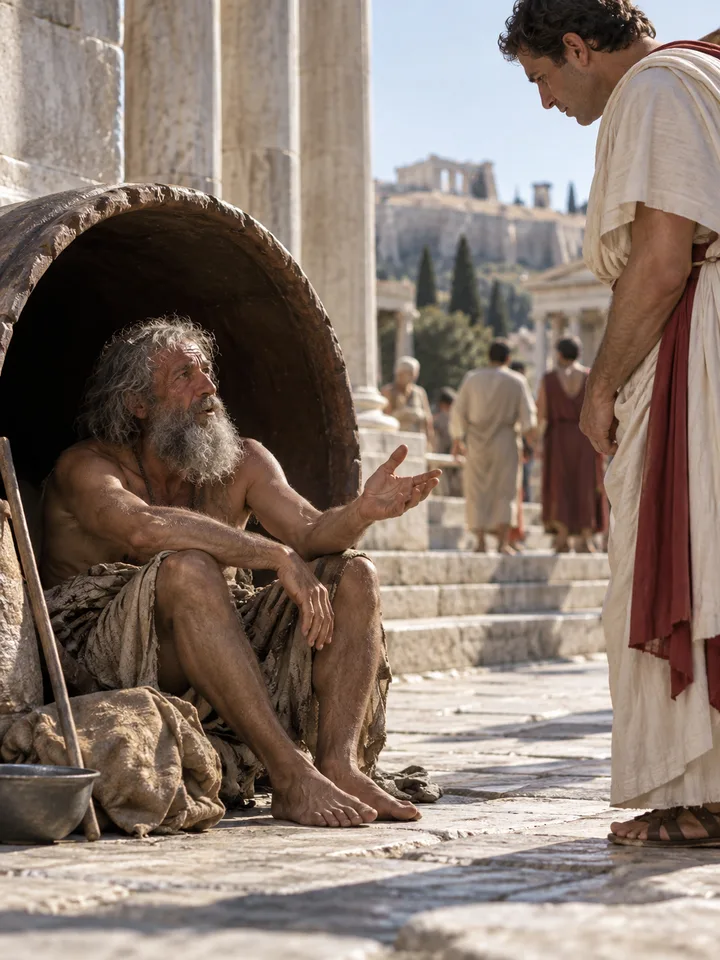
Photorealistic editorial illustration of Dio Chrysostom’s Diogenic Orations in the Prokopton42.com Library Dio Chrysostom’s Diogenic OrationsDio Chrysostom

Work

Dio Chrysostom’s Diogenic Orations

Dio Chrysostom stages Diogenes to examine kingship, freedom, and wealth. These imperial-period orations use the Cynic as an exemplary and provocative character; they witness a later reception rather than transcribe his speech.

What you will learn
Composition
late 1st or early 2nd century CE
Editions / translations
Dates to be documented
Languages
Ancient Greek · English · French
Extent
5 passages · 26,283 words
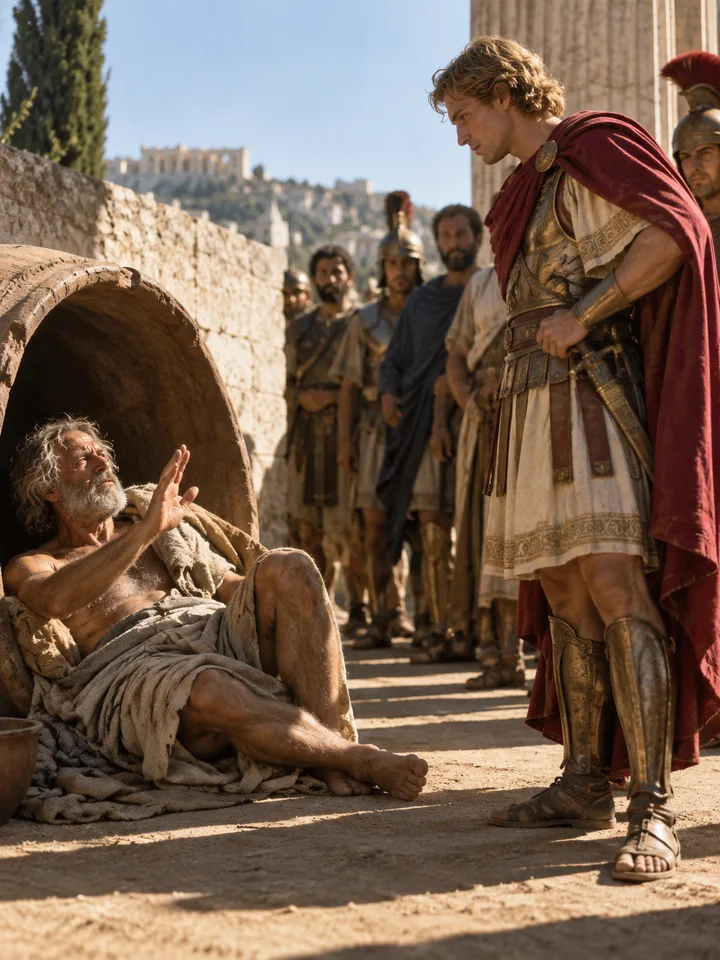
Photorealistic editorial illustration of Life of Alexander, Chapter 14: The Encounter with Diogenes, by Plutarch in the Prokopton42.com Library Life of Alexander, Chapter 14: The Encounter with Diogenes, by PlutarchPlutarch

Work

Life of Alexander, Chapter 14: The Encounter with Diogenes, by Plutarch

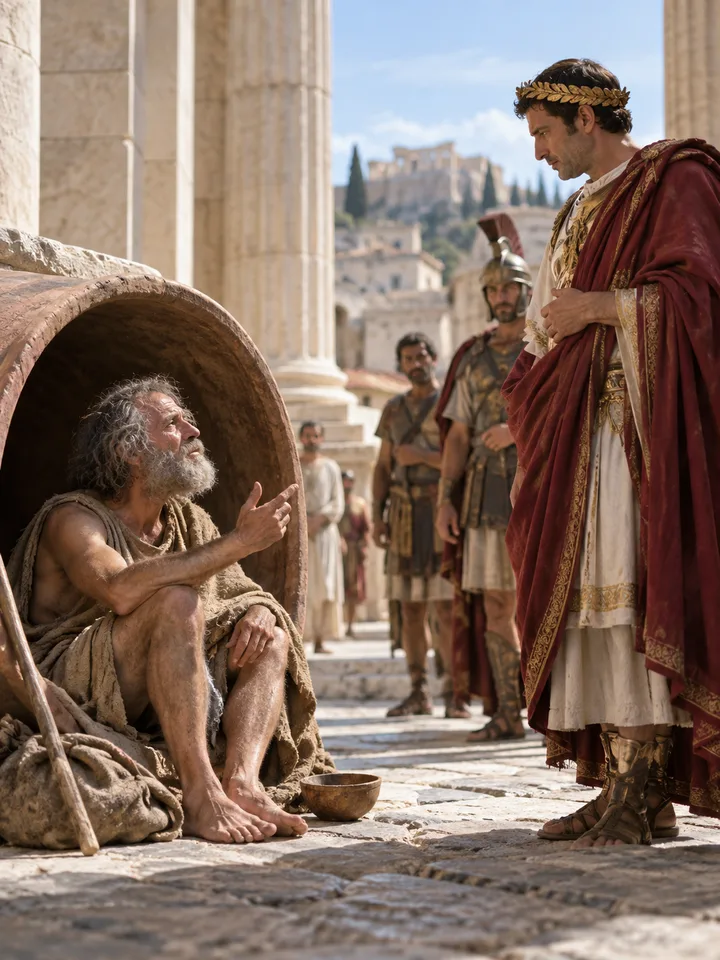
Plutarch tells the celebrated encounter in which Diogenes asks Alexander to stop blocking his sunlight. The scene opposes conquest to sufficiency and makes the king recognize a freedom his power can neither grant nor purchase.

What you will learn
Composition
c. 96-120 CE
Editions / translations
Dates to be documented
Languages
Ancient Greek · English · French
Extent
1 passage · 378 words
Photorealistic editorial illustration of Lives of Eminent Philosophers, Book VI: The Cynics, by Diogenes Laertius in the Prokopton42.com Library Lives of Eminent Philosophers, Book VI: The Cynics, by Diogenes LaertiusDiogenes Laertius

Work

Lives of Eminent Philosophers, Book VI: The Cynics, by Diogenes Laertius

Book VI of Diogenes Laertius gathers biographies, doctrines, sayings, and anecdotes about Antisthenes, Diogenes, and other Cynics. This late compilation preserves essential traditions while combining sources of unequal historical value.

What you will learn
Composition
first half of the 3rd century CE
Editions / translations
Dates to be documented
Languages
Ancient Greek · English · French
Extent
62 passages · 8,711 words
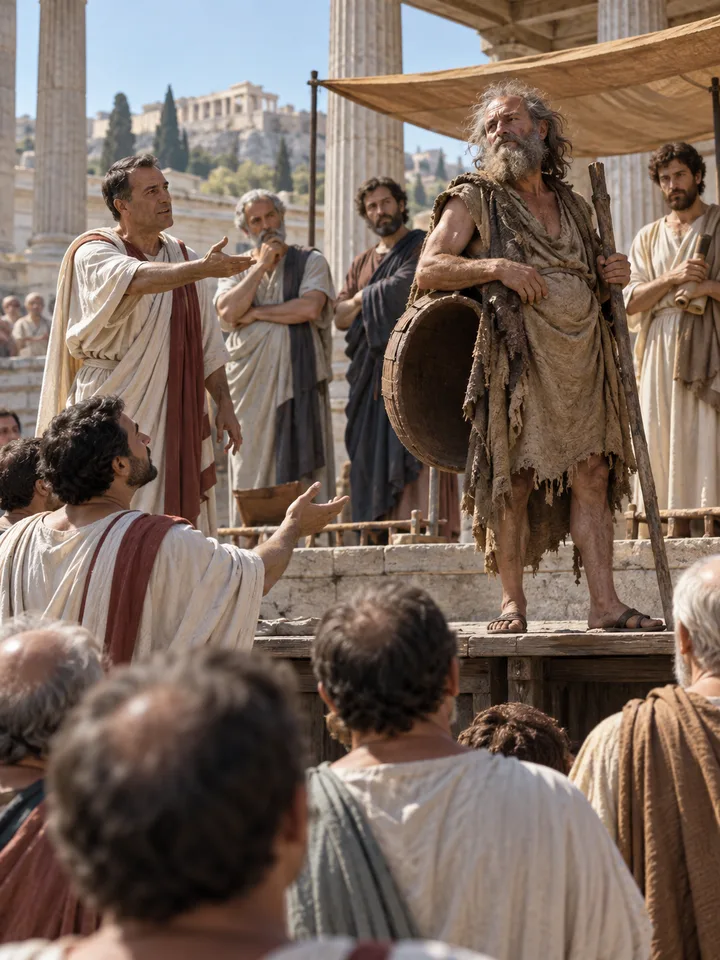
Photorealistic editorial illustration of Philosophies for Sale, Sections 7-11, by Lucian of Samosata in the Prokopton42.com Library Philosophies for Sale, Sections 7-11, by Lucian of SamosataLucian of Samosata

Work

Philosophies for Sale, Sections 7-11, by Lucian of Samosata

Lucian turns philosophical schools into lots offered at auction. In this satire, doctrines and ways of life become sales pitches; the Cynic caricature reveals a cultural reputation rather than providing a neutral exposition.

What you will learn
Composition
c. 165 CE
Editions / translations
Dates to be documented
Languages
Ancient Greek · English · French
Extent
5 passages · 796 words
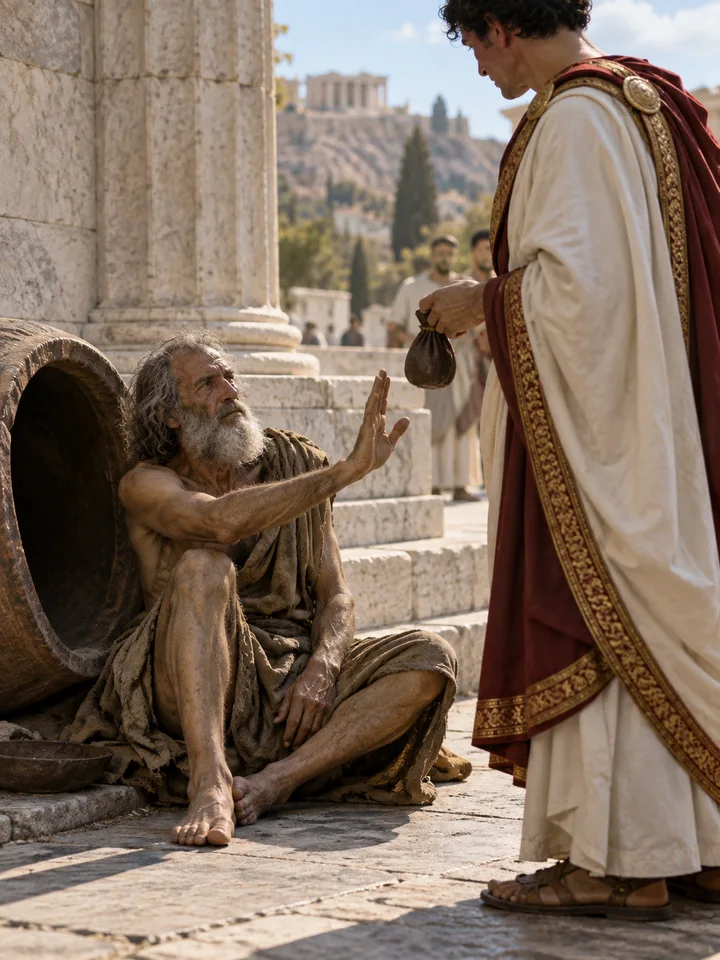
Photorealistic editorial illustration of Pseudo-Diogenic Epistles in the Prokopton42.com Library Pseudo-Diogenic EpistlesPseudo-Diogenes

Fragments or testimony

Pseudo-Diogenic Epistles

These letters transmitted under Diogenes’ name dramatize Cynic frankness, contempt for wealth, and freedom before rulers. Their attribution is conventional: they belong to a literary tradition later than the historical philosopher.

What you will learn
Composition
late Hellenistic or Imperial period, 1st century BCE-2nd century CE
Editions / translations
Dates to be documented
Languages
Ancient Greek · English · French
Extent
51 passages · 10,974 words

Before reading

What you will learn

Open the full record