Traceable Library

Explore the corpus of thinkers on prokopton42.com

We do not always look for a work, a text, or a passage in the same way. Browse by work as you would in a traditional library, travel through time, follow a semantic concept, or go straight to a precise excerpt. This Library exists to support practice and deeper study by bringing old texts into contact with daily experience and present questions.

Works
305
Authors
94
Passages
89,767
See more statistics
Corpus works
259
Private works
46
Private records
56
Private excerpts
20,006
Text representations
223,819
Editions and translations
849
Languages
17
Works in French and English
259
Multilingual works
259
Tracked concepts
9
Estimated sentences
1,456,557
Words
27,541,029

A representation is one language version of a canonical passage. Private excerpts come from source files. Sentence count is estimated from punctuation.

By work34
Greek and Roman traditions

Works

Books, collections and works from the Private collection share this shelf. Each card keeps its editions and sources.

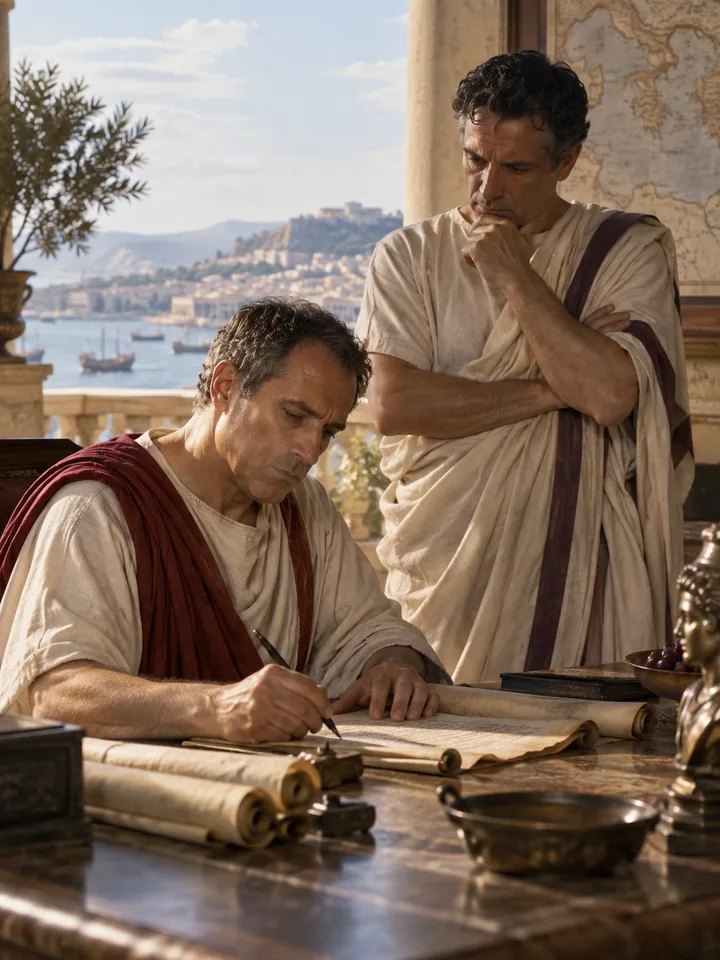
Photorealistic editorial illustration of Academica in the Prokopton42.com Library AcademicaCicero

Work

Academica

In the surviving fragments of the Academica, Cicero stages the conflict between dogmatic certainty and sceptical inquiry. He asks what criterion can identify a true impression and how action remains possible when secure knowledge is disputed.

What you will learn
Composition
45 BCE
Editions / translations
Dates to be documented
Languages
Latin · English · French
Extent
69 passages · 215,055 words
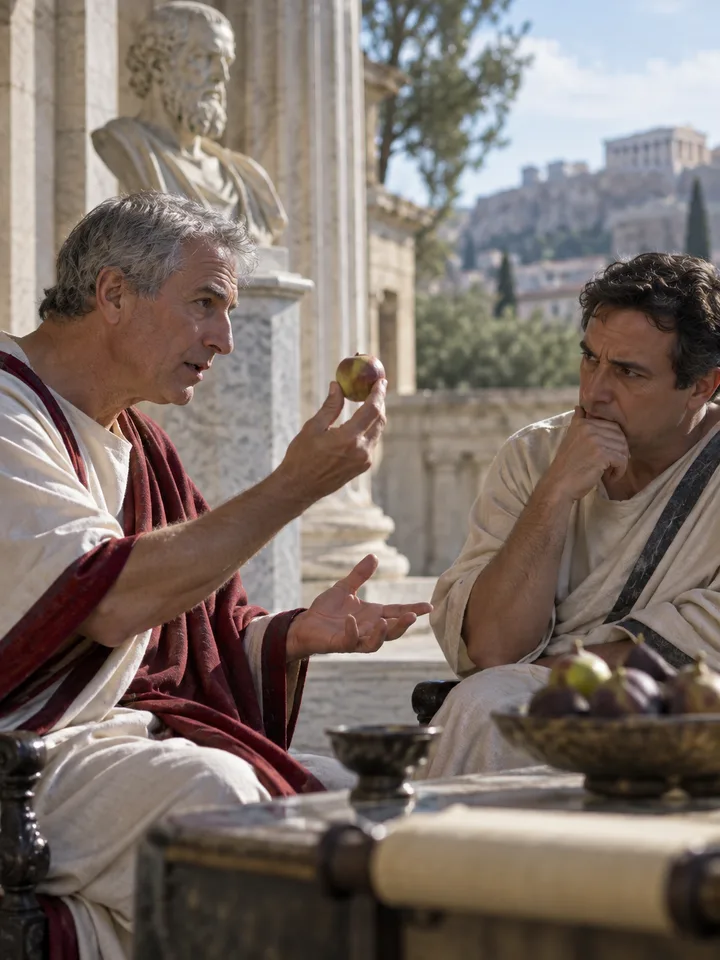
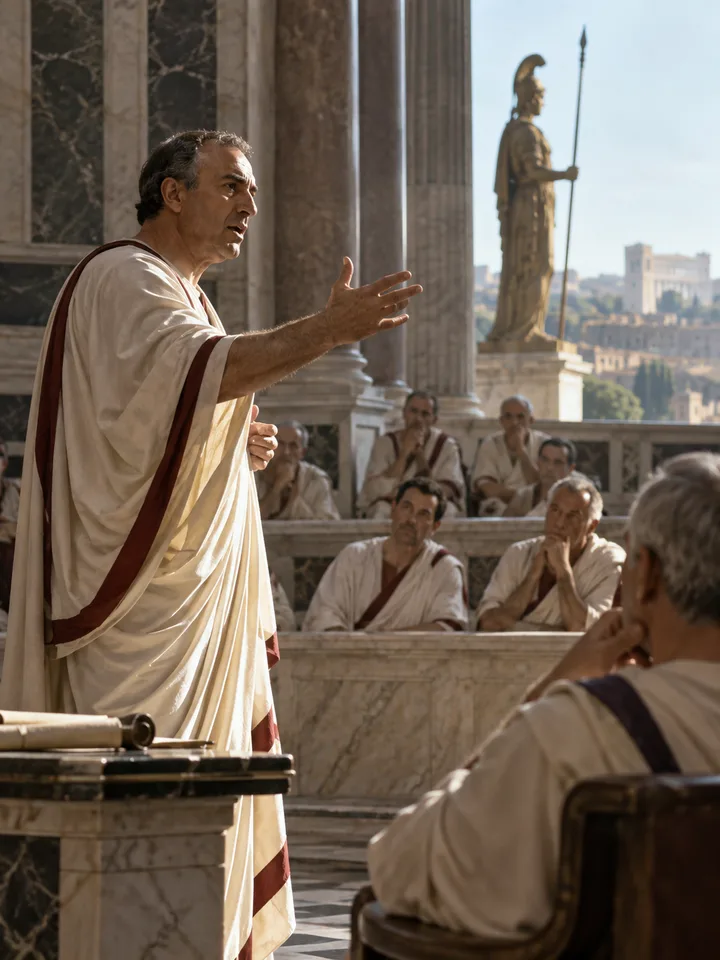
Photorealistic editorial illustration of Brutus, or On Eminent Orators in the Prokopton42.com Library Brutus, or On Eminent OratorsCicero

Work

Brutus, or On Eminent Orators

Cicero traces the history of Roman eloquence through the speakers who shaped it. The dialogue combines criticism, portraiture, and an anxious reflection on public speech at a moment when the Republic is losing its freedom.

What you will learn
Composition
46 BCE
Editions / translations
Dates to be documented
Languages
Latin · English · French
Extent
334 passages · 79,995 words
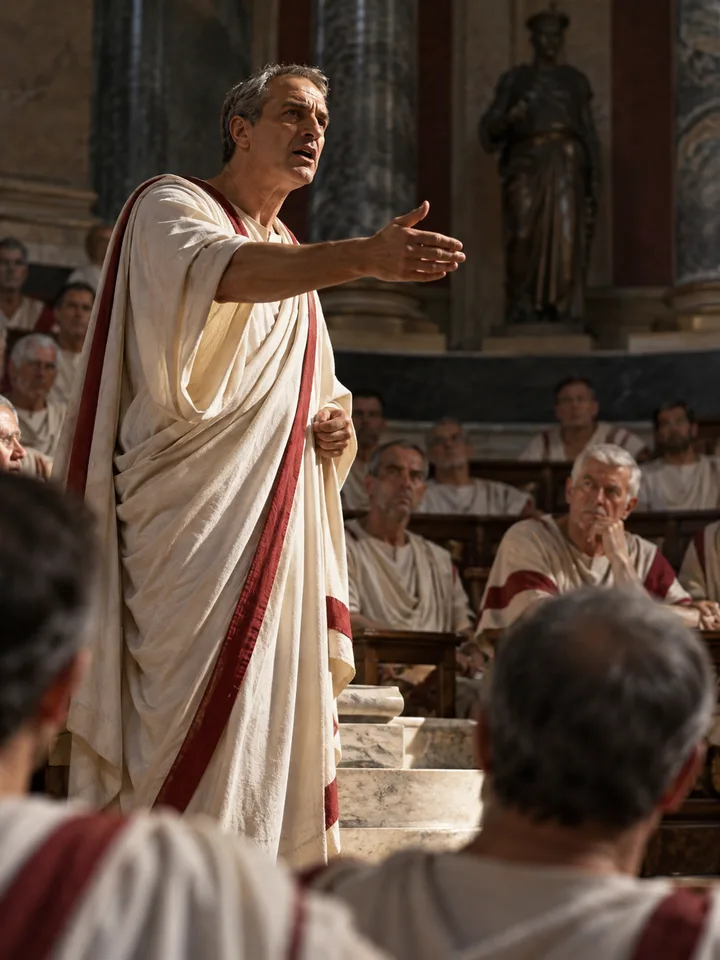
Photorealistic editorial illustration of Catilinarian Orations in the Prokopton42.com Library Catilinarian OrationsCicero

Work

Catilinarian Orations

Delivered during Catiline’s conspiracy, these four speeches accuse, mobilize, and justify the actions of the consul Cicero. They show eloquence turning a political threat into a public narrative of the Republic’s rescue.

What you will learn
Composition
63 BCE
Editions / translations
Dates to be documented
Languages
Latin · English · French
Extent
115 passages · 22,400 words
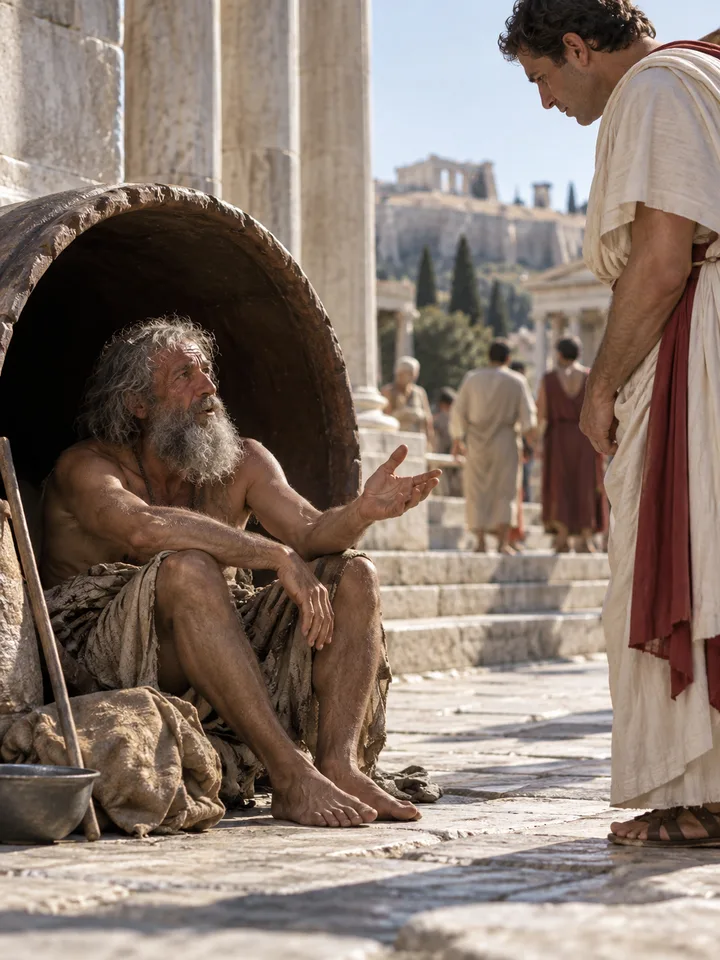
Photorealistic editorial illustration of Dio Chrysostom’s Diogenic Orations in the Prokopton42.com Library Dio Chrysostom’s Diogenic OrationsDio Chrysostom

Work

Dio Chrysostom’s Diogenic Orations

Dio Chrysostom stages Diogenes to examine kingship, freedom, and wealth. These imperial-period orations use the Cynic as an exemplary and provocative character; they witness a later reception rather than transcribe his speech.

What you will learn
Composition
late 1st or early 2nd century CE
Editions / translations
Dates to be documented
Languages
Ancient Greek · English · French
Extent
5 passages · 26,283 words
Photorealistic editorial illustration of Diogenes Laertius II.11: Stilpo in the Prokopton42.com Library Diogenes Laertius II.11: StilpoStilpo of Megara

Work

Diogenes Laertius II.11: Stilpo

Seven trilingual units preserve the most continuous late account of Stilpo without turning its anecdotes into memories.

What you will learn
Composition
first half of the 3rd century CE; testimony about Stilpo
Editions / translations
Dates to be documented
Languages
Ancient Greek · French · English
Extent
7 passages · 1,104 words
Photorealistic editorial illustration of Eudemian Ethics in the Prokopton42.com Library Eudemian EthicsAristotle

Work

Eudemian Ethics

Eudemian Ethics proceeds through distinctions, objections, and causal inquiry. The surviving text has the density of a school treatise, not a transcribed conversation.

What you will learn
Composition
4th century BCE; internal chronology disputed
Editions / translations
Dates to be documented
Languages
Ancient Greek · English · French
Extent
41 passages · 39,333 words
Photorealistic editorial illustration of Heraclitus: Diels B fragments in the Prokopton42.com Library Heraclitus: Diels B fragmentsHeraclitus

Fragments or testimony

Heraclitus: Diels B fragments

One hundred forty-five 22B units keep fragment, language, and transmitting carrier together.

What you will learn
Composition
late 6th or early 5th century BCE; quotations transmitted later
Editions / translations
Dates to be documented
Languages
Ancient Greek · Latin · English · French
Extent
145 passages · 3,662 words
Photorealistic editorial illustration of Letters to Atticus in the Prokopton42.com Library Letters to AtticusCicero

Fragments or testimony

Letters to Atticus

In letters to Atticus, Cicero shares calculations, fears, and reversals with his closest political confidant. The correspondence preserves a voice less polished than the speeches, caught within the crises of the late Republic.

What you will learn
Composition
68-44 BCE
Editions / translations
Dates to be documented
Languages
Latin · English · French
Extent
1,479 passages · 211,714 words
Photorealistic editorial illustration of Letters to Friends in the Prokopton42.com Library Letters to FriendsCicero

Fragments or testimony

Letters to Friends

The Letters to Friends gather Cicero’s exchanges with magistrates, allies, relatives, and protégés. Recommendations, intelligence, and political appeals reveal the Republic as a fabric of personal obligations, negotiation, and fragile loyalties.

What you will learn
Composition
62-43 BCE
Editions / translations
Dates to be documented
Languages
Latin · English · French
Extent
1,342 passages · 225,910 words
Photorealistic editorial illustration of Letters to Quintus in the Prokopton42.com Library Letters to QuintusCicero

Fragments or testimony

Letters to Quintus

Cicero writes to his brother Quintus about provincial government, family ambitions, and the storms of Roman politics. Fraternal affection does not erase stern advice or disagreements about authority, reputation, and prudence.

What you will learn
Composition
60-54 BCE
Editions / translations
Dates to be documented
Languages
Latin · English · French
Extent
198 passages · 60,446 words
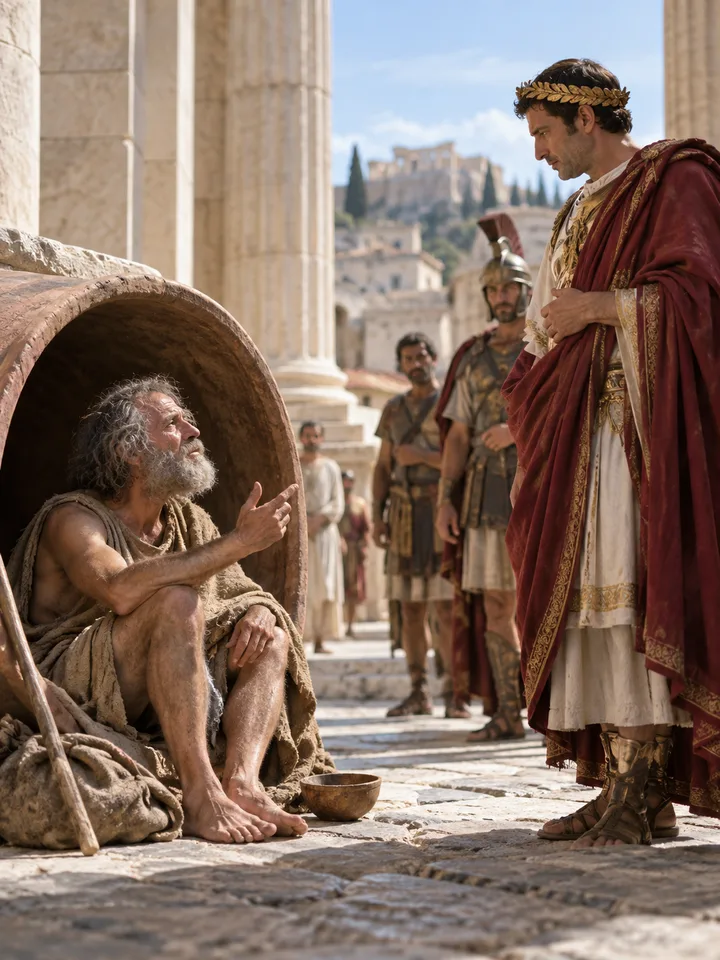
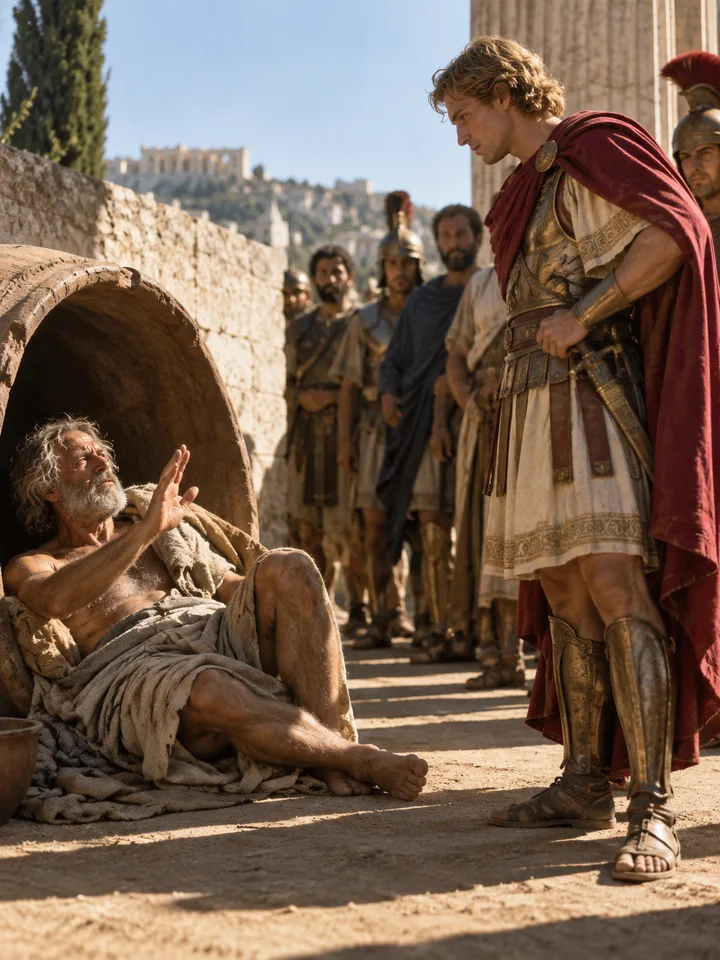
Photorealistic editorial illustration of Life of Alexander, Chapter 14: The Encounter with Diogenes, by Plutarch in the Prokopton42.com Library Life of Alexander, Chapter 14: The Encounter with Diogenes, by PlutarchPlutarch

Work

Life of Alexander, Chapter 14: The Encounter with Diogenes, by Plutarch

Plutarch tells the celebrated encounter in which Diogenes asks Alexander to stop blocking his sunlight. The scene opposes conquest to sufficiency and makes the king recognize a freedom his power can neither grant nor purchase.

What you will learn
Composition
c. 96-120 CE
Editions / translations
Dates to be documented
Languages
Ancient Greek · English · French
Extent
1 passage · 378 words
Photorealistic editorial illustration of Lives of Eminent Philosophers, Book VI: The Cynics, by Diogenes Laertius in the Prokopton42.com Library Lives of Eminent Philosophers, Book VI: The Cynics, by Diogenes LaertiusDiogenes Laertius

Work

Lives of Eminent Philosophers, Book VI: The Cynics, by Diogenes Laertius

Book VI of Diogenes Laertius gathers biographies, doctrines, sayings, and anecdotes about Antisthenes, Diogenes, and other Cynics. This late compilation preserves essential traditions while combining sources of unequal historical value.

What you will learn
Composition
first half of the 3rd century CE
Editions / translations
Dates to be documented
Languages
Ancient Greek · English · French
Extent
62 passages · 8,711 words
Photorealistic editorial illustration of Lucullus, Book Two of the Academica in the Prokopton42.com Library Lucullus, Book Two of the AcademicaCicero

Work

Lucullus, Book Two of the Academica

The Lucullus pits a defence of certain knowledge against Cicero’s sceptical reply. At the centre stands the cognitive impression: can it bear a mark that guarantees truth and therefore warrants assent?

What you will learn
Composition
45 BCE
Editions / translations
Dates to be documented
Languages
Latin · English · French
Extent
148 passages · 25,042 words
Photorealistic editorial illustration of Metaphysics in the Prokopton42.com Library MetaphysicsAristotle

Work

Metaphysics

Metaphysics proceeds through distinctions, objections, and causal inquiry. The surviving text has the density of a school treatise, not a transcribed conversation.

What you will learn
Composition
4th century BCE; transmitted as a layered collection
Editions / translations
Dates to be documented
Languages
Ancient Greek · English · French
Extent
142 passages · 109,138 words
Photorealistic editorial illustration of Nicomachean Ethics in the Prokopton42.com Library Nicomachean EthicsAristotle

Work

Nicomachean Ethics

Nicomachean Ethics proceeds through distinctions, objections, and causal inquiry. The surviving text has the density of a school treatise, not a transcribed conversation.

What you will learn
Composition
4th century BCE; internal chronology disputed
Editions / translations
Dates to be documented
Languages
Ancient Greek · English · French
Extent
116 passages · 89,657 words
Photorealistic editorial illustration of On Divination in the Prokopton42.com Library On DivinationCicero

Work

On Divination

Cicero stages a debate about omens, dreams, and divinatory practices. His brother Quintus defends their validity, after which Cicero tests the evidence through arguments about rational inquiry, chance, and religious authority.

What you will learn
Composition
44 BCE
Editions / translations
Dates to be documented
Languages
Latin · English · French
Extent
284 passages · 46,076 words
Photorealistic editorial illustration of On Duties in the Prokopton42.com Library On DutiesCicero

Work

On Duties

Addressed to his son Marcus, the treatise examines what honour demands, what advantage recommends, and why their conflict is only apparent when utility is rightly understood. Cicero translates Greek ethics into Roman responsibilities.

What you will learn
Composition
44 BCE
Editions / translations
Dates to be documented
Languages
Latin · English · French
Extent
371 passages · 114,758 words
Photorealistic editorial illustration of On Ends in the Prokopton42.com Library On EndsCicero

Work

On Ends

Cicero confronts Epicurean, Stoic, and Academic-Peripatetic answers to a decisive question: what final good orders every choice? The dialogues assess pleasure, virtue, human nature, and external goods without smoothing away disagreement.

What you will learn
Composition
45 BCE
Editions / translations
Dates to be documented
Languages
Latin · English · French
Extent
443 passages · 64,329 words

Before reading

What you will learn

Open the full record