Traceable Library

Explore the corpus of thinkers on prokopton42.com

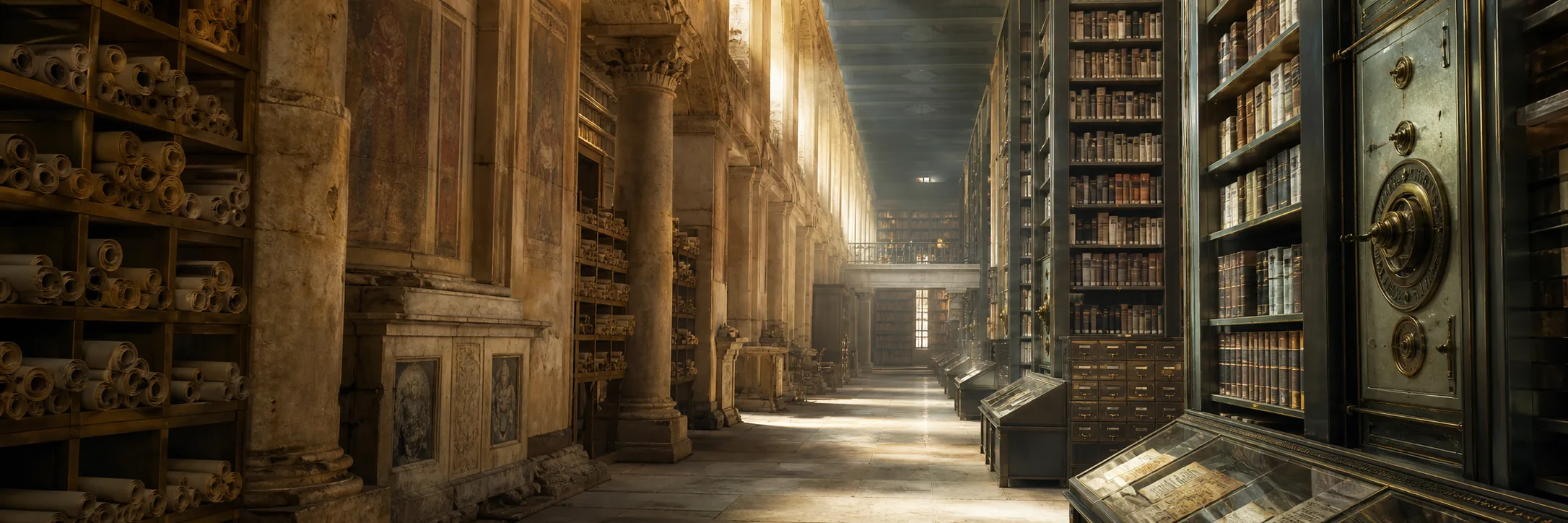
We do not always look for a work, a text, or a passage in the same way. Browse by work as you would in a traditional library, travel through time, follow a semantic concept, or go straight to a precise excerpt. This Library exists to support practice and deeper study by bringing old texts into contact with daily experience and present questions.

Works
305
Authors
94
Passages
89,767
See more statistics
Corpus works
259
Private works
46
Private records
56
Private excerpts
20,006
Text representations
223,819
Editions and translations
849
Languages
17
Works in French and English
259
Multilingual works
259
Tracked concepts
9
Estimated sentences
1,456,557
Words
27,541,029

A representation is one language version of a canonical passage. Private excerpts come from source files. Sentence count is estimated from punctuation.

By work21
Cicero

Works

Books, collections and works from the Private collection share this shelf. Each card keeps its editions and sources.

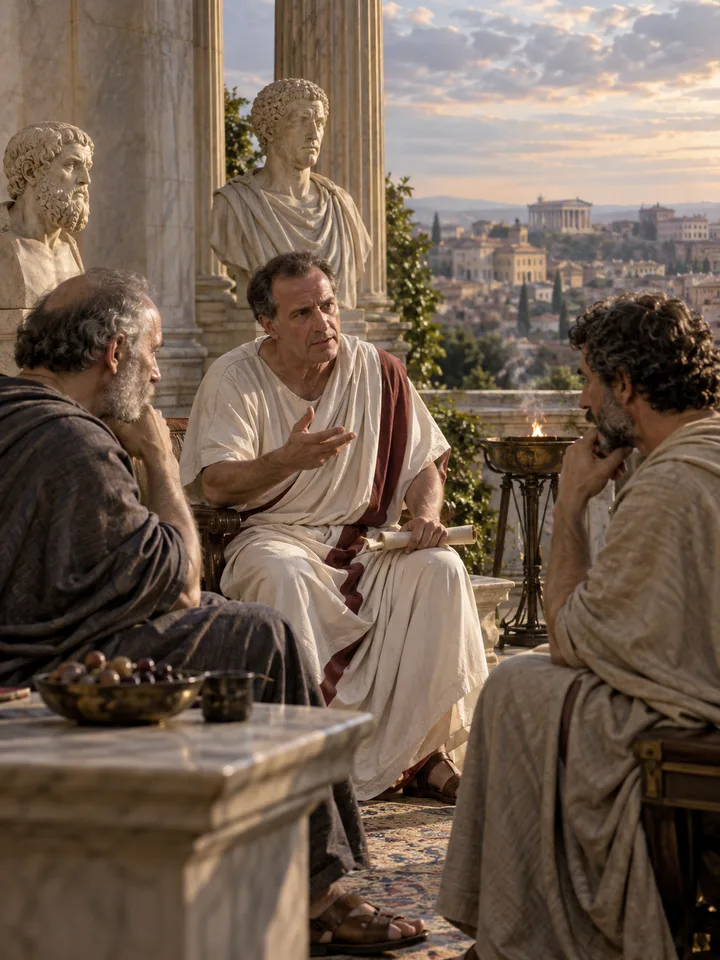
Photorealistic editorial illustration of Academica in the Prokopton42.com Library AcademicaCicero

Work

Academica

In the surviving fragments of the Academica, Cicero stages the conflict between dogmatic certainty and sceptical inquiry. He asks what criterion can identify a true impression and how action remains possible when secure knowledge is disputed.

What you will learn
Composition
45 BCE
Editions / translations
Dates to be documented
Languages
Latin · English · French
Extent
69 passages · 215,055 words
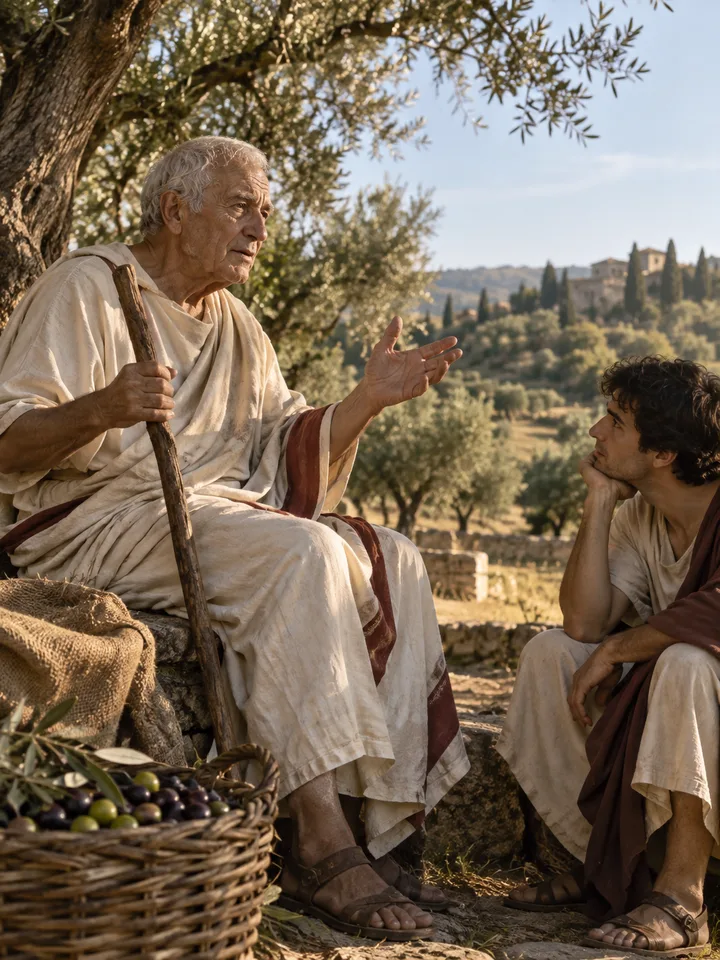
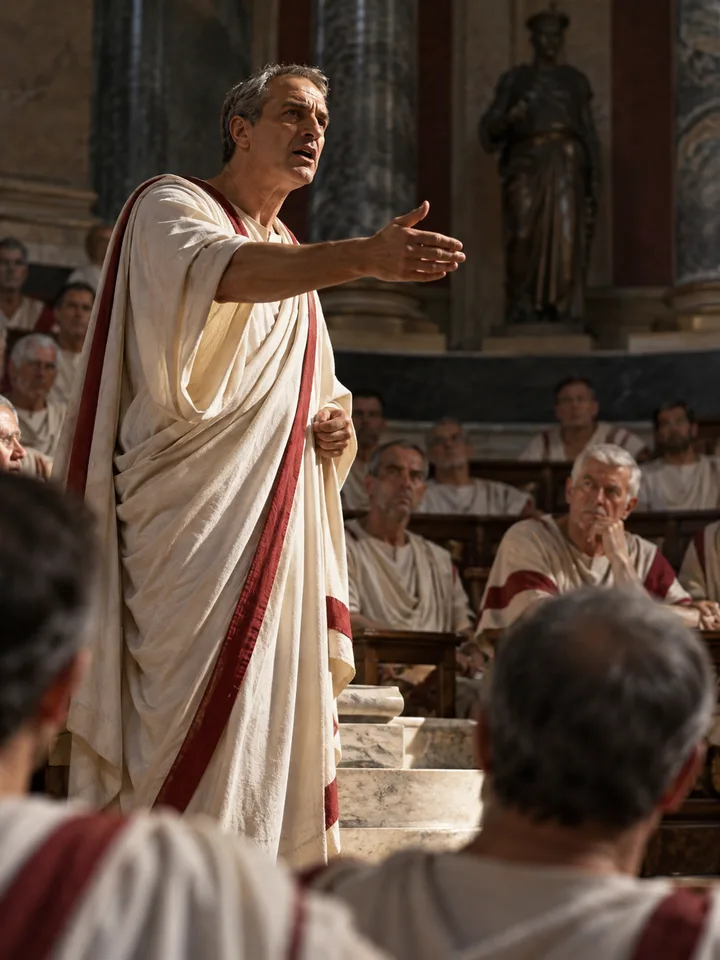
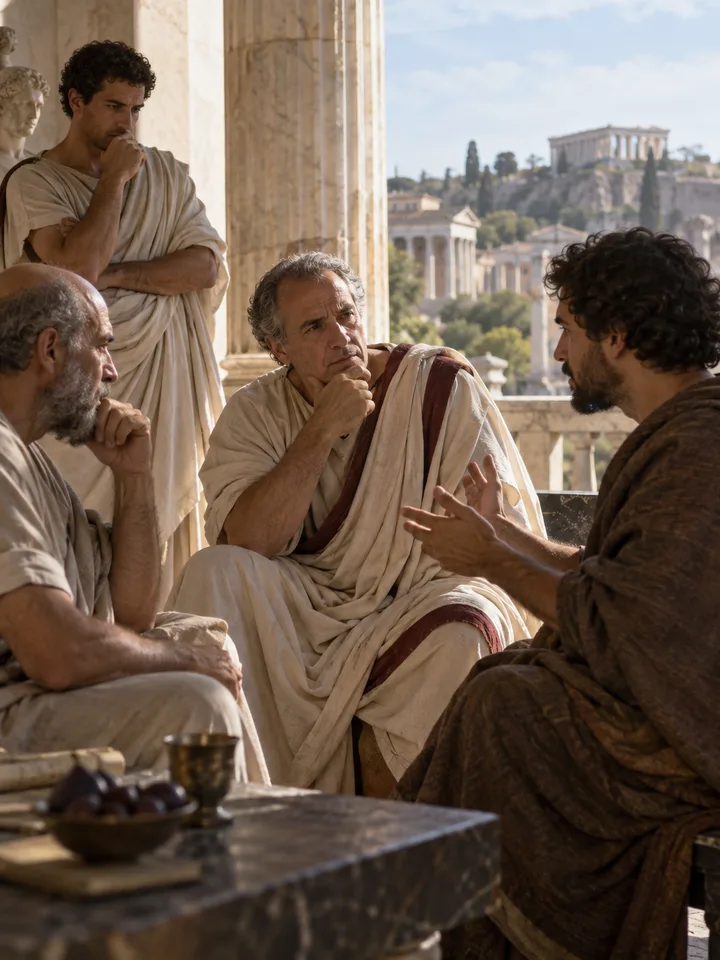
Photorealistic editorial illustration of Brutus, or On Eminent Orators in the Prokopton42.com Library Brutus, or On Eminent OratorsCicero

Work

Brutus, or On Eminent Orators

Cicero traces the history of Roman eloquence through the speakers who shaped it. The dialogue combines criticism, portraiture, and an anxious reflection on public speech at a moment when the Republic is losing its freedom.

What you will learn
Composition
46 BCE
Editions / translations
Dates to be documented
Languages
Latin · English · French
Extent
334 passages · 79,995 words
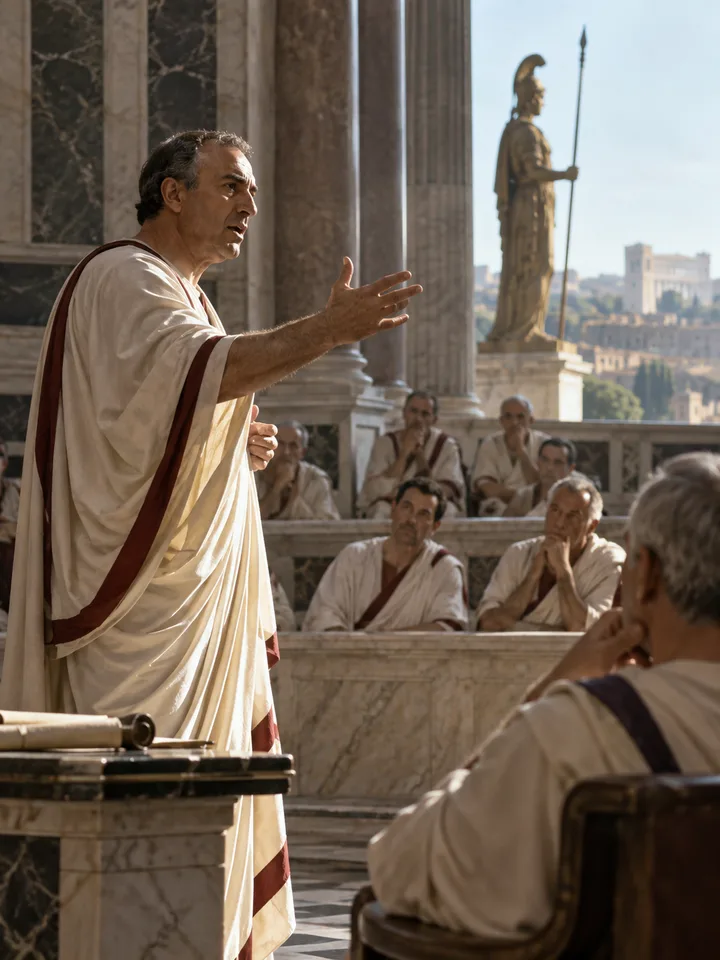
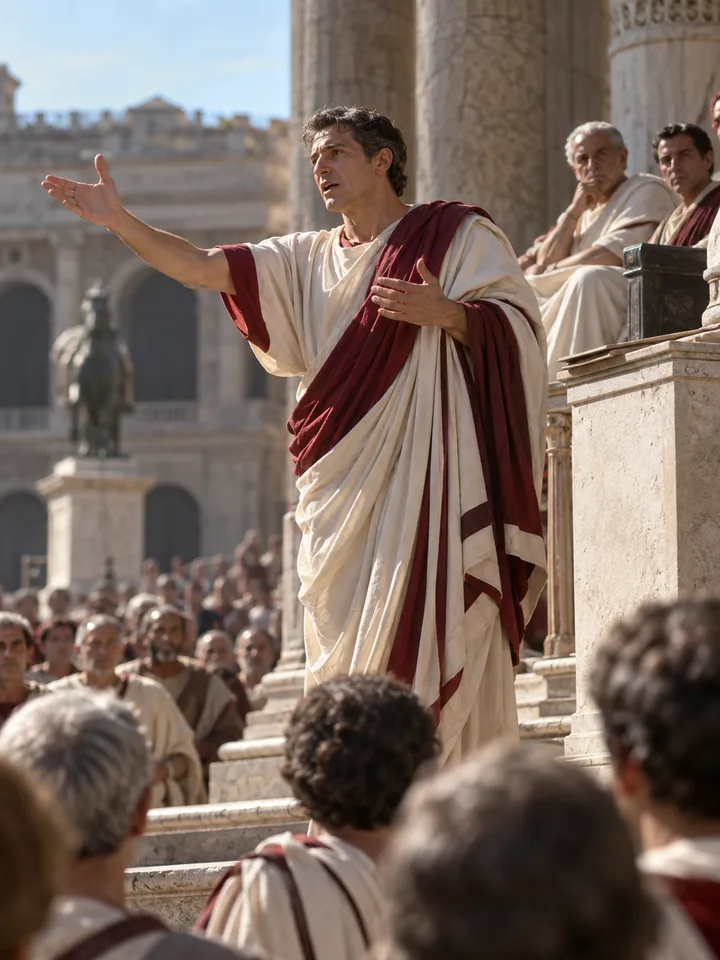
Photorealistic editorial illustration of Catilinarian Orations in the Prokopton42.com Library Catilinarian OrationsCicero

Work

Catilinarian Orations

Delivered during Catiline’s conspiracy, these four speeches accuse, mobilize, and justify the actions of the consul Cicero. They show eloquence turning a political threat into a public narrative of the Republic’s rescue.

What you will learn
Composition
63 BCE
Editions / translations
Dates to be documented
Languages
Latin · English · French
Extent
115 passages · 22,400 words
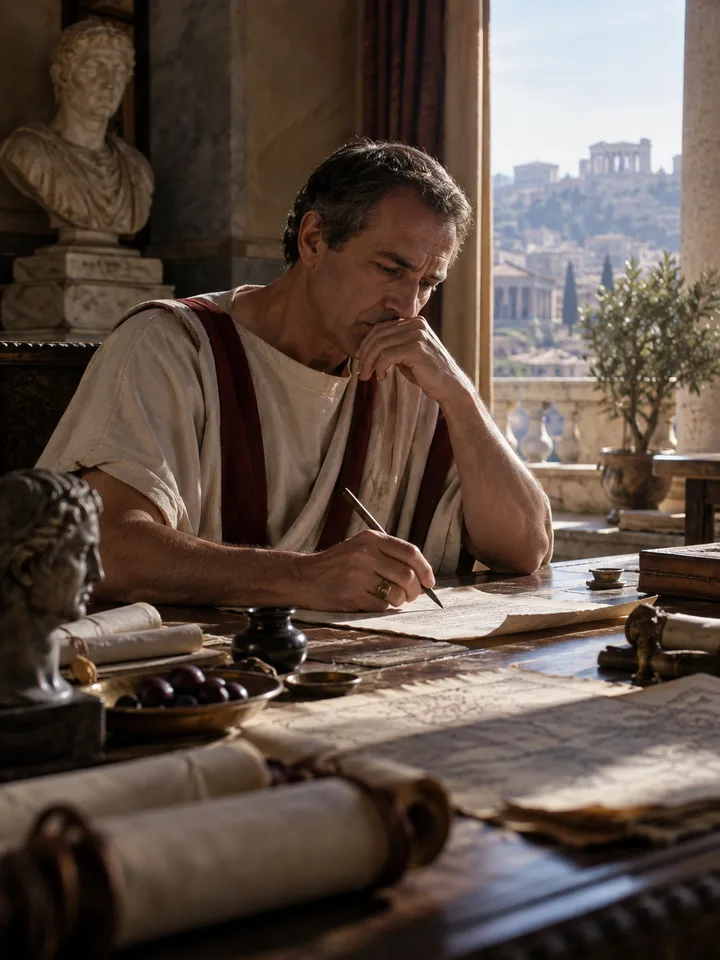
Photorealistic editorial illustration of Letters to Atticus in the Prokopton42.com Library Letters to AtticusCicero

Fragments or testimony

Letters to Atticus

In letters to Atticus, Cicero shares calculations, fears, and reversals with his closest political confidant. The correspondence preserves a voice less polished than the speeches, caught within the crises of the late Republic.

What you will learn
Composition
68-44 BCE
Editions / translations
Dates to be documented
Languages
Latin · English · French
Extent
1,479 passages · 211,714 words
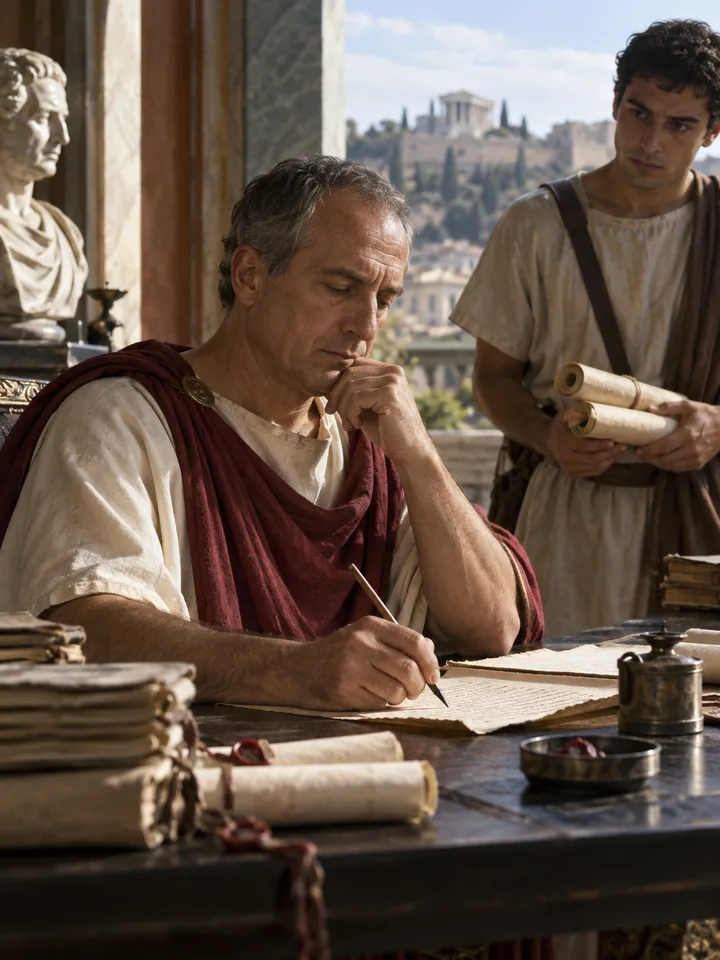
Photorealistic editorial illustration of Letters to Friends in the Prokopton42.com Library Letters to FriendsCicero

Fragments or testimony

Letters to Friends

The Letters to Friends gather Cicero’s exchanges with magistrates, allies, relatives, and protégés. Recommendations, intelligence, and political appeals reveal the Republic as a fabric of personal obligations, negotiation, and fragile loyalties.

What you will learn
Composition
62-43 BCE
Editions / translations
Dates to be documented
Languages
Latin · English · French
Extent
1,342 passages · 225,910 words
Photorealistic editorial illustration of Letters to Quintus in the Prokopton42.com Library Letters to QuintusCicero

Fragments or testimony

Letters to Quintus

Cicero writes to his brother Quintus about provincial government, family ambitions, and the storms of Roman politics. Fraternal affection does not erase stern advice or disagreements about authority, reputation, and prudence.

What you will learn
Composition
60-54 BCE
Editions / translations
Dates to be documented
Languages
Latin · English · French
Extent
198 passages · 60,446 words
Photorealistic editorial illustration of Lucullus, Book Two of the Academica in the Prokopton42.com Library Lucullus, Book Two of the AcademicaCicero

Work

Lucullus, Book Two of the Academica

The Lucullus pits a defence of certain knowledge against Cicero’s sceptical reply. At the centre stands the cognitive impression: can it bear a mark that guarantees truth and therefore warrants assent?

What you will learn
Composition
45 BCE
Editions / translations
Dates to be documented
Languages
Latin · English · French
Extent
148 passages · 25,042 words
Photorealistic editorial illustration of On Divination in the Prokopton42.com Library On DivinationCicero

Work

On Divination

Cicero stages a debate about omens, dreams, and divinatory practices. His brother Quintus defends their validity, after which Cicero tests the evidence through arguments about rational inquiry, chance, and religious authority.

What you will learn
Composition
44 BCE
Editions / translations
Dates to be documented
Languages
Latin · English · French
Extent
284 passages · 46,076 words
Photorealistic editorial illustration of On Duties in the Prokopton42.com Library On DutiesCicero

Work

On Duties

Addressed to his son Marcus, the treatise examines what honour demands, what advantage recommends, and why their conflict is only apparent when utility is rightly understood. Cicero translates Greek ethics into Roman responsibilities.

What you will learn
Composition
44 BCE
Editions / translations
Dates to be documented
Languages
Latin · English · French
Extent
371 passages · 114,758 words
Photorealistic editorial illustration of On Ends in the Prokopton42.com Library On EndsCicero

Work

On Ends

Cicero confronts Epicurean, Stoic, and Academic-Peripatetic answers to a decisive question: what final good orders every choice? The dialogues assess pleasure, virtue, human nature, and external goods without smoothing away disagreement.

What you will learn
Composition
45 BCE
Editions / translations
Dates to be documented
Languages
Latin · English · French
Extent
443 passages · 64,329 words
Photorealistic editorial illustration of On Fate in the Prokopton42.com Library On FateCicero

Work

On Fate

In this fragmentary dialogue, Cicero asks whether causal chains and the truth of future statements abolish human freedom. Modal logic, causation, and responsibility meet in a rejection of inescapable fatalism.

What you will learn
Composition
44 BCE
Editions / translations
Dates to be documented
Languages
Latin · English · French
Extent
48 passages · 7,134 words
Photorealistic editorial illustration of On Friendship in the Prokopton42.com Library On FriendshipCicero

Work

On Friendship

Cicero gives Laelius, grieving for Scipio, a reflection on friendship grounded in virtue rather than advantage. The dialogue examines loyalty, frankness, and the limits of solidarity when a friend asks for an unjust act.

What you will learn
Composition
44 BCE
Editions / translations
Dates to be documented
Languages
Latin · English · French
Extent
104 passages · 29,907 words
Photorealistic editorial illustration of On Old Age in the Prokopton42.com Library On Old AgeCicero

Work

On Old Age

Through the voice of Cato the Elder, Cicero answers charges against old age: withdrawal from affairs, weakness, loss of pleasures, and proximity to death. The dialogue defends adapted activity rather than denying decline.

What you will learn
Composition
44 BCE
Editions / translations
Dates to be documented
Languages
Latin · English · French
Extent
85 passages · 13,563 words
Photorealistic editorial illustration of On the Laws in the Prokopton42.com Library On the LawsCicero

Work

On the Laws

Cicero seeks the foundation of law in a reason common to human nature before examining Roman religious institutions and magistracies. The dialogue thereby connects natural law, constitution, and republican reform.

What you will learn
Composition
c. 52-51 BCE
Editions / translations
Dates to be documented
Languages
Latin · English · French
Extent
181 passages · 26,272 words
Photorealistic editorial illustration of On the Nature of the Gods in the Prokopton42.com Library On the Nature of the GodsCicero

Work

On the Nature of the Gods

Epicurean, Stoic, and Academic speakers confront accounts of gods, providence, and the world. Cicero distributes argument among several voices so theology, physics, and criticism of evidence can answer one another without a summary conclusion.

What you will learn
Composition
45 BCE
Editions / translations
Dates to be documented
Languages
Latin · English · French
Extent
386 passages · 49,688 words
Photorealistic editorial illustration of On the Orator in the Prokopton42.com Library On the OratorCicero

Work

On the Orator

In this dialogue, Cicero defines the accomplished orator as a mind trained in law, history, philosophy, and human emotion. Speech technique is not enough: eloquence requires knowledge, judgement, and civic presence.

What you will learn
Composition
55 BCE
Editions / translations
Dates to be documented
Languages
Latin · English · French
Extent
862 passages · 82,291 words
Photorealistic editorial illustration of On the Republic in the Prokopton42.com Library On the RepublicCicero

Work

On the Republic

Around Scipio Aemilianus, the dialogue examines justice, forms of government, and the mixed constitution. Cicero confronts the ideal statesman with Rome’s historical fragility, culminating in the cosmic vision of Scipio’s Dream.

What you will learn
Composition
c. 54-51 BCE
Editions / translations
Dates to be documented
Languages
Latin · English · French
Extent
251 passages · 30,060 words
Photorealistic editorial illustration of Orator in the Prokopton42.com Library OratorCicero

Work

Orator

Addressed to Brutus, Orator defines an eloquence able to adapt style, rhythm, and emotion to each case. Cicero defends variety against making a single austere manner the absolute rule.

What you will learn
Composition
46 BCE
Editions / translations
Dates to be documented
Languages
Latin · English · French
Extent
238 passages · 24,828 words

Before reading

What you will learn

Open the full record