Work
On the Laws
Cicero seeks the foundation of law in a reason common to human nature before examining Roman religious institutions and magistracies. The dialogue thereby connects natural law, constitution, and republican reform.
- Composition
- c. 52-51 BCE
Sources and precision
The range describes composition or formation of the text, distinct from the dates of the editions held.
Confidence B · strong consensus
- Tradition
- Greek and Roman traditions
- Period
- Antiquity
- Languages
- Latin · English · French
- Extent
- 181 passages · 26,272 words
Before reading
What you will learn
Understand the natural-law argument, follow its translation into civic statutes, and assess the relation between rational ideal and Roman institutions.
Short summary
Cicero seeks the foundation of law in a reason common to human nature before examining Roman religious institutions and magistracies. The dialogue thereby connects natural law, constitution, and republican reform.
Long summary
The discussion begins from justice and rejects its reduction to convention or the interest of the stronger. It then formulates model laws for religion and political organization in the solemn language of Roman legislation.
The move from universal principle to civic rule creates the central difficulty. Cicero presents Roman institutions as a possible expression of reason while selecting and correcting them according to his conservative project.
Inside this work
The table of contents follows the divisions actually carried by the corpus.
Work › Division
- Passage 1
- Passage 2
- Passage 3
- Passage 4
- Passage 5
- Passage 6
- Passage 7
- Passage 8
- Passage 9
- Passage 10
- Passage 11
- Passage 12
- Passage 13
- Passage 14
- Passage 15
- Passage 16
- Passage 17
- Passage 18
- Passage 19
- Passage 20
- Passage 21
- Passage 22
- Passage 23
- Passage 24
- Passage 25
- Passage 26
- Passage 27
- Passage 28
- Passage 29
- Passage 30
- Passage 31
- Passage 32
- Passage 33
- Passage 34
- Passage 35
- Passage 36
- Passage 37
- Passage 38
- Passage 39
- Passage 40
- Passage 41
- Passage 42
- Passage 43
- Passage 44
- Passage 45
- Passage 46
- Passage 47
- Passage 48
- Passage 49
- Passage 50
- Passage 51
- Passage 52
- Passage 53
- Passage 54
- Passage 55
- Passage 56
- Passage 57
- Passage 58
- Passage 59
- Passage 60
- Passage 61
- Passage 62
- Passage 63
- Passage 1
- Passage 2
- Passage 3
- Passage 4
- Passage 5
- Passage 6
- Passage 7
- Passage 8
- Passage 9
- Passage 10
- Passage 11
- Passage 12
- Passage 13
- Passage 14
- Passage 15
- Passage 16
- Passage 17
- Passage 18
- Passage 19
- Passage 20
- Passage 21
- Passage 22
- Passage 23
- Passage 24
- Passage 25
- Passage 26
- Passage 27
- Passage 28
- Passage 29
- Passage 30
- Passage 31
- Passage 32
- Passage 33
- Passage 34
- Passage 35
- Passage 36
- Passage 37
- Passage 38
- Passage 39
- Passage 40
- Passage 41
- Passage 42
- Passage 43
- Passage 44
- Passage 45
- Passage 46
- Passage 47
- Passage 48
- Passage 49
- Passage 50
- Passage 51
- Passage 52
- Passage 53
- Passage 54
- Passage 55
- Passage 56
- Passage 57
- Passage 58
- Passage 59
- Passage 60
- Passage 61
- Passage 62
- Passage 63
- Passage 64
- Passage 65
- Passage 66
- Passage 67
- Passage 68
- Passage 69
- Passage 1
- Passage 2
- Passage 3
- Passage 4
- Passage 5
- Passage 6
- Passage 7
- Passage 8
- Passage 9
- Passage 10
- Passage 11
- Passage 12
- Passage 13
- Passage 14
- Passage 15
- Passage 16
- Passage 17
- Passage 18
- Passage 19
- Passage 20
- Passage 21
- Passage 22
- Passage 23
- Passage 24
- Passage 25
- Passage 26
- Passage 27
- Passage 28
- Passage 29
- Passage 30
- Passage 31
- Passage 32
- Passage 33
- Passage 34
- Passage 35
- Passage 36
- Passage 37
- Passage 38
- Passage 39
- Passage 40
- Passage 41
- Passage 42
- Passage 43
- Passage 44
- Passage 45
- Passage 46
- Passage 47
- Passage 48
- Passage 49
Concepts covered
Historical context
The world around the text
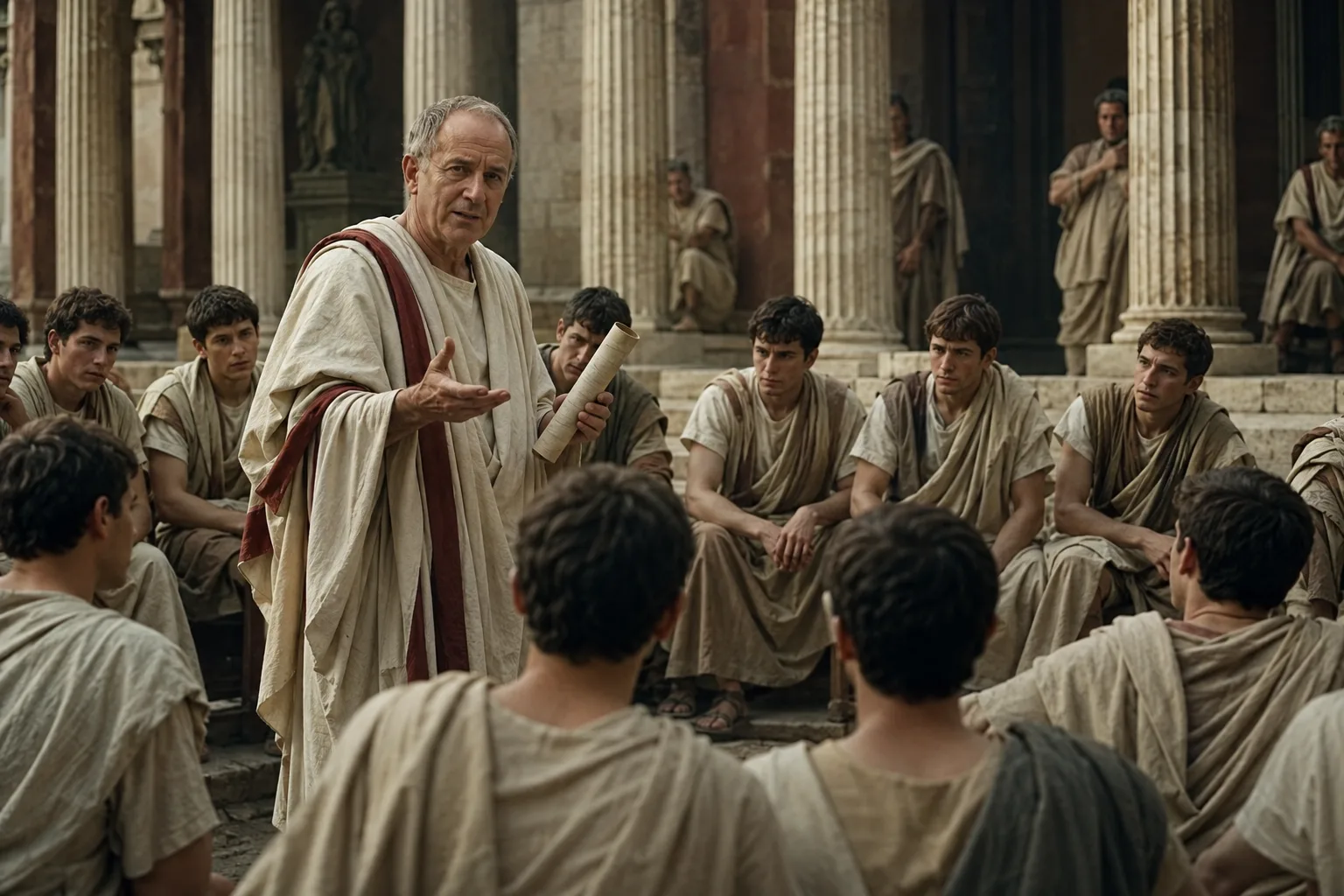
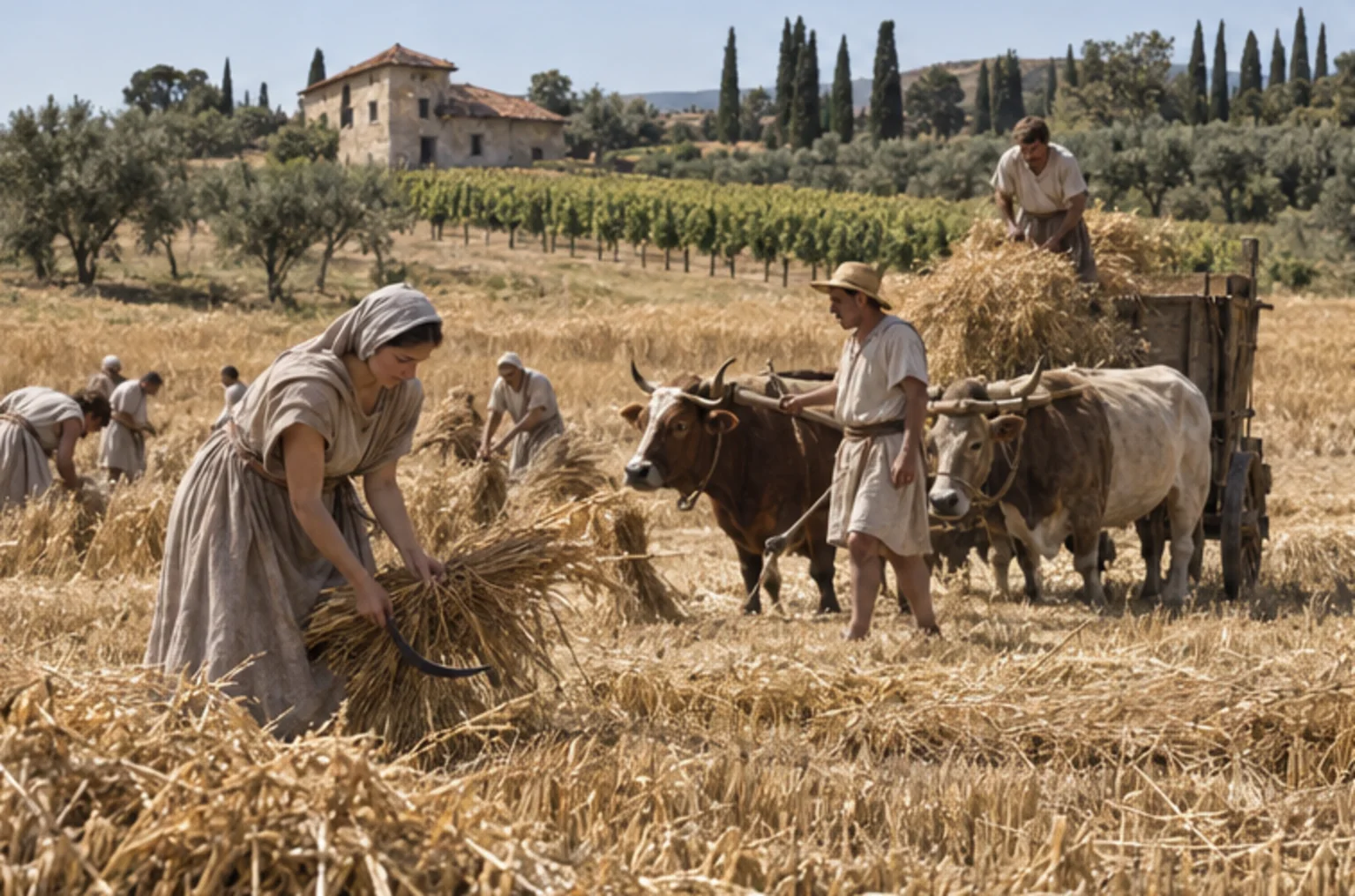
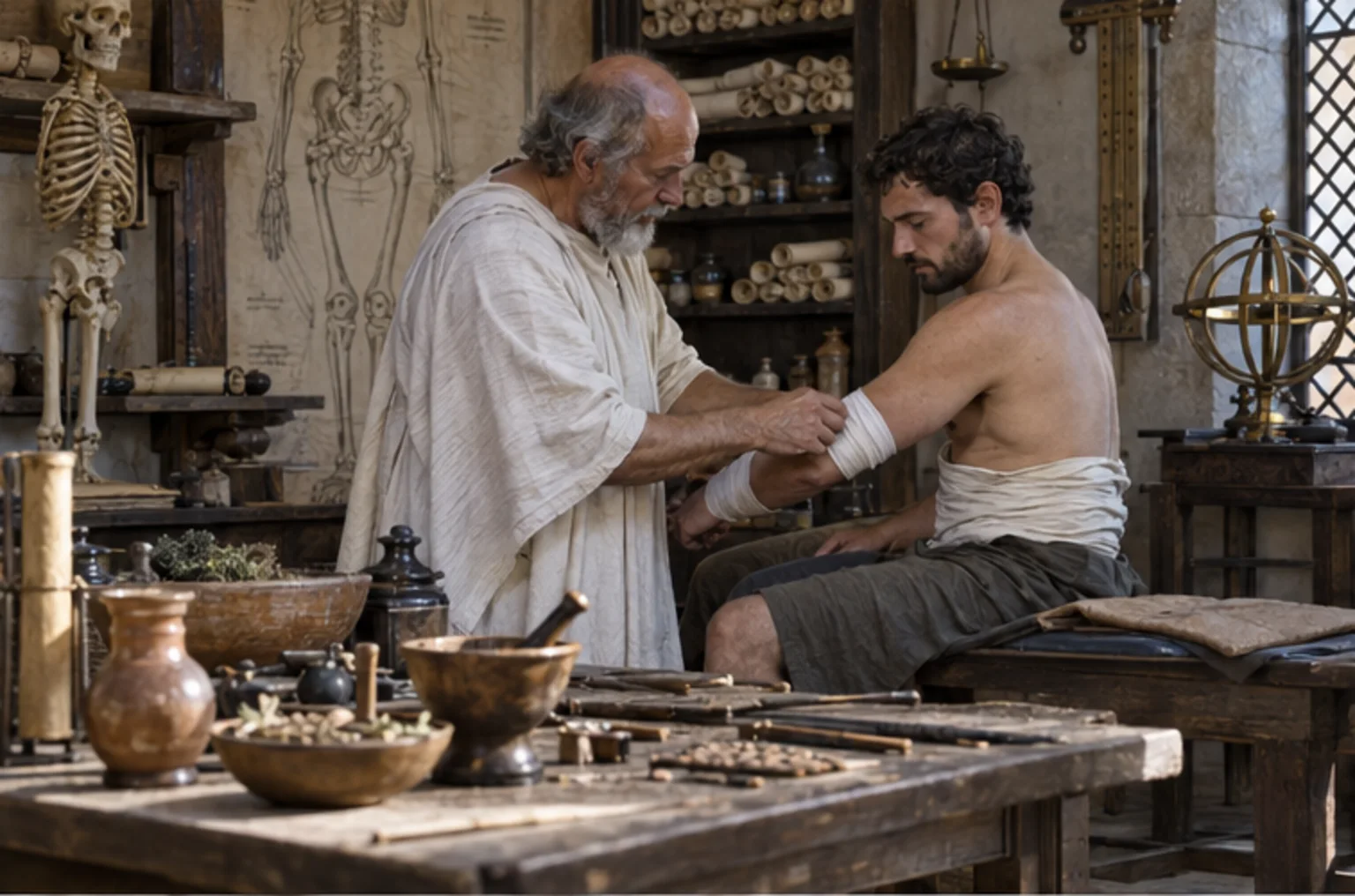
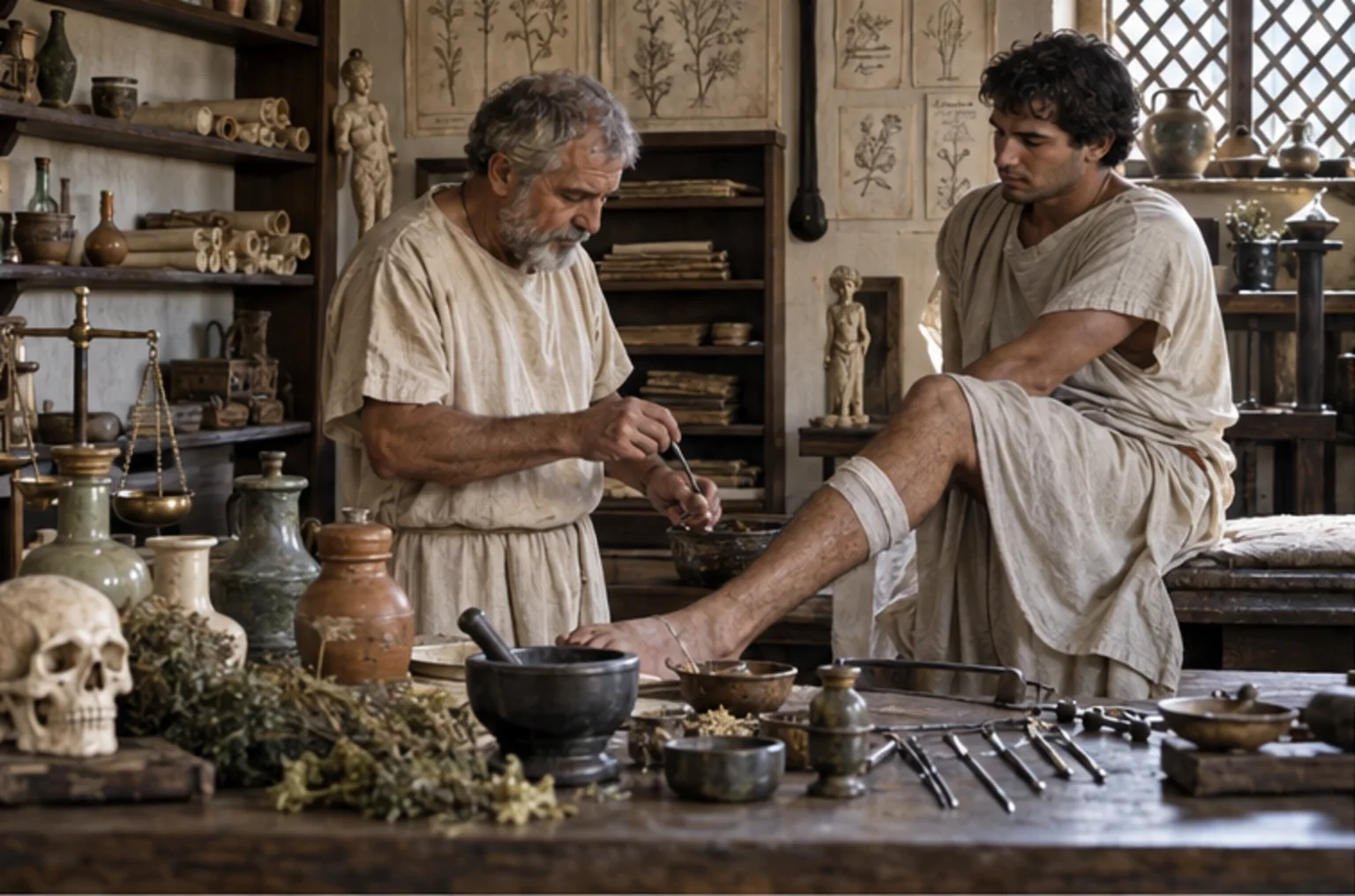
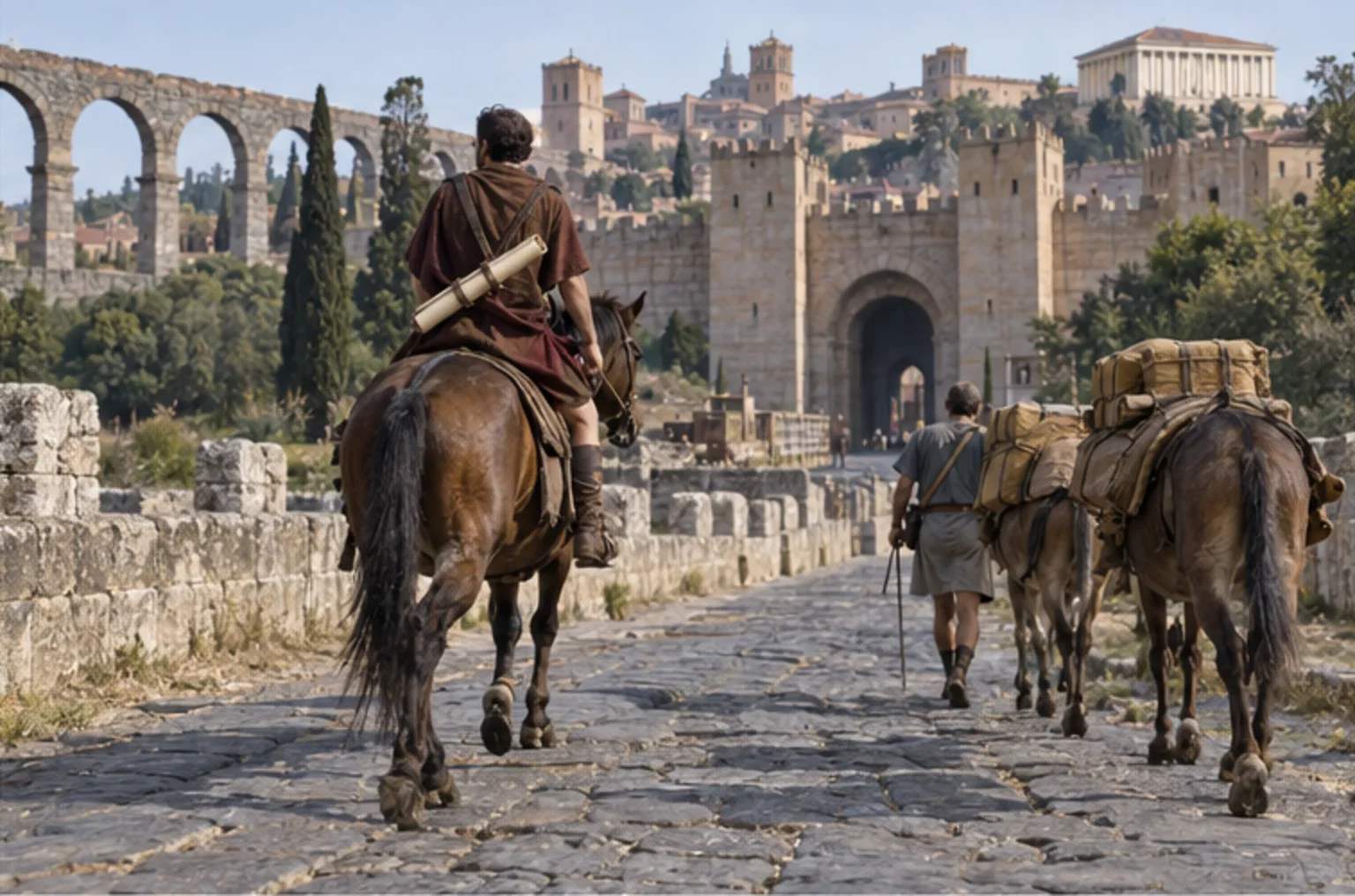
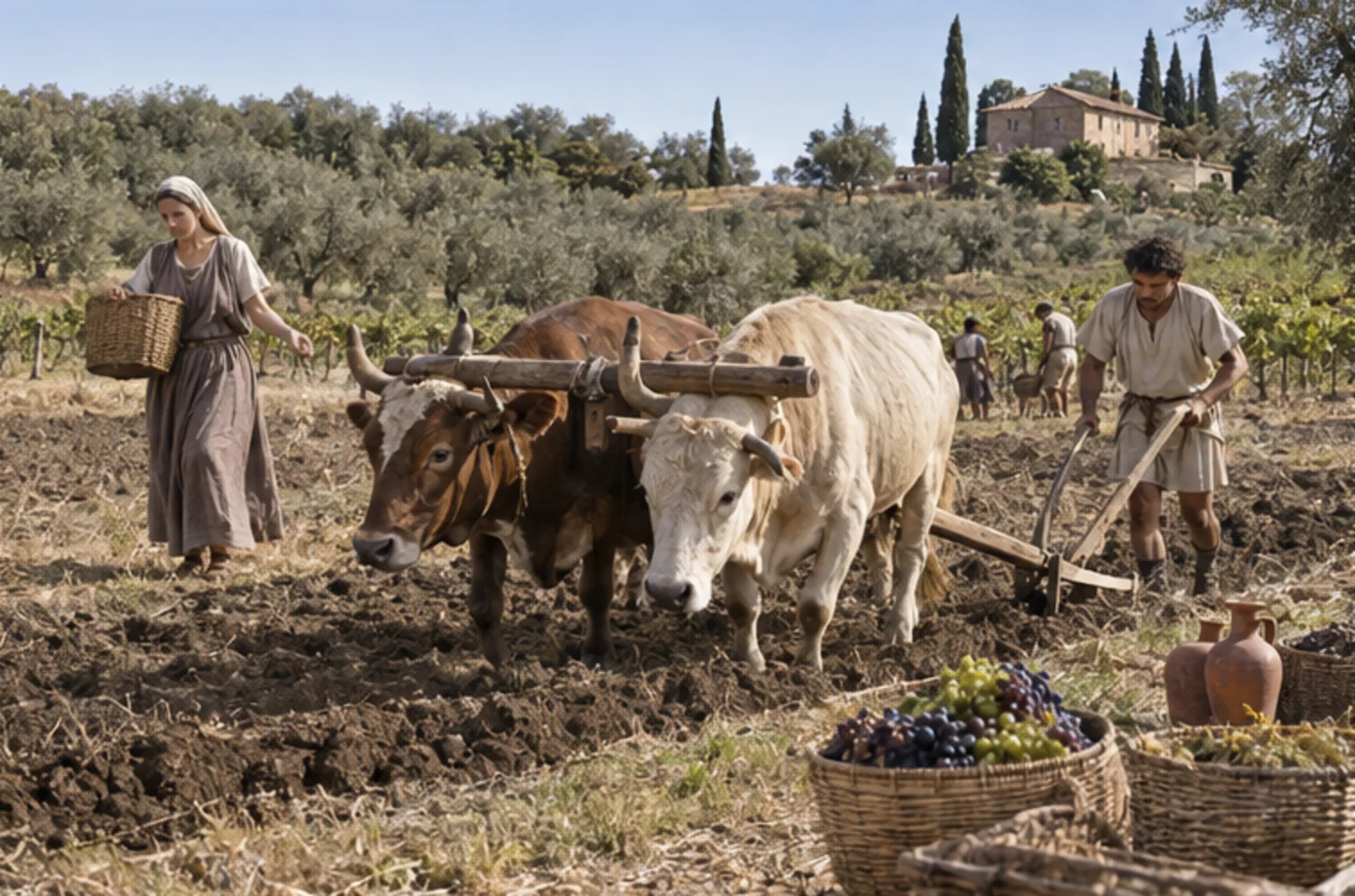
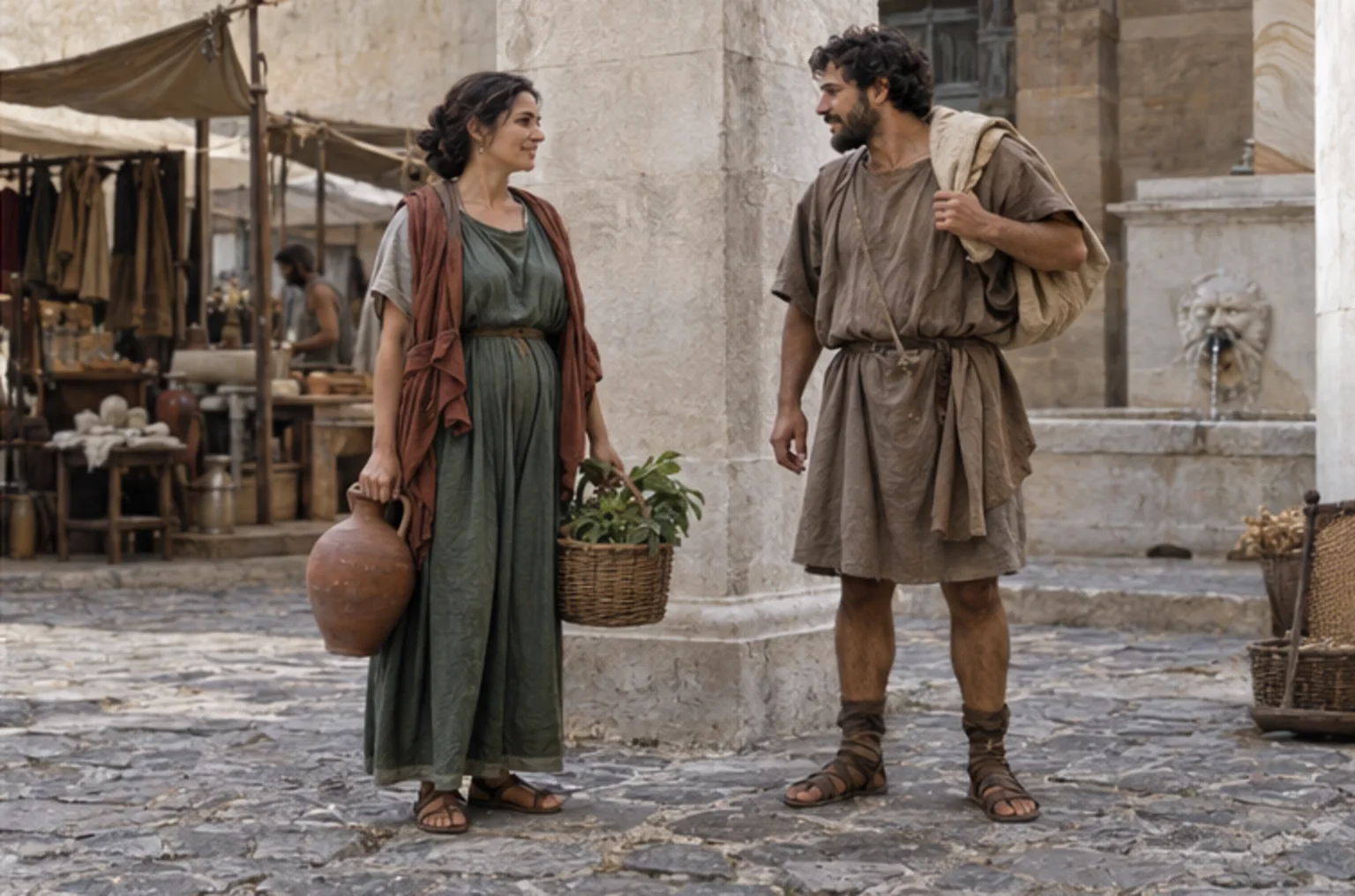
The corpus manifests do not yet establish the precise place and circumstances of composition. The images below document the author’s world or the text’s transmission. They do not claim to show the exact scene of writing.
These are modern reconstructions. They situate a documented place, practice, or transmission and are not period documents.
What the world looked like
Roman world, 1st century BCE to 3rd century CE
- State of technology
- Paved roads, aqueducts, concrete, glassware, mills, and hypocaust heating equip some cities, but energy comes mainly from bodies, animals, water, and wood.
- Science and knowledge
- Astronomy, geometry, natural history, and engineering compile Greek, Egyptian, and Roman knowledge. Measurement exists without a modern laboratory.
- Medicine and care
- Physicians, midwives, baths, plants, and rudimentary surgery can help; reliable anaesthesia, antisepsis, and antibiotics do not exist.
- Transport
- On foot, horseback, cart, or ship, road and sea networks connect the Empire. Travel remains slow, costly, and risky.
- Agriculture and food
- Grain, vines, olives, pulses, and livestock supply cities and armies; estates, slavery, and tenancy organize part of the labour.
- Communication
- Imperial couriers, letters on papyrus or tablets, inscriptions, and oral proclamations spread information. Everything is copied by hand.
- Clothing and fashion
- Tunics and cloaks are common to both sexes; the stola, toga, footwear, colours, and jewellery mark citizenship, office, wealth, and origin.
Editions, translations, and provenance
The following carriers represent the text. They do not create new passage identities.
- Latinoriginal
- English AI-generated translation, non-officialCodex gpt-5.6-sol · Non-official working translation · 2026-09-11
- French AI-generated translation, non-officialCodex gpt-5.6-sol · Non-official working translation · 2026-09-11
Source manifests: cicero.de_legibus
Reader
Read page by page
On the LawsCicero