
Work
Sutta Nipāta: Early Collection of Discourses in Verse
The Sutta Nipāta preserves poems, dialogues, and teachings on simplicity, conflict, desire, and the path of the sage. Its compressed language stages ascetics, brahmins, and seekers confronting the difficulty of living without attachment to positions.
Before reading
What you will learn
Interpret the collection’s ascetic imagery, follow its criticism of conflict and fixed views, and distinguish nonattachment, indifference, and discipline.
Short summary
The Sutta Nipāta preserves poems, dialogues, and teachings on simplicity, conflict, desire, and the path of the sage. Its compressed language stages ascetics, brahmins, and seekers confronting the difficulty of living without attachment to positions.
Long summary
The collection brings together different layers and forms, from compact stanzas to cycles of questions. Its texts criticize violence, rivalry, craving, and ritual pretension while describing the attention, solitude, and nonattachment of the wandering sage.
The poetry works through image and paradox rather than exhaustive classification. Some passages emphasize release from dogmatic views, but that release is not absence of discipline. It entails a demanding way of speaking, acting, and refraining from appropriating experience.
Inside this work
The table of contents follows the divisions actually carried by the corpus.
Work › Canonical text
- Text 1
- Text 2
- Text 3
- Text 4
- Text 5
- Text 6
- Text 7
- Text 8
- Text 9
- Text 10
- Text 11
- Text 12
- Text 1
- Text 2
- Text 3
- Text 4
- Text 5
- Text 6
- Text 7
- Text 8
- Text 9
- Text 10
- Text 11
- Text 12
- Text 13
- Text 14
- Text 1
- Text 2
- Text 3
- Text 4
- Text 5
- Text 6
- Text 7
- Text 8
- Text 9
- Text 10
- Text 11
- Text 12
- Text 1
- Text 2
- Text 3
- Text 4
- Text 5
- Text 6
- Text 7
- Text 8
- Text 9
- Text 10
- Text 11
- Text 12
- Text 13
- Text 14
- Text 15
- Text 16
- Text 1
- Text 2
- Text 3
- Text 4
- Text 5
- Text 6
- Text 7
- Text 8
- Text 9
- Text 10
- Text 11
- Text 12
- Text 13
- Text 14
- Text 15
- Text 16
- Text 17
- Text 18
- Text 19
Concepts covered
Historical context
The world around the text
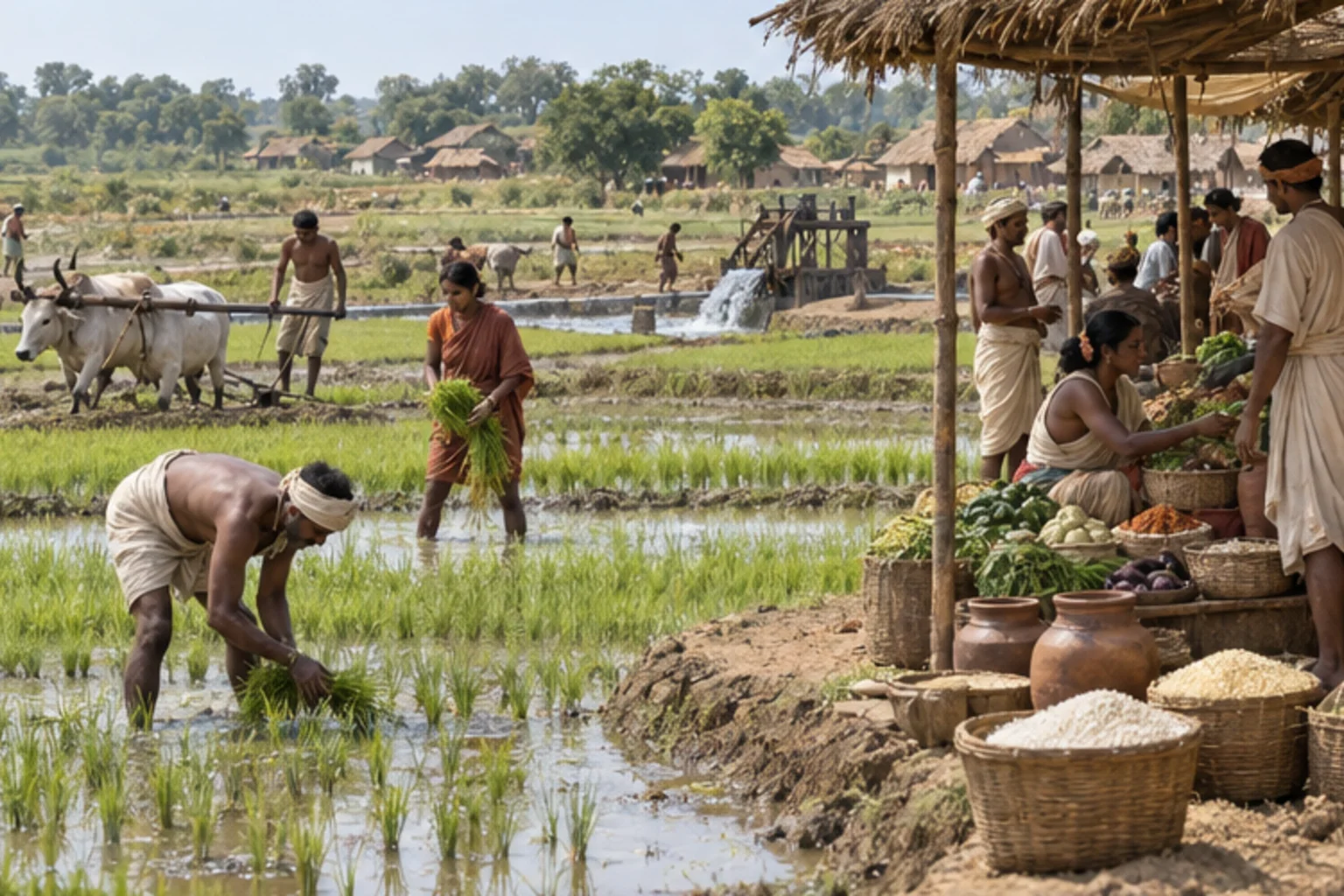
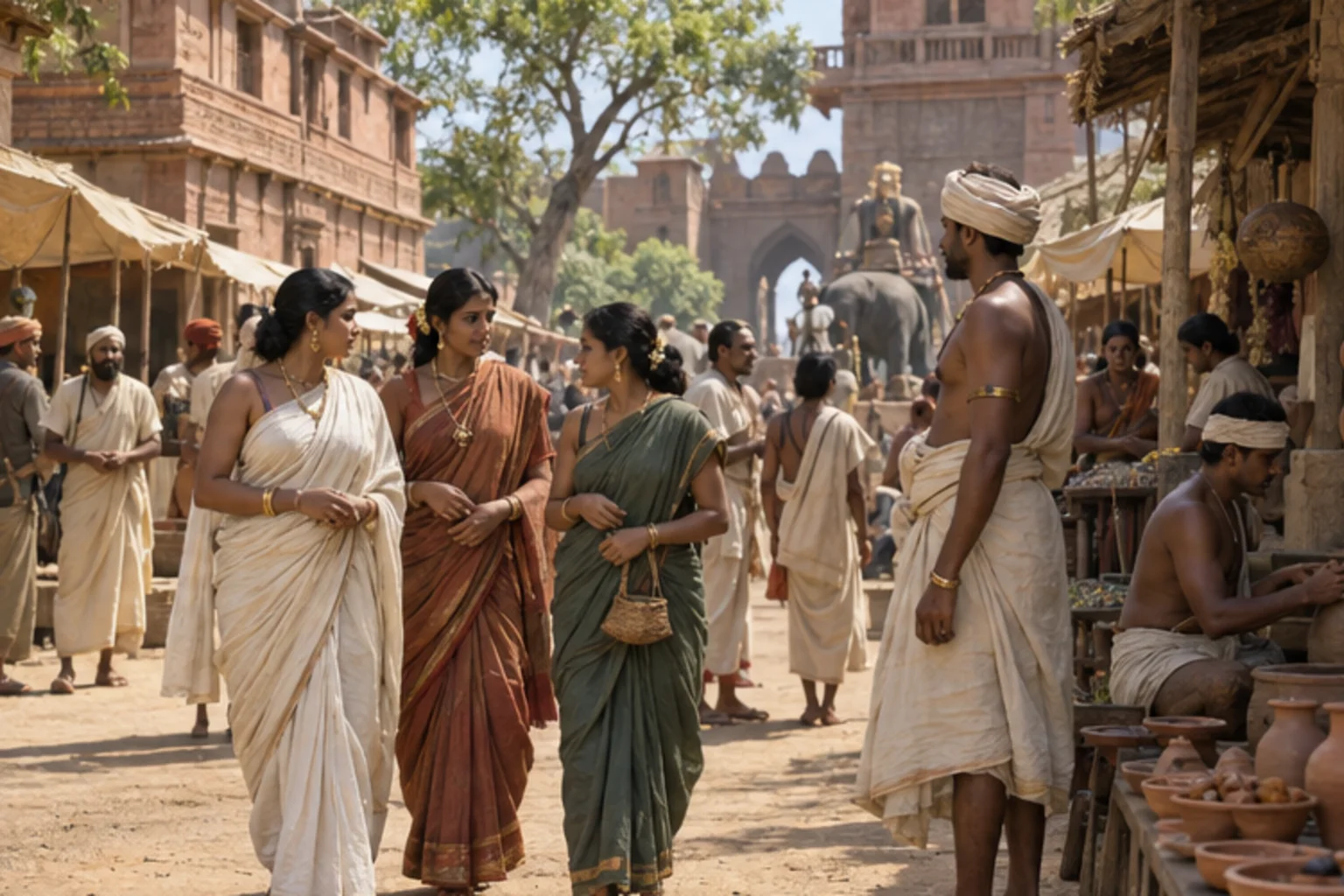
The corpus manifests do not yet establish the precise place and circumstances of composition. The images below document the author’s world or the text’s transmission. They do not claim to show the exact scene of writing.
These are modern reconstructions. They situate a documented place, practice, or transmission and are not period documents.
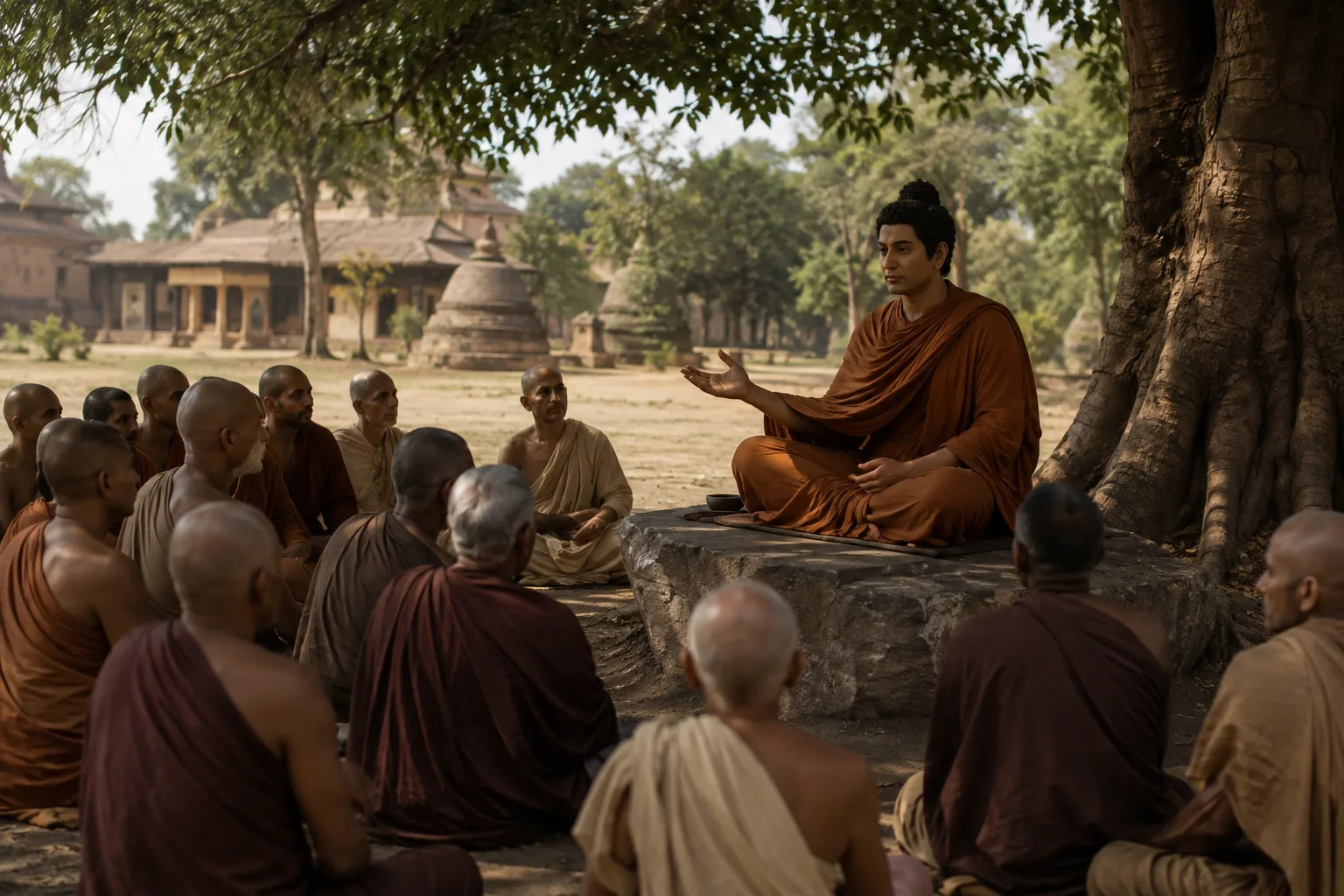
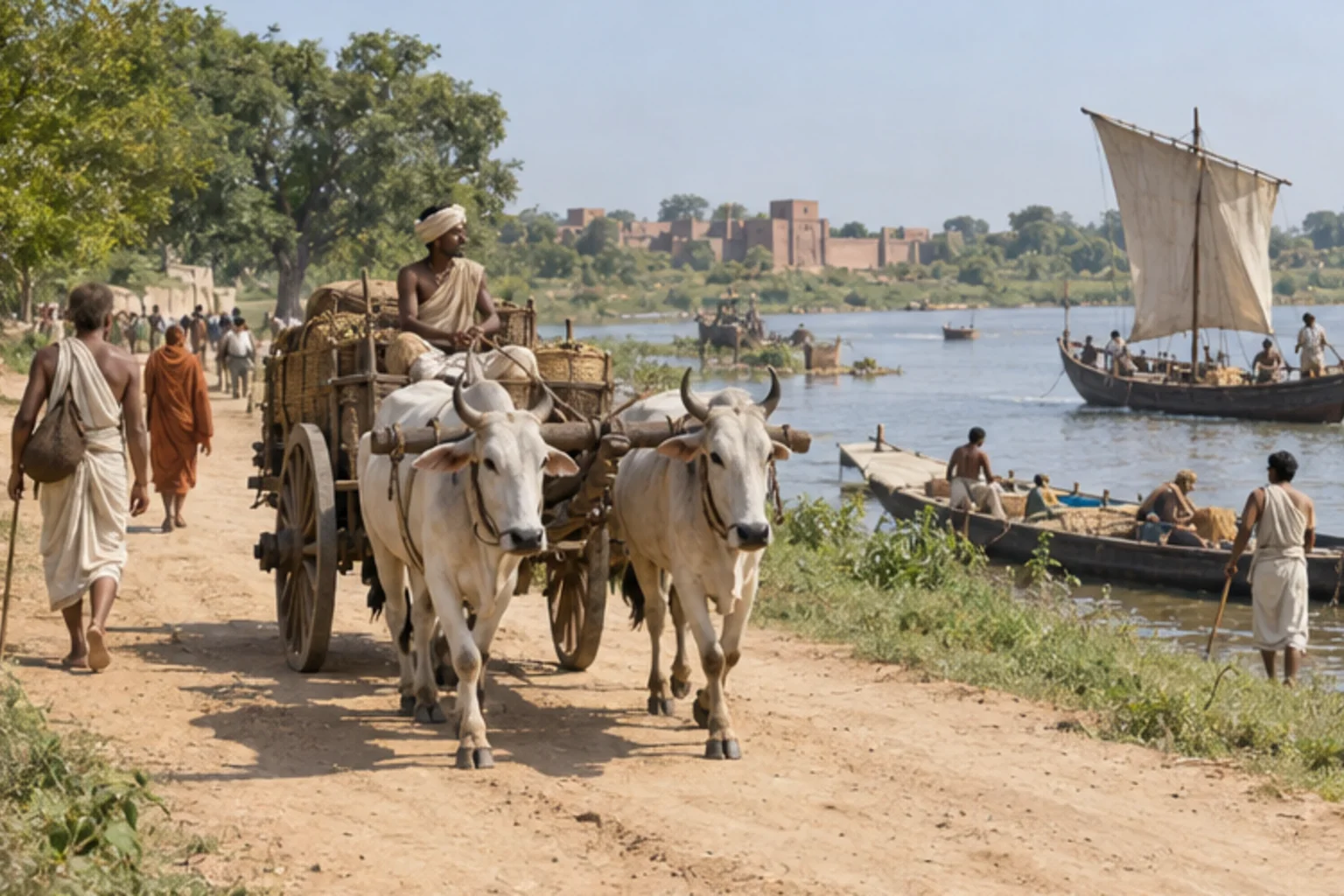
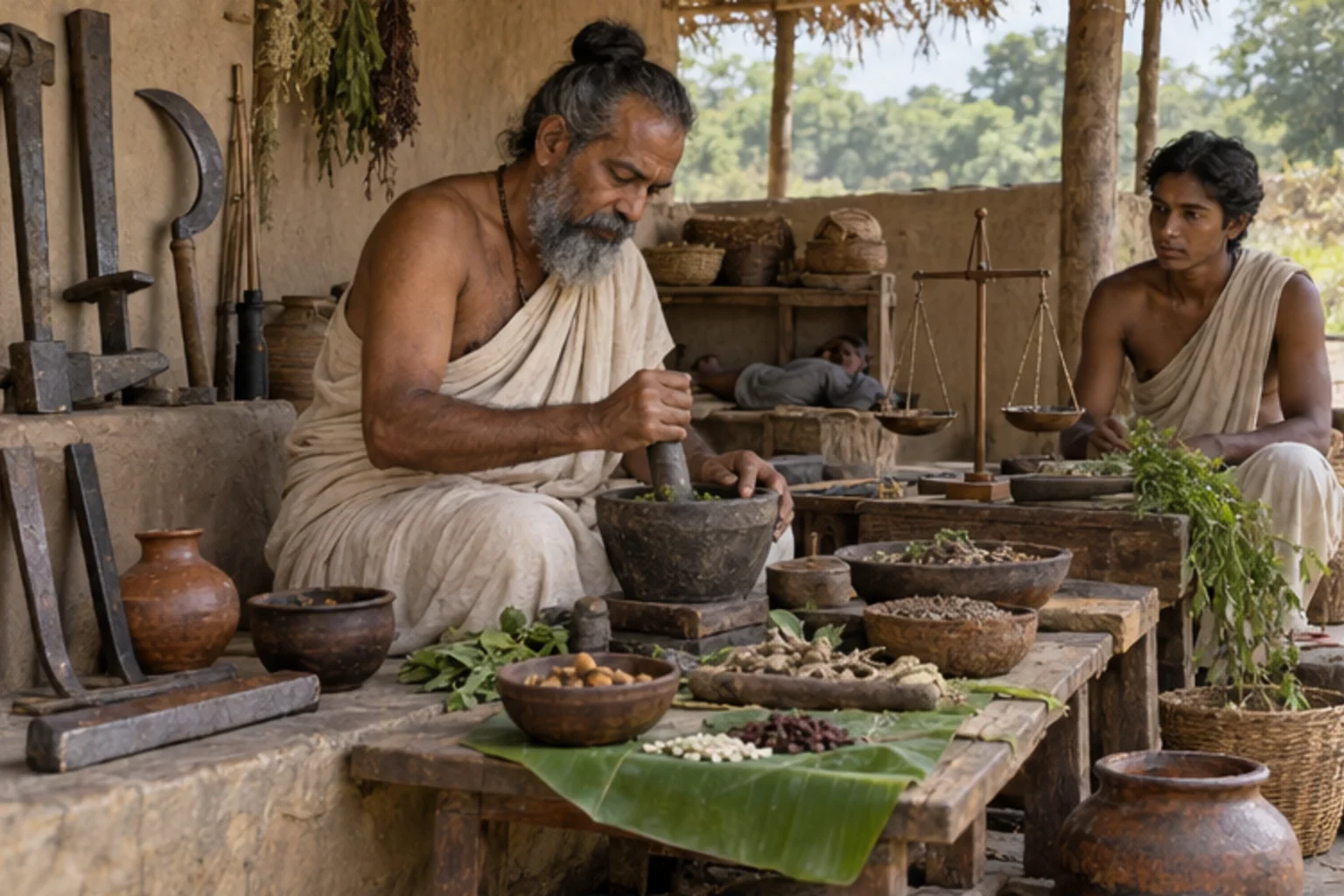
What the world looked like
Northern India, 5th-4th centuries BCE
- State of technology
- Iron tools, pottery, carpentry, weaving, and water works support towns, villages, and trade routes.
- Science and knowledge
- Calendars, calculation, observation of the sky, grammar, and debates on nature circulate in scholarly and religious settings that remain chiefly oral.
- Medicine and care
- Plants, diets, massage, cautery, and surgical procedures form traditions of care without germ theory.
- Transport
- Walking, chariots, ox carts, horses, and river craft connect kingdoms, markets, and itinerant communities.
- Agriculture and food
- Rice, millet, barley, pulses, livestock, and irrigation feed dense regions through largely manual labour.
- Communication
- Oral teaching, recitation, messengers, and early regional uses of writing carry doctrines and decisions.
- Clothing and fashion
- Women and men wear draped cotton or wool cloth, belts, shawls, and ornaments whose form varies by region and status.
Editions, translations, and provenance
The following carriers represent the text. They do not create new passage identities.
- Englishpublished_canonical_carrier
- Palipublished_canonical_carrier
- French AI-generated translation, non-officialCodex gpt-5.6-sol · Non-official working translation · 2026-09-11
Source manifests: buddha.sutta_nipata
Reader
Read page by page
Sutta Nipāta: Early Collection of Discourses in VerseSiddhartha Gautama / Buddha