Traceable Library

Explore the corpus of thinkers on prokopton42.com

We do not always look for a work, a text, or a passage in the same way. Browse by work as you would in a traditional library, travel through time, follow a semantic concept, or go straight to a precise excerpt. This Library exists to support practice and deeper study by bringing old texts into contact with daily experience and present questions.

Works
305
Authors
94
Passages
89,767
See more statistics
Corpus works
259
Private works
46
Private records
56
Private excerpts
20,006
Text representations
223,819
Editions and translations
849
Languages
17
Works in French and English
259
Multilingual works
259
Tracked concepts
9
Estimated sentences
1,456,557
Words
27,541,029

A representation is one language version of a canonical passage. Private excerpts come from source files. Sentence count is estimated from punctuation.

By work18
Socrates

Works

Books, collections and works from the Private collection share this shelf. Each card keeps its editions and sources.

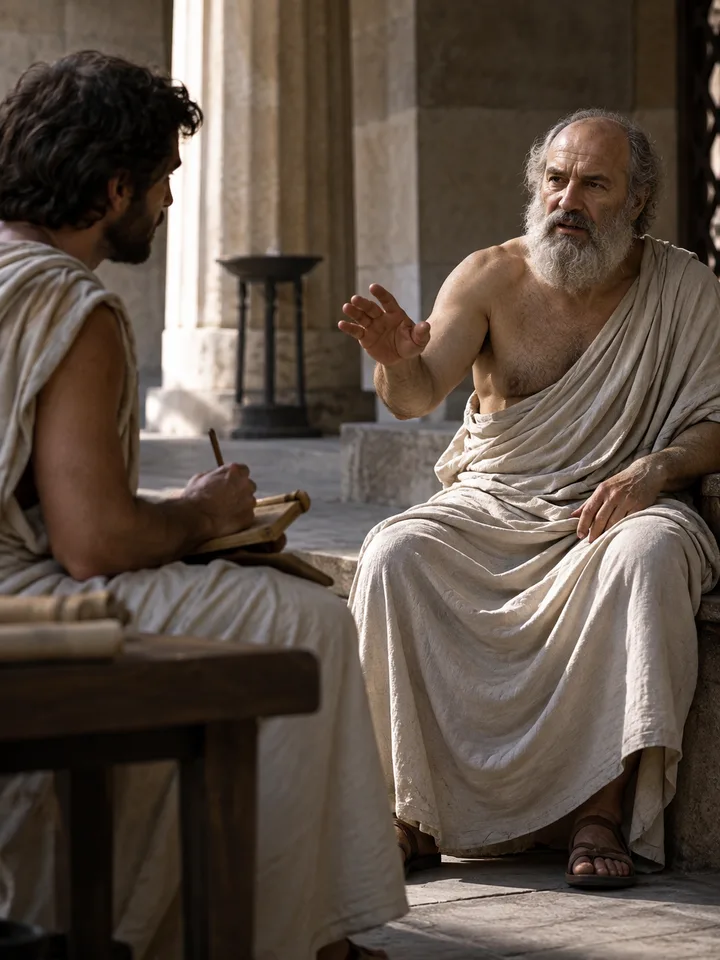
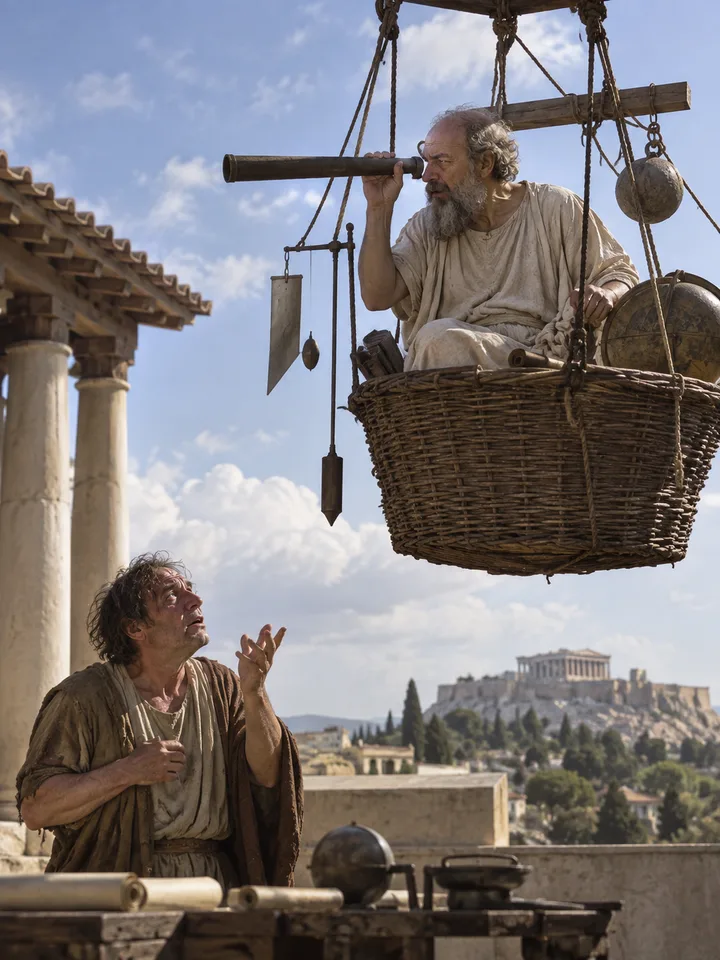
Photorealistic editorial illustration of Socrates in Aristophanes’ Clouds in the Prokopton42.com Library Socrates in Aristophanes’ CloudsAristophanes

Work

Socrates in Aristophanes’ Clouds

Aristophanes turns Socrates into the comic director of a Thinkery where natural science and deceptive argument promise escape from debts. This contemporary caricature witnesses the philosopher’s public image, not a neutral report of his teaching.

What you will learn
Composition
first performed in 423 BCE; later revision
Editions / translations
Dates to be documented
Languages
Ancient Greek · English · French
Extent
123 passages · 14,262 words
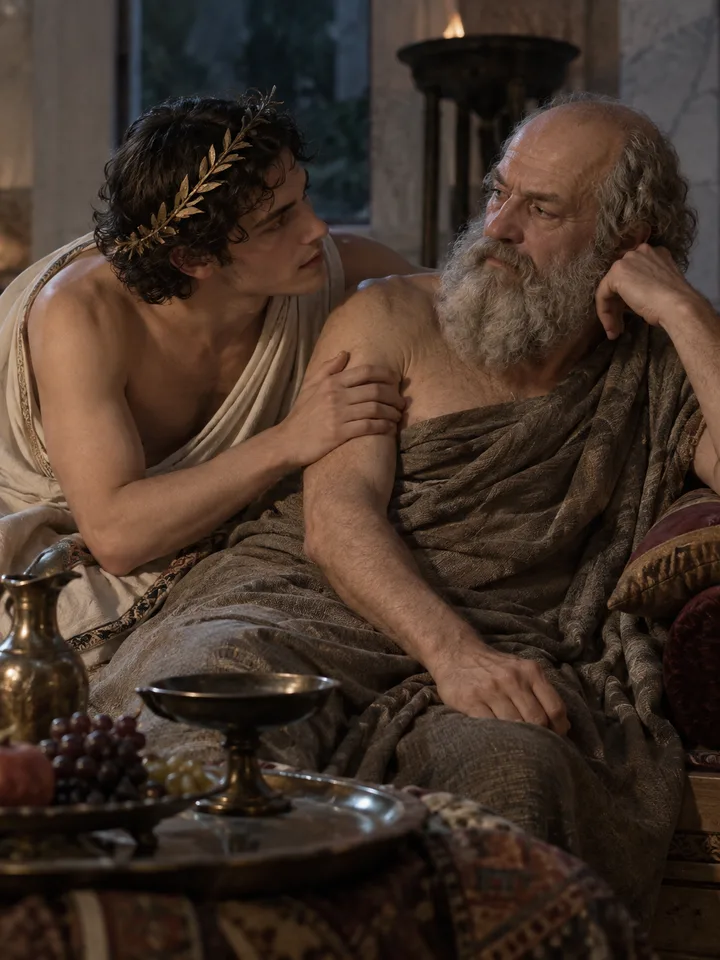
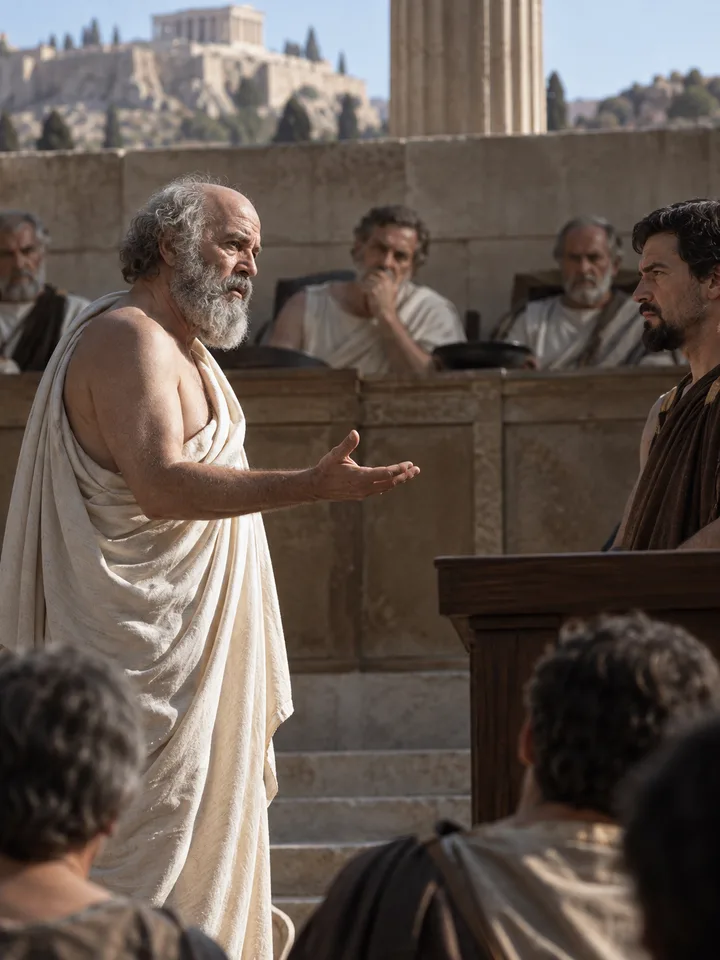
Photorealistic editorial illustration of Socrates in Plato’s Apology in the Prokopton42.com Library Socrates in Plato’s ApologyPlato

Work

Socrates in Plato’s Apology

Plato’s witness stages Socrates defending a life of examination against charges of impiety and corruption. His oracle-related mission, questioning of Meletus, and refusal to flatter construct a philosophical portrait under judicial pressure.

What you will learn
Composition
c. 399-390 BCE
Editions / translations
Dates to be documented
Languages
Ancient Greek · English · French
Extent
26 passages · 11,771 words
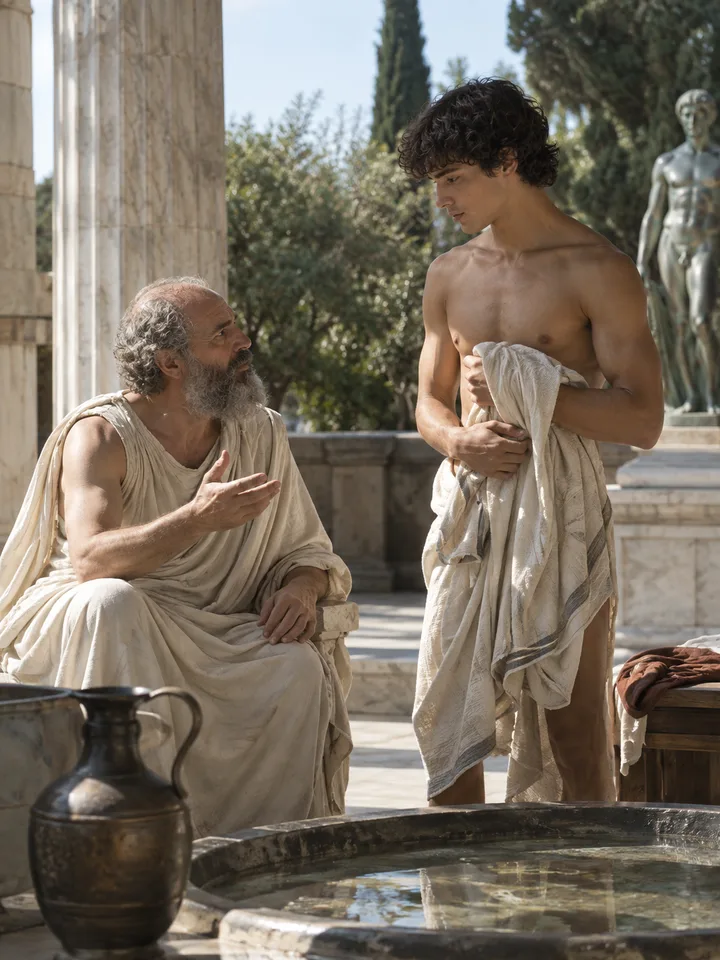
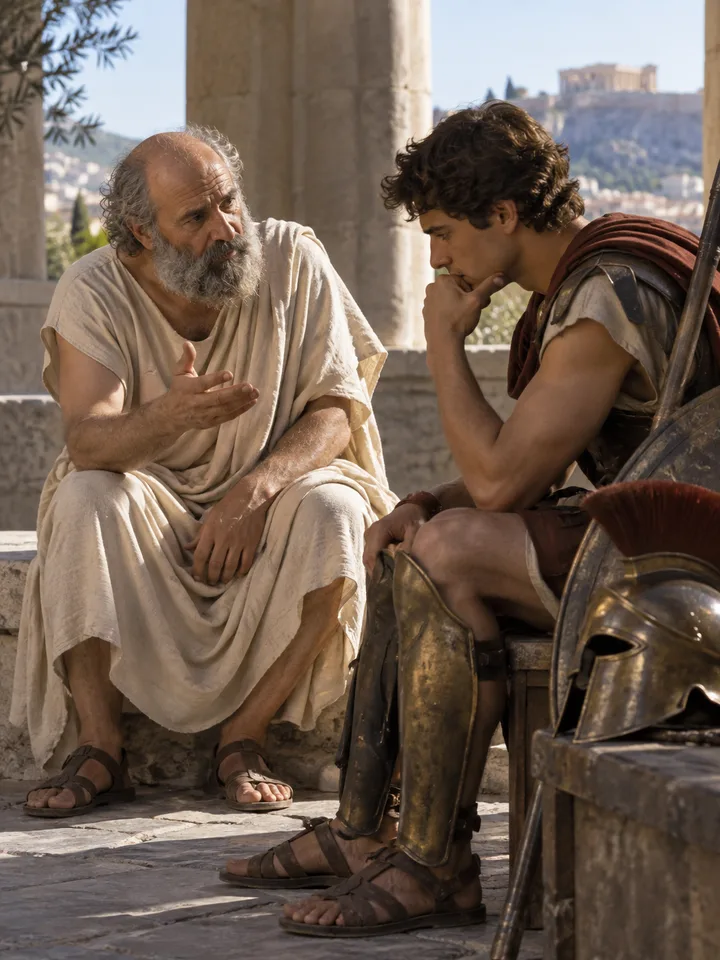
Photorealistic editorial illustration of Socrates in Plato’s Charmides in the Prokopton42.com Library Socrates in Plato’s CharmidesPlato

Work

Socrates in Plato’s Charmides

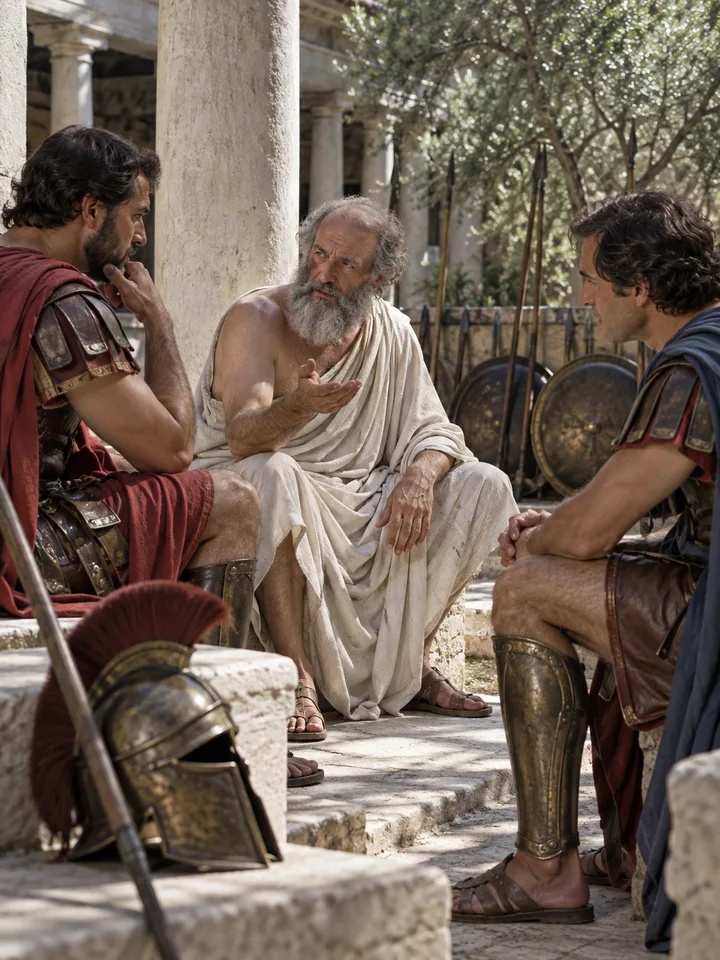
Plato shows Socrates returning from campaign, attentive to the beautiful Charmides yet redirecting the encounter toward temperance and care of the soul. His questioning leads Charmides and then Critias from confident definitions to acknowledged difficulty.

What you will learn
Composition
c. 399-380 BCE
Editions / translations
Dates to be documented
Languages
Ancient Greek · English · French
Extent
24 passages · 11,134 words
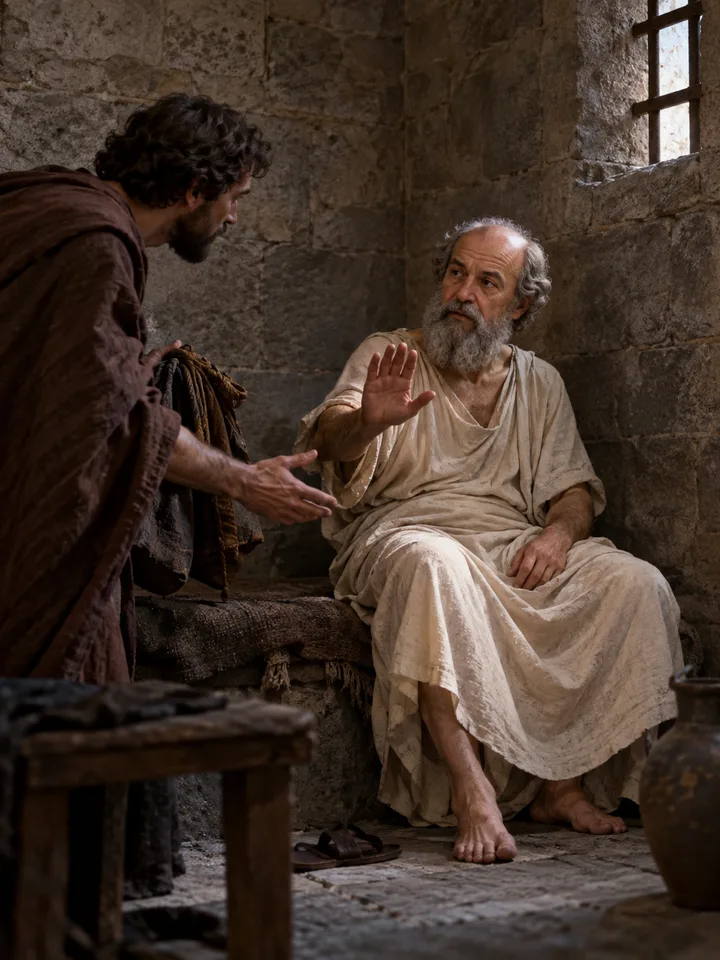
Photorealistic editorial illustration of Socrates in Plato’s Crito in the Prokopton42.com Library Socrates in Plato’s CritoPlato

Work

Socrates in Plato’s Crito

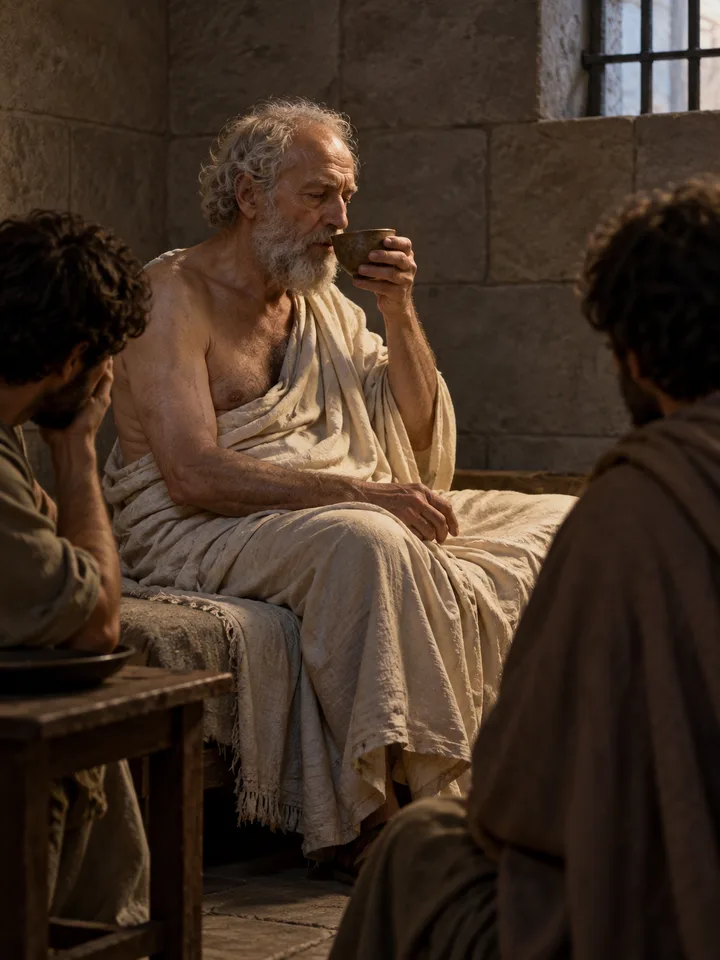
In prison, Plato’s Socrates refuses Crito’s escape plan. He places justice above survival and makes the Laws of Athens speak to test a citizen’s commitments toward a city capable of condemning him unjustly.

What you will learn
Composition
c. 399-390 BCE
Editions / translations
Dates to be documented
Languages
Ancient Greek · English · French
Extent
12 passages · 7,893 words
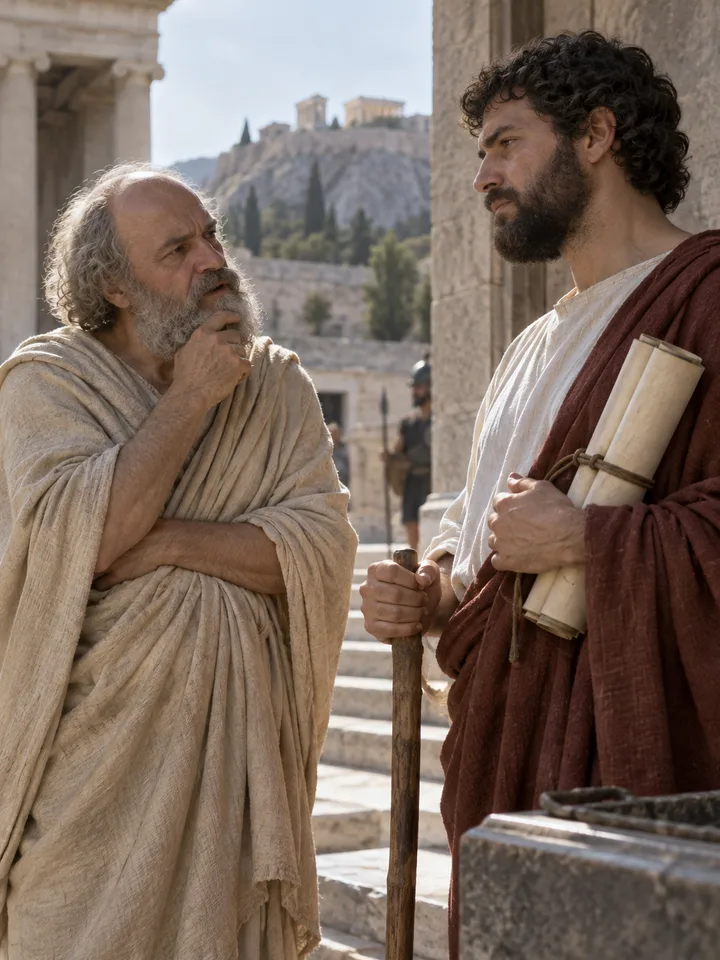
Photorealistic editorial illustration of Socrates in Plato’s Euthyphro in the Prokopton42.com Library Socrates in Plato’s EuthyphroPlato

Work

Socrates in Plato’s Euthyphro

On the eve of trial, Socrates questions a man certain he understands holiness. Plato’s inquiry shows the questioner separating example, definition, and cause until reaching the dilemma between divine approval and holy value.

What you will learn
Composition
c. 399-390 BCE
Editions / translations
Dates to be documented
Languages
Ancient Greek · English · French
Extent
15 passages · 6,994 words
Photorealistic editorial illustration of Socrates in Plato’s Gorgias in the Prokopton42.com Library Socrates in Plato’s GorgiasPlato

Work

Socrates in Plato’s Gorgias

Facing three defenders of rhetoric and power, Plato’s Socrates argues that speech without knowledge of justice is flattery. He prefers suffering injustice to deforming his soul by committing it.

What you will learn
Composition
c. 390-380 BCE
Editions / translations
Dates to be documented
Languages
Ancient Greek · English · French
Extent
81 passages · 42,811 words
Photorealistic editorial illustration of Socrates in Plato’s Laches in the Prokopton42.com Library Socrates in Plato’s LachesPlato

Work

Socrates in Plato’s Laches

Plato places Socrates among fathers and generals judging military training. By asking what courage is before advising children, he turns professional standing and combat experience into objects of examination.

What you will learn
Composition
c. 399-380 BCE
Editions / translations
Dates to be documented
Languages
Ancient Greek · English · French
Extent
24 passages · 11,014 words
Photorealistic editorial illustration of Socrates in Plato’s Meno in the Prokopton42.com Library Socrates in Plato’s MenoPlato

Work

Socrates in Plato’s Meno

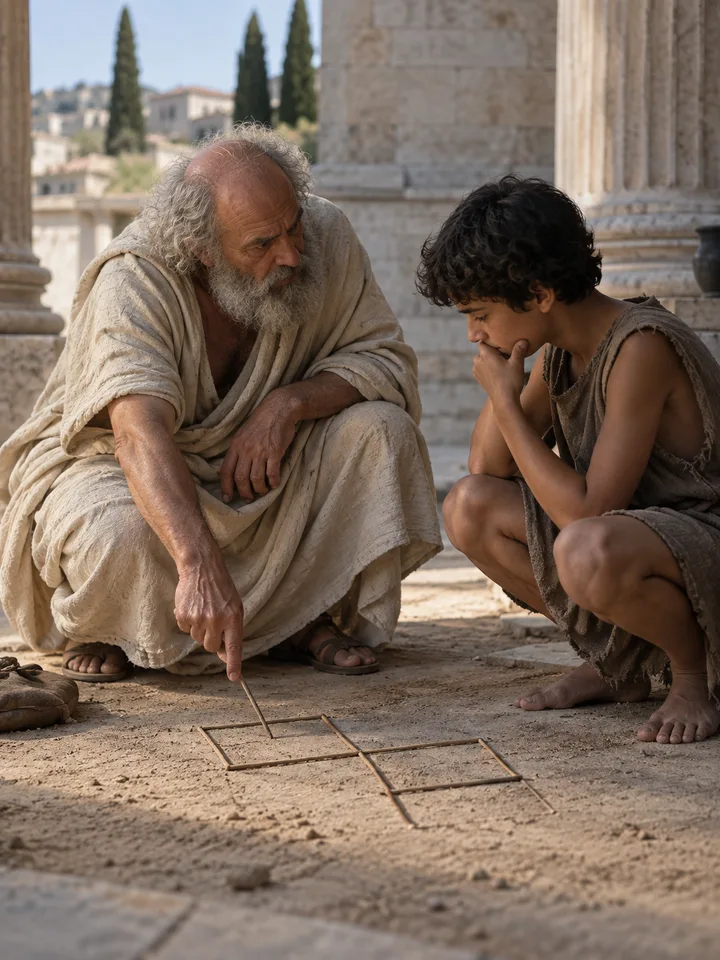
The Meno presents Socrates refusing to say whether virtue is teachable before it is defined. His midwifery, staged with an enslaved boy, answers the paradox of inquiry without turning questioning into simple transmission of doctrine.

What you will learn
Composition
c. 390-380 BCE
Editions / translations
Dates to be documented
Languages
Ancient Greek · English · French
Extent
31 passages · 13,779 words
Photorealistic editorial illustration of Socrates in Plato’s Phaedo in the Prokopton42.com Library Socrates in Plato’s PhaedoPlato

Work

Socrates in Plato’s Phaedo

Phaedo’s report gives Socrates his final arguments, corrections, and gesture before the hemlock. Plato joins calm before death, examination of immortality, and care for friends in a composed memorial portrait.

What you will learn
Composition
c. 385-370 BCE
Editions / translations
Dates to be documented
Languages
Ancient Greek · English · French
Extent
62 passages · 30,892 words
Photorealistic editorial illustration of Socrates in Plato’s Phaedrus in the Prokopton42.com Library Socrates in Plato’s PhaedrusPlato

Work

Socrates in Plato’s Phaedrus

Outside Athens’ walls, Plato shows Socrates improvising and then recanting a speech about love. The character becomes inspired speaker, analyst of soul, and critic of writing unable to answer questions.

What you will learn
Composition
c. 370-360 BCE
Editions / translations
Dates to be documented
Languages
Ancient Greek · English · French
Extent
53 passages · 23,263 words
Photorealistic editorial illustration of Socrates in Plato’s Protagoras in the Prokopton42.com Library Socrates in Plato’s ProtagorasPlato

Work

Socrates in Plato’s Protagoras

Plato confronts Socrates’ short questioning with the extended speeches of the sophist Protagoras. The Socratic character seeks unity among virtues, questions courage and pleasure, and destabilizes his opening claim that virtue is not teachable.

What you will learn
Composition
c. 399-380 BCE
Editions / translations
Dates to be documented
Languages
Ancient Greek · English · French
Extent
54 passages · 23,719 words
Photorealistic editorial illustration of Socrates in Plato’s Republic in the Prokopton42.com Library Socrates in Plato’s RepublicPlato

Work

Socrates in Plato’s Republic

In the Republic, Plato gives Socrates construction of a city in speech to answer the challenge that injustice pays. The questioner of the opening exchanges also becomes narrator of highly developed educational, political, and metaphysical models.

What you will learn
Composition
c. 390-370 BCE
Editions / translations
Dates to be documented
Languages
Ancient Greek · English · French
Extent
278 passages · 124,617 words
Photorealistic editorial illustration of Socrates in Plato’s Symposium in the Prokopton42.com Library Socrates in Plato’s SymposiumPlato

Work

Socrates in Plato’s Symposium

The Symposium presents Socrates as a strange object of desire and transmitter of Diotima’s teaching on Eros. His endurance, irony, and inner beauty finally appear through Alcibiades’ passionate praise.

What you will learn
Composition
c. 385-370 BCE
Editions / translations
Dates to be documented
Languages
Ancient Greek · English · French
Extent
52 passages · 23,769 words
Photorealistic editorial illustration of Socrates in Plato’s Theaetetus in the Prokopton42.com Library Socrates in Plato’s TheaetetusPlato

Work

Socrates in Plato’s Theaetetus

Plato makes Socrates a midwife to Theaetetus’ thoughts: he helps deliver and test definitions without claiming to transmit knowledge of his own. Perception, judgement, and account reveal the fertility of inquiry that nevertheless ends without an answer.

What you will learn
Composition
c. 369-360 BCE
Editions / translations
Dates to be documented
Languages
Ancient Greek · English · French
Extent
69 passages · 34,012 words
Photorealistic editorial illustration of Socrates in Xenophon’s Apology in the Prokopton42.com Library Socrates in Xenophon’s ApologyXenophon

Work

Socrates in Xenophon’s Apology

Xenophon explains Socrates’ proud courtroom manner through his conviction that timely death is preferable to decline in old age. The divine sign and deliberate choice not to prepare persuasive defence structure a portrait distinct from Plato’s.

What you will learn
Composition
c. 390-360 BCE
Editions / translations
Dates to be documented
Languages
Ancient Greek · English · French
Extent
34 passages · 2,999 words
Photorealistic editorial illustration of Socrates in Xenophon’s Memorabilia in the Prokopton42.com Library Socrates in Xenophon’s MemorabiliaXenophon

Work

Socrates in Xenophon’s Memorabilia

Xenophon defends Socrates against charges of impiety and corruption by gathering conversations, advice, and exemplary scenes. His Socrates teaches through questions but also through positive counsel on self-command, friendship, management, and civic service.

What you will learn
Composition
c. 385-355 BCE
Editions / translations
Dates to be documented
Languages
Ancient Greek · English · French
Extent
39 passages · 45,044 words
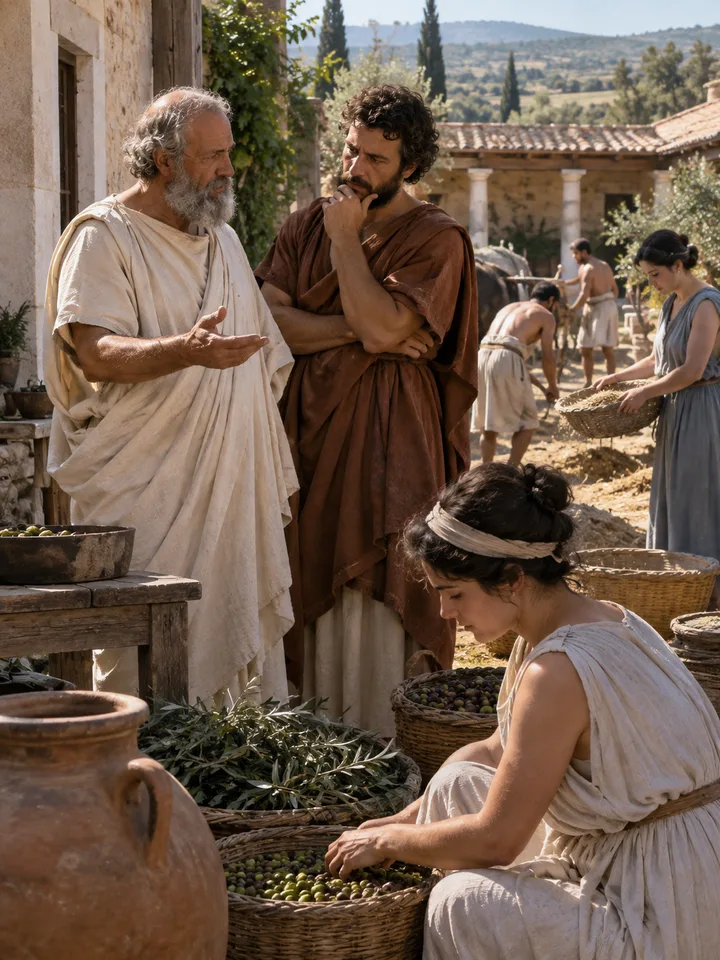
Photorealistic editorial illustration of Socrates in Xenophon’s Oeconomicus in the Prokopton42.com Library Socrates in Xenophon’s OeconomicusXenophon

Work

Socrates in Xenophon’s Oeconomicus

In the Oeconomicus, Socrates questions Critobulus about wealth, household management, and use of possessions, then reports the teaching of Ischomachus. The Socratic frame organizes inquiry into domestic command rather than economics in the modern sense.

What you will learn
Composition
c. 380-350 BCE
Editions / translations
Dates to be documented
Languages
Ancient Greek · English · French
Extent
21 passages · 22,477 words
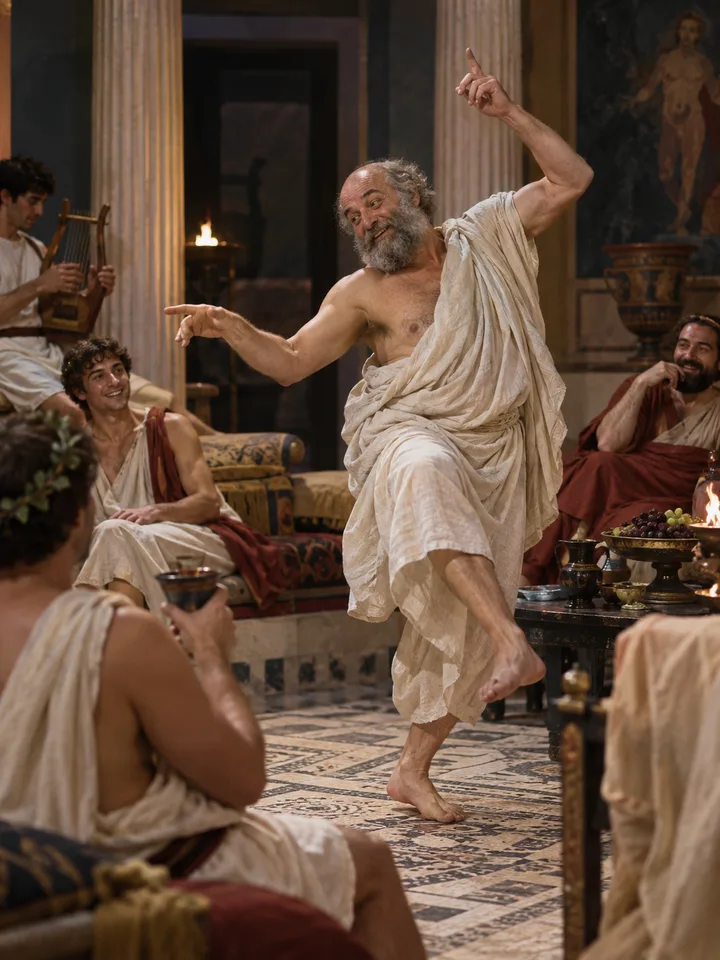
Photorealistic editorial illustration of Socrates in Xenophon’s Symposium in the Prokopton42.com Library Socrates in Xenophon’s SymposiumXenophon

Work

Socrates in Xenophon’s Symposium

At Callias’ banquet, Xenophon shows Socrates joking, dancing, discussing beauty and desire, then defending a love that forms character. Games, performances, and boasts give this portrait a more domestic tone than Plato’s Symposium.

What you will learn
Composition
c. 380-350 BCE
Editions / translations
Dates to be documented
Languages
Ancient Greek · English · French
Extent
9 passages · 14,033 words

Before reading

What you will learn

Open the full record