
Work
Principal Doctrines
The Principal Doctrines condense Epicurean ethics into propositions about gods, death, desire, justice, friendship, and security. Their sequence supplies a doctrinal aid to memory rather than continuous demonstration.
- Composition
- 3rd century BCE; compilation of sayings by Epicurus and associates
Sources and precision
The range describes formation of the collection. Individual units may have different dates.
Confidence D · disputed range
- Tradition
- Epicureanism
- Period
- Antiquity
- Languages
- English · Ancient Greek · French
- Extent
- 40 passages · 1,635 words
Before reading
What you will learn
Connect the doctrines with Epicurean therapy, distinguish natural from empty desires, and analyze the reciprocal and conventional account of justice.
Short summary
The Principal Doctrines condense Epicurean ethics into propositions about gods, death, desire, justice, friendship, and security. Their sequence supplies a doctrinal aid to memory rather than continuous demonstration.
Long summary
The opening doctrines disarm fundamental fears, then clarify limits of pleasure and pain. Others define justice as a useful agreement against harm and examine social conditions allowing life without disturbance.
A maxim removes intermediate steps so its conclusion remains available. Such efficiency requires comparison with letters and testimony: terms such as pleasure, natural, or just retain precision only within the system.
Inside this work
The table of contents follows the divisions actually carried by the corpus.
Work › Reference
- Fragment or passage 1
- Fragment or passage 2
- Fragment or passage 3
- Fragment or passage 4
- Fragment or passage 5
- Fragment or passage 6
- Fragment or passage 7
- Fragment or passage 8
- Fragment or passage 9
- Fragment or passage 10
- Fragment or passage 11
- Fragment or passage 12
- Fragment or passage 13
- Fragment or passage 14
- Fragment or passage 15
- Fragment or passage 16
- Fragment or passage 17
- Fragment or passage 18
- Fragment or passage 19
- Fragment or passage 20
- Fragment or passage 21
- Fragment or passage 22
- Fragment or passage 23
- Fragment or passage 24
- Fragment or passage 25
- Fragment or passage 26
- Fragment or passage 27
- Fragment or passage 28
- Fragment or passage 29
- Fragment or passage 30
- Fragment or passage 31
- Fragment or passage 32
- Fragment or passage 33
- Fragment or passage 34
- Fragment or passage 35
- Fragment or passage 36
- Fragment or passage 37
- Fragment or passage 38
- Fragment or passage 39
- Fragment or passage 40
Concepts covered
Historical context
The world around the text
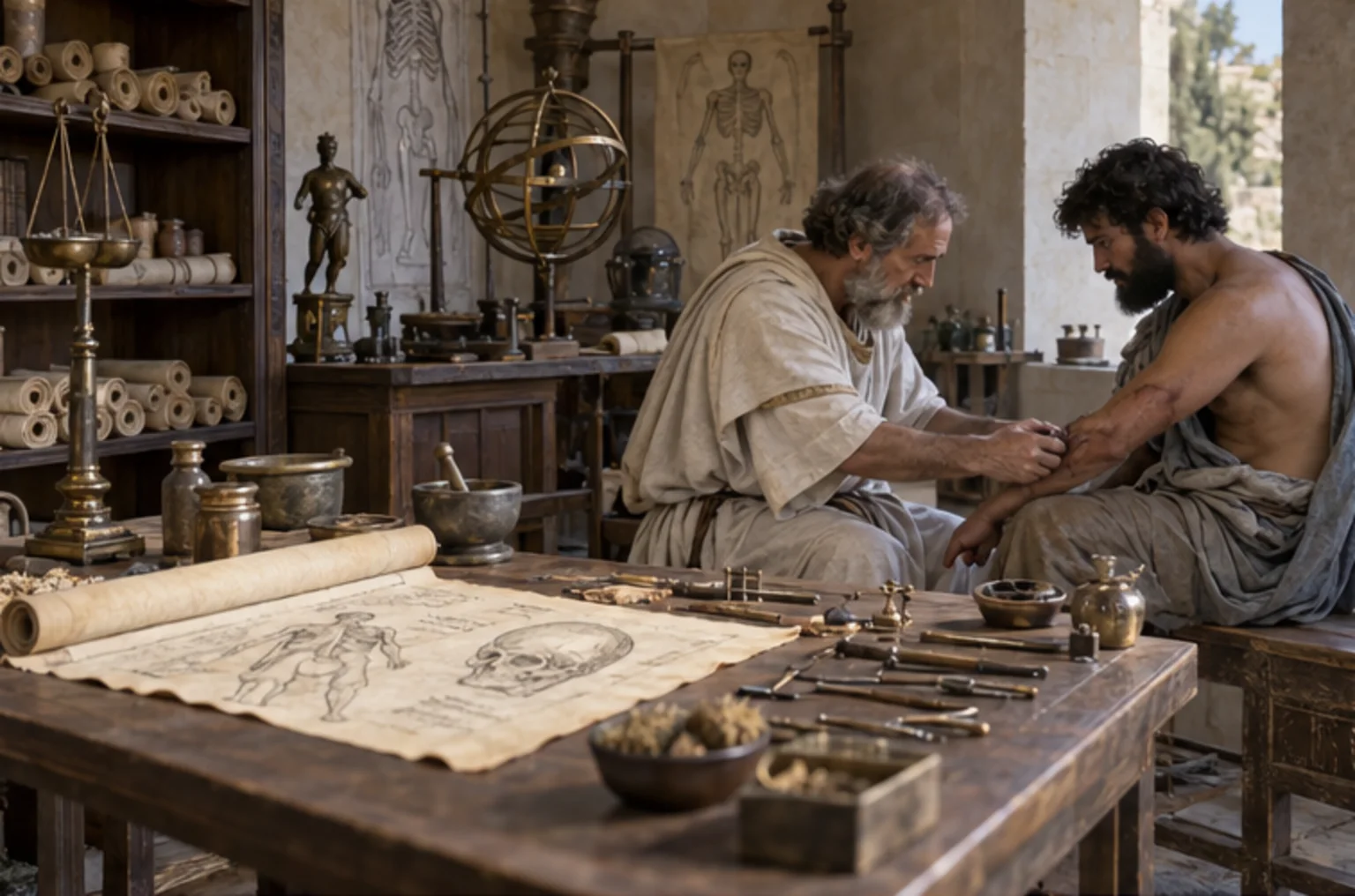
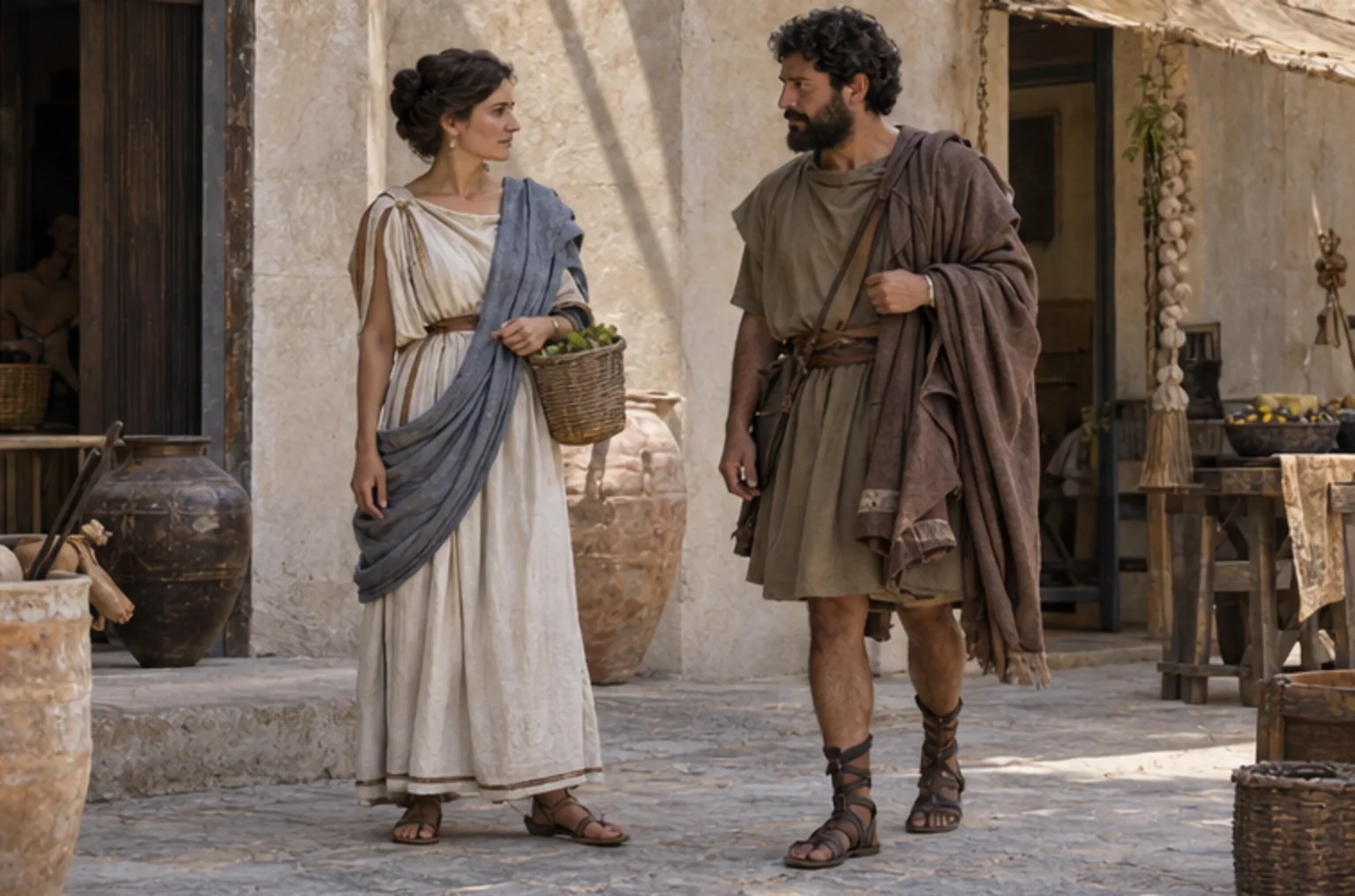
The corpus manifests do not yet establish the precise place and circumstances of composition. The images below document the author’s world or the text’s transmission. They do not claim to show the exact scene of writing.
These are modern reconstructions. They situate a documented place, practice, or transmission and are not period documents.
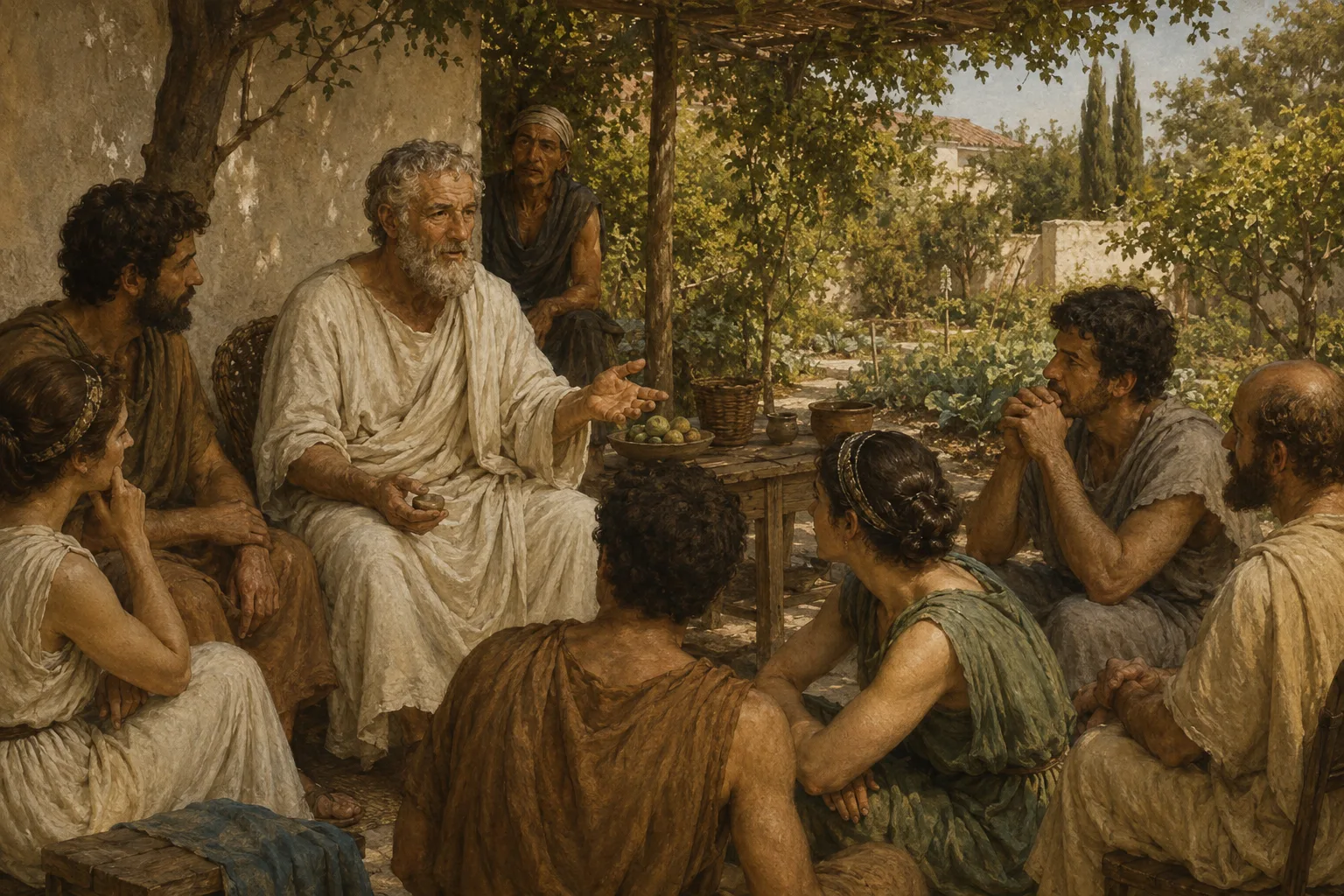
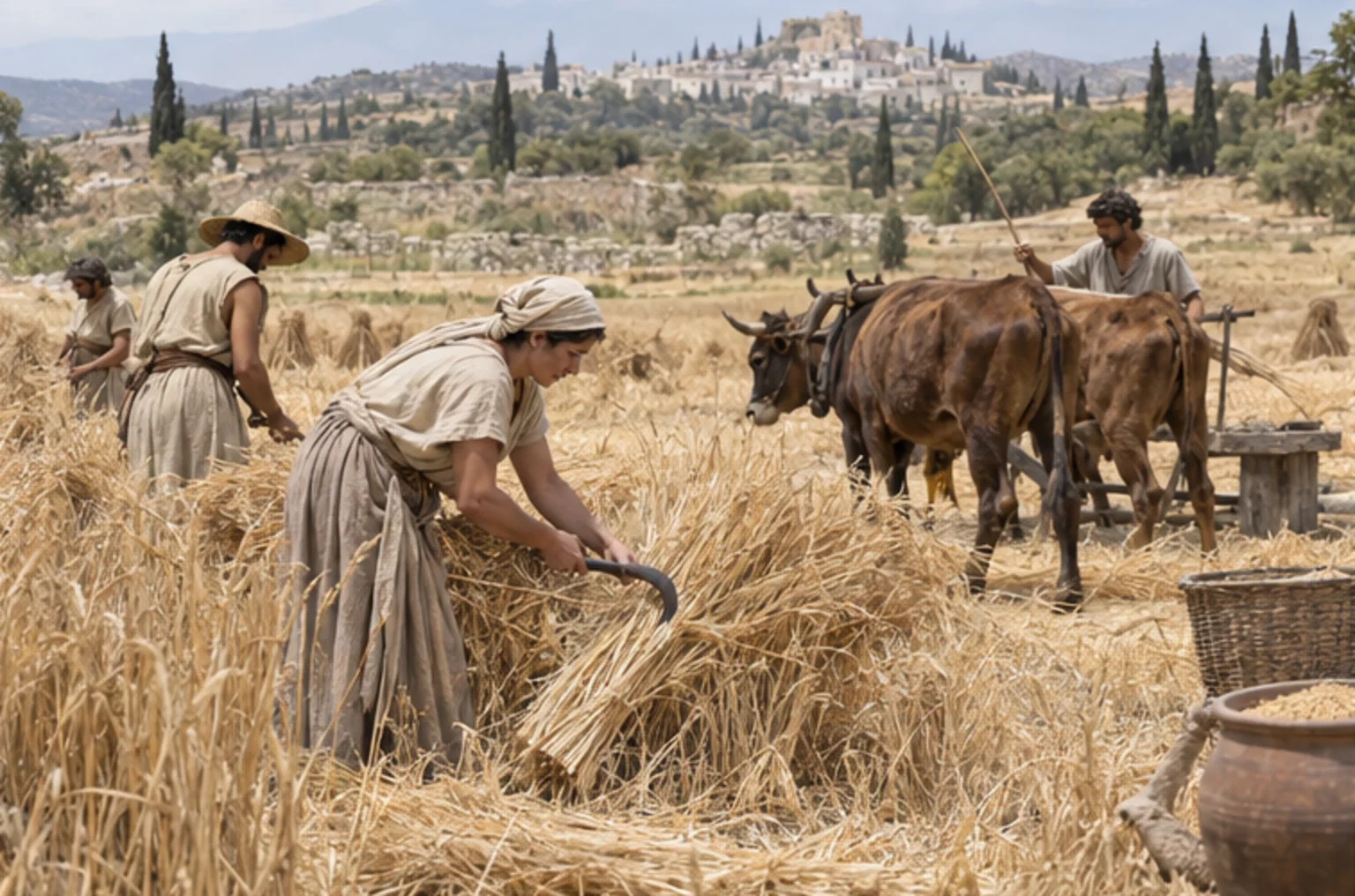
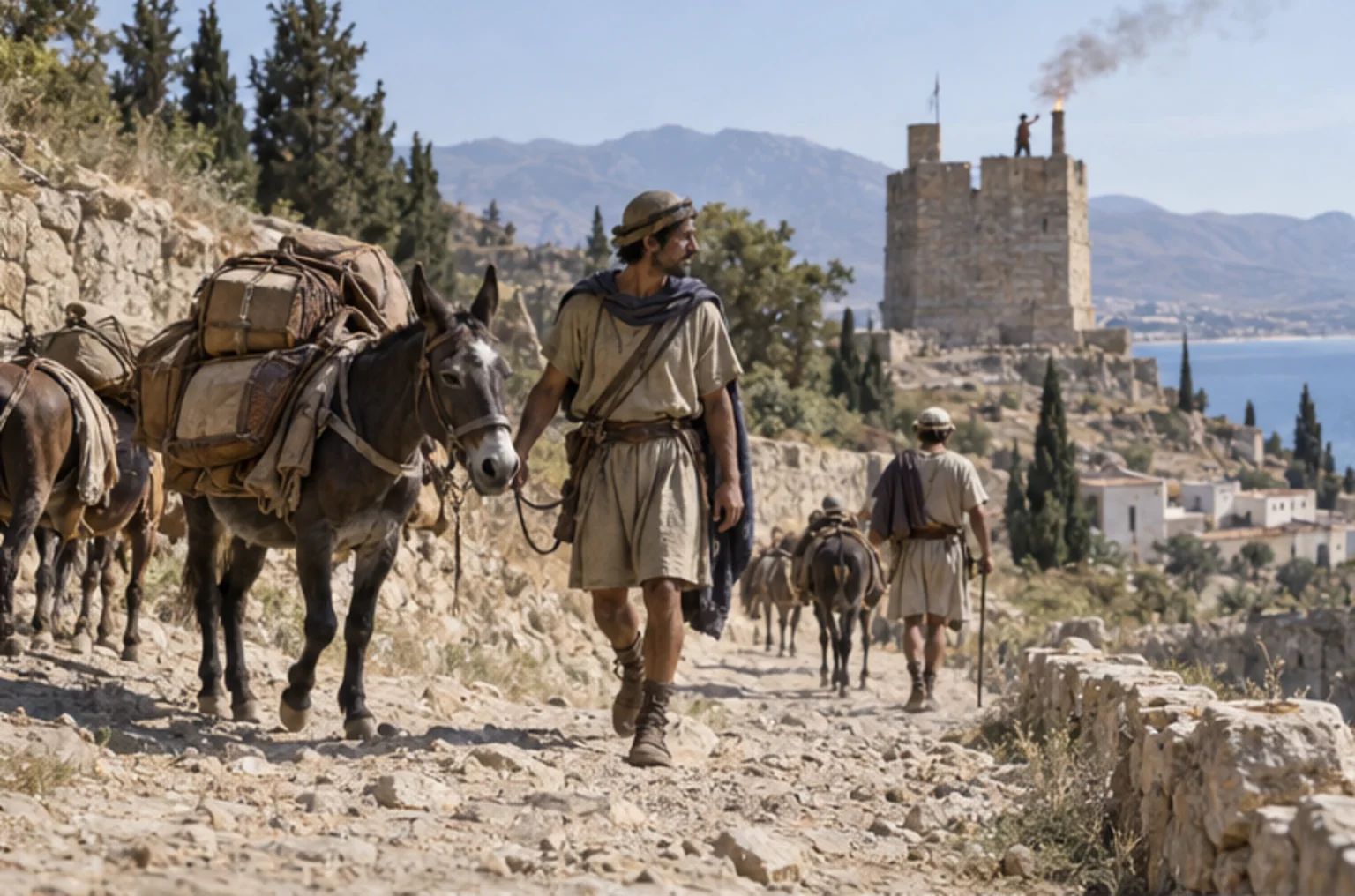
What the world looked like
Hellenistic Mediterranean, 4th-3rd centuries BCE
- State of technology
- Siege engines, pulleys, presses, mills, and large ships extend mechanical capacity, still limited by muscle, water, and wind.
- Science and knowledge
- Scholarly centres develop geometry, mechanics, astronomy, and geography. Manuscripts are hand-copied and instruments remain scarce.
- Medicine and care
- Physicians, herbalists, and midwives use plant remedies and limited surgery; infection and pain remain poorly controlled.
- Transport
- Roads, caravans, and Mediterranean shipping move soldiers, merchants, and ideas across very long distances.
- Agriculture and food
- Grain, wine, oil, pulses, and livestock supply cities and armies through storage, estates, and maritime trade.
- Communication
- Royal couriers, inscriptions, and manuscript rolls connect multilingual kingdoms. Public reading and memory remain decisive.
- Clothing and fashion
- Draped tunics and cloaks predominate; dyed cloth, jewellery, and hairstyles distinguish gender, occupation, city, and wealth.
Editions, translations, and provenance
The following carriers represent the text. They do not create new passage identities.
- Englishhistorical_translation
- Ancient Greekoriginal
- French AI-generated translation, non-officialCodex gpt-5.6-sol · Non-official working translation · 2026-09-11
- Frenchhistorical_translation
- English AI-generated translation, non-officialCodex gpt-5.6-sol · Non-official working translation · 2026-09-11
Source manifests: epicurus.principal_doctrines, epicurus.principal_doctrines_fr_carrier
Reader
Read page by page
Principal DoctrinesEpicurus