
Work
Schopenhauer as Educator
Schopenhauer as Educator must be read through its period, genre, and precise polemical target. Its striking formulations do not replace the movement of the text.
- Composition
- 1874
Sources and precision
The range describes composition or formation of the text, distinct from the dates of the editions held.
Confidence A · direct evidence
- Tradition
- Modern and contemporary philosophy
- Period
- Modern era
- Languages
- German · English · French
- Extent
- 32 passages · 31,039 words
Before reading
What you will learn
To read Schopenhauer as Educator, name the attacked value, recover its target and period, then test a counter-perspective without turning provocation into dogma.
Short summary
Schopenhauer as Educator must be read through its period, genre, and precise polemical target. Its striking formulations do not replace the movement of the text.
Long summary
In Schopenhauer as Educator, canonical identity follows the eKGWB editorial block and preserves its source anchor. Critical German and AI-generated French and English remain distinct manifestations.
This reading requires following the polemic’s target, the adopted mask, and shifts between periods. An isolated aphorism is neither a complete system nor permission to crush another person.
Inside this work
The table of contents follows the divisions actually carried by the corpus.
Work › Critical block › Segment
Concepts covered
Historical context
The world around the text
The corpus manifests do not yet establish the precise place and circumstances of composition. The images below document the author’s world or the text’s transmission. They do not claim to show the exact scene of writing.
These are modern reconstructions. They situate a documented place, practice, or transmission and are not period documents.
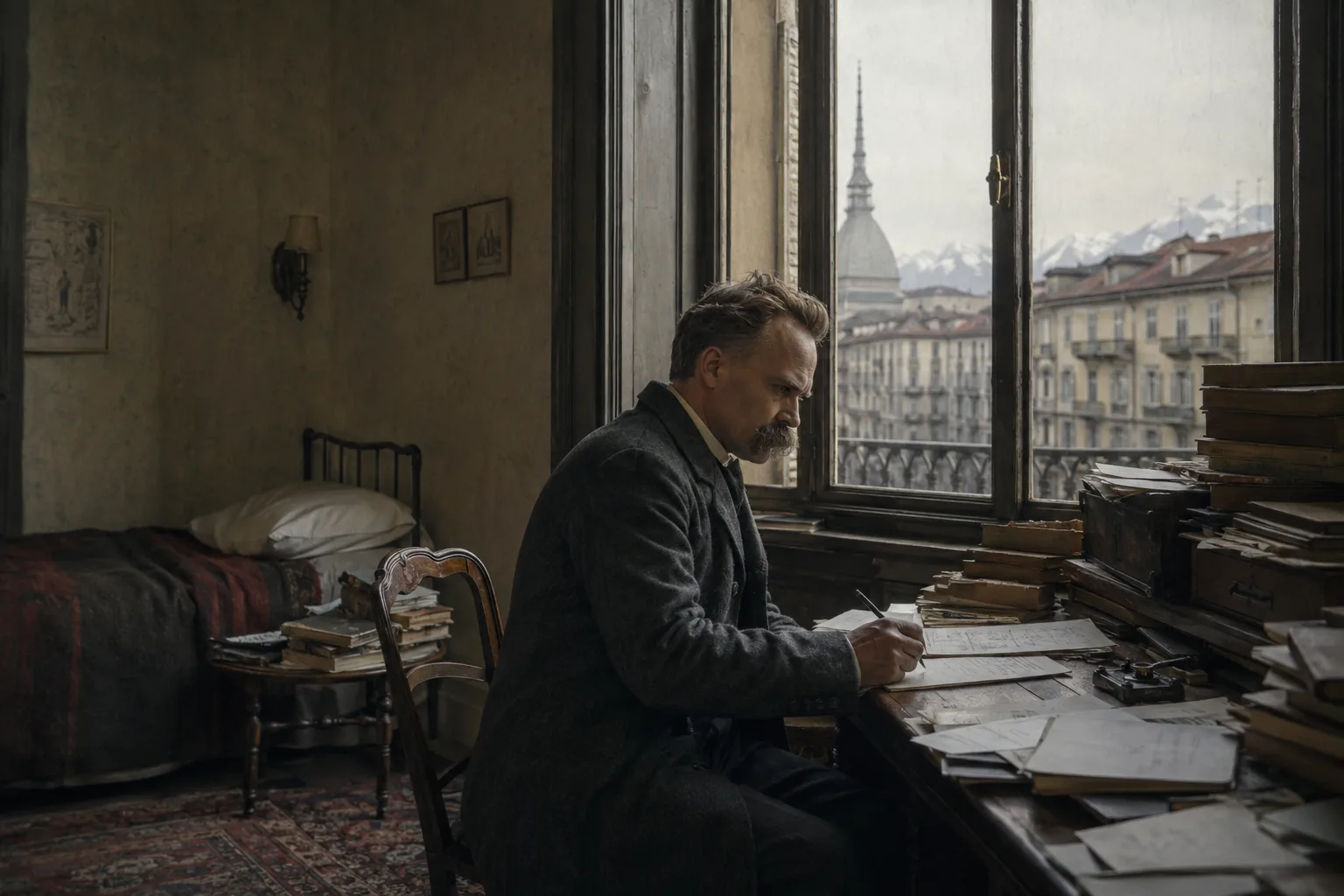

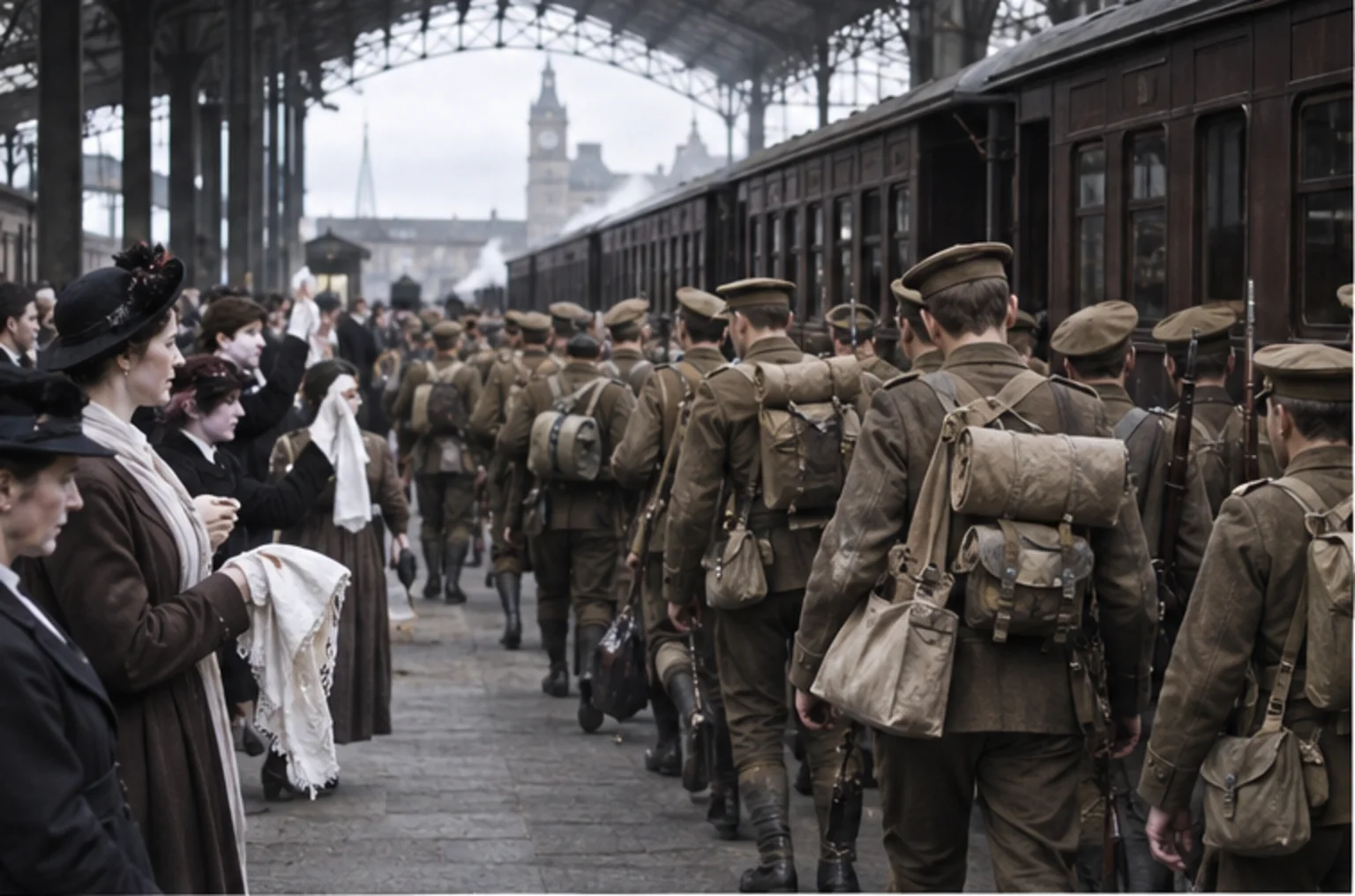
What the world looked like
World of 1989


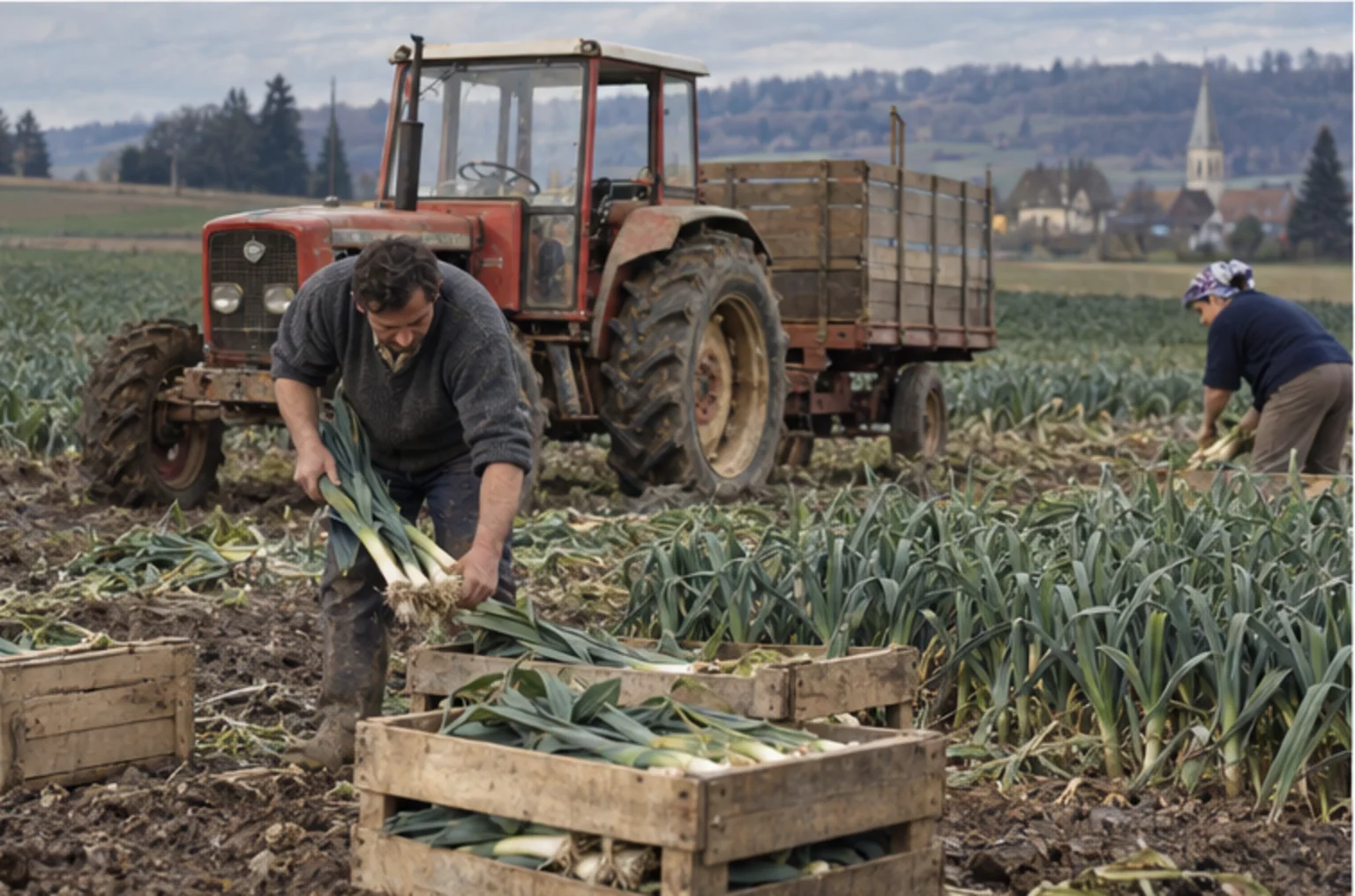
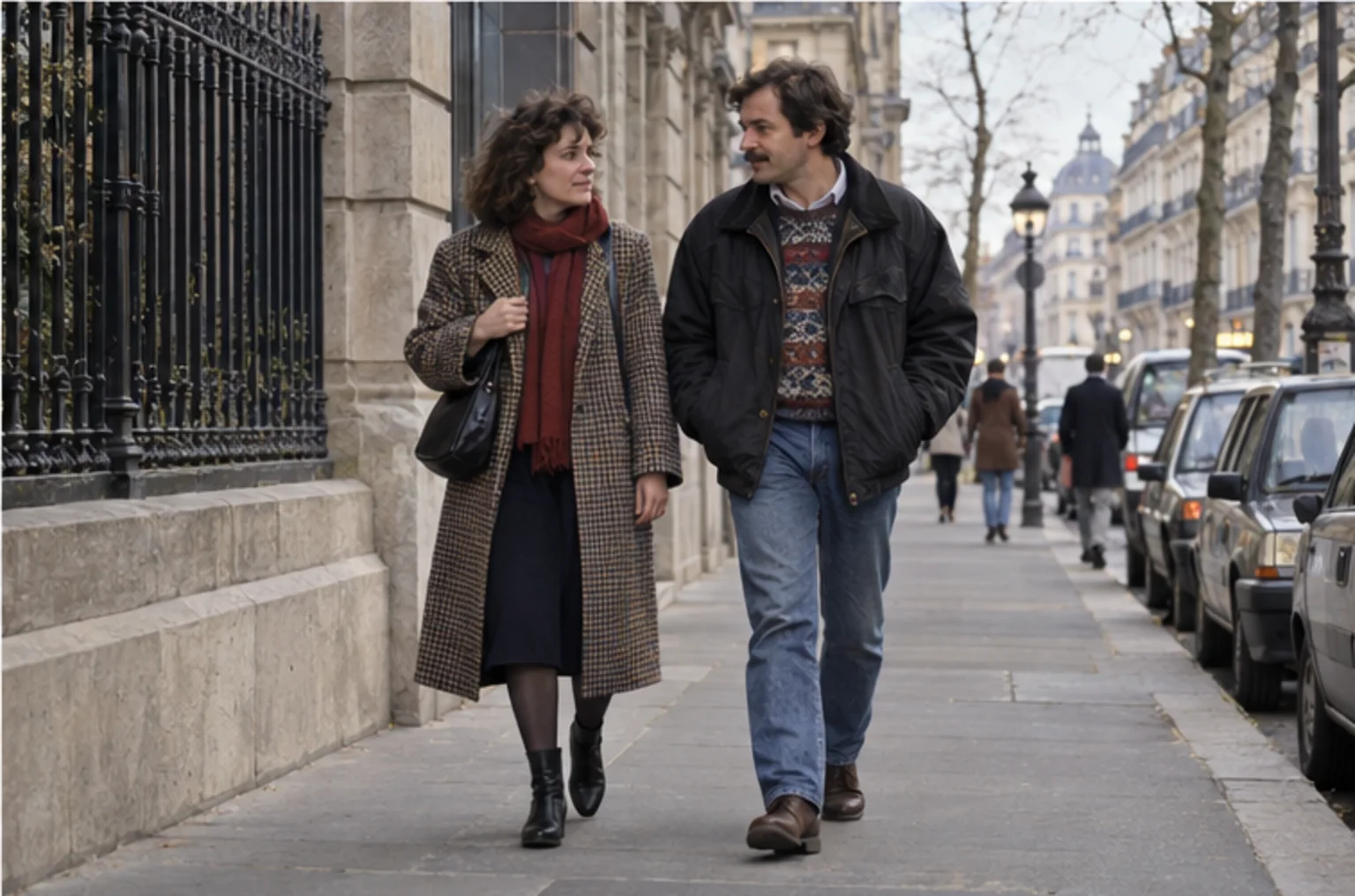
- State of technology
- Personal computers, satellites, video, industrial robots, and expensive mobile phones exist, but the public Web does not yet.
- Science and knowledge
- Computing, genetics, climate science, cosmology, and medical imaging produce growing data and international collaboration.
- Medicine and care
- CT, MRI, transplantation, vaccines, and intensive care advance; the AIDS epidemic exposes both medical capacity and its limits.
- Transport
- Cars, high-speed rail, metros, aircraft, and containers globalize people and goods.
- Agriculture and food
- Machinery, chemical inputs, breeding, and cold chains support high yields with increasingly debated social and environmental costs.
- Communication
- Fixed telephones, fax, television, radio, and newspapers predominate. Email and computer networks remain mainly professional or academic.
- Clothing and fashion
- Loose suits, jeans, trainers, women’s power suits, sportswear, and urban subcultures create highly varied silhouettes.
Editions, translations, and provenance
The following carriers represent the text. They do not create new passage identities.
- Germandigital_critical_original_language
- English AI-generated translation, non-officialCodex gpt-5.6-sol · Non-official working translation · 2026-09-13
- French AI-generated translation, non-officialCodex gpt-5.6-sol · Non-official working translation · 2026-09-13
Source manifests: nietzsche.schopenhauer_educator
Reader
Read page by page
1. That traveler who had seen many countries and peoples and several continents, when asked what quality he had found again everywhere among human beings, said: they have a tendency toward laziness. Some may think he would have spoken more correctly and validly if he had said: they are all fearful. They hide beneath customs and opinions. At bottom, every human being knows perfectly well that he exists in the world only once, as something unique, and that no accident, however strange, will a second time shake together such a wonderfully motley multiplicity into the unity that he is: he knows it, but conceals it like a guilty conscience. Why? From fear of his neighbor, who demands convention and conceals himself beneath it. But what is it that compels the individual to fear his neighbor, to think and act like the herd, and not to take pleasure in himself? Modesty, perhaps, in a few rare cases. In the great majority it is comfort, inertia, in short, that tendency toward laziness of which the traveler spoke. He is right: human beings are still lazier than they are fearful, and what they fear most are precisely the burdens that unconditional honesty and nakedness would impose upon them. Artists alone hate this negligent way of walking about in borrowed manners and opinions thrown over one’s shoulders, and they reveal the secret, the guilty conscience of everyone: the proposition that every human being is a unique miracle. They dare to show us the human being as, down to every muscular movement, himself and himself alone; and more than that, that in this strict consistency of his uniqueness he is beautiful and worthy of contemplation, new and incredible like every work of nature, and by no means tedious. When the great thinker despises human beings, he despises their laziness, for it is because of this that they appear as manufactured wares, as indifferent, unworthy of association and instruction. The human being who does not wish to belong to the mass need only cease being easy on himself; let him follow his conscience, which calls to him: “Be yourself! All that you now do, think, and desire is not you.” Every young soul hears this call by day and by night and trembles at it, for when it thinks of its true liberation, it senses the measure of happiness appointed for it from eternity, a happiness that cannot possibly be obtained for it so long as it lies in the chains of opinions and fear. And how comfortless and senseless life can become without this liberation! There is no drearier or more repellent creature in nature than the human being who has evaded his genius and now peers to the right and left, backward and in every direction. In the end one must no longer even attack such a person, for he is all exterior without a core, a tattered, painted, puffed-out garment, a gaudily trimmed specter that cannot inspire even fear, and certainly no pity. And if it is rightly said of the lazy person that he kills time, then one must seriously fear that an age which places its salvation in public opinions, that is, in private forms of laziness, will itself truly be killed one day. I mean that it will be struck from the history of the genuine liberation of life. How great must be the aversion of later generations to concerning themselves with the legacy of that period in which it was not living human beings who governed, but sham human beings professing public opinions; for this reason, perhaps, our age may appear to some distant posterity as the darkest and least known because most inhuman section of history. I walk through the new streets of our cities and think how, in a century, nothing will remain of all these hideous houses that the race of public opinion-makers has built for itself, and how the opinions of these builders will presumably also have collapsed by then. By contrast, how hopeful all those may be who do not feel themselves citizens of this age; for if they were, they would help to kill their age and perish along with it, whereas they wish instead to awaken the age to life, so that they themselves may live on in that life. But even if the future allowed us no hope, our strange existence precisely in this present moment encourages us most strongly to live according to our own measure and law: the inexplicable fact that we live precisely today, although we had infinite time in which to come into being; that we possess nothing but a handspan of today, and in it must show why and to what end we came into being precisely now. We must answer to ourselves for our existence; consequently, we also intend to be the true helmsmen of this existence and not allow our life to resemble a thoughtless accident. One must deal with it somewhat boldly and dangerously, especially since, in the worst as in the best case, one will always lose it. Why cling to this clod of earth, this trade? Why listen for what the neighbor says? It is so provincial to bind oneself to views that cease to bind a person a few hundred miles away. Orient and Occident are chalk lines that someone draws before our eyes in order to make fools of our timidity. “I will make the attempt to attain freedom,” the young soul says to itself; and should it be hindered because two nations happen to hate one another and wage war, or because a sea lies between two continents, or because all around it a religion is taught that did not even exist a few thousand years ago? “All that is not you yourself,” it says to itself. No one can build for you the bridge upon which you, and you alone, must cross the river of life; no one but you alone. To be sure, there are countless paths and bridges and demigods that wish to carry you across the river, but only at the price of yourself; you would pledge yourself and lose yourself. There is one single path in the world upon which no one can walk except you: where does it lead? Do not ask, walk it. Who was it who uttered the proposition: “A man never rises higher than when he does not know where his path may yet lead him”? But how do we find ourselves again? How can the human being know himself?