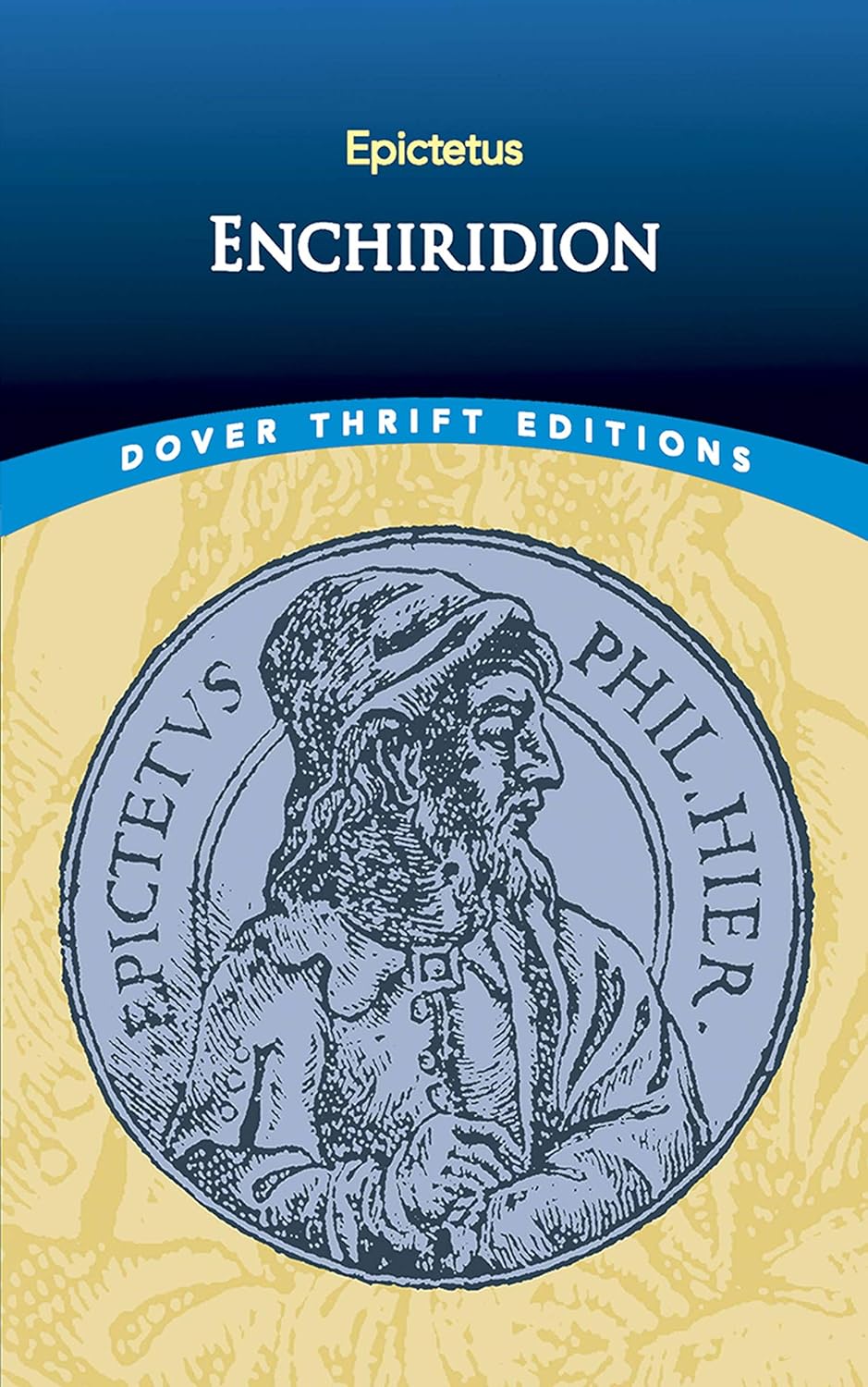
Work
Enchiridion of Epictetus
The Enchiridion condenses Epictetus’ teaching into rules of discernment and exercise. Its opening distinction is sharp: some things are up to us and others are not.
Before reading
What you will learn
Identify what belongs to judgement, prepare for impressions, and act without making one’s worth depend on the outcome.
Short summary
The Enchiridion condenses Epictetus’ teaching into rules of discernment and exercise. Its opening distinction is sharp: some things are up to us and others are not.
Long summary
Arrian condenses parts of Epictetus’ teaching here. The text does not explain every argument; it supplies portable reminders meant for use in action. Its opening distinction then organizes relations to the body, reputation, loved ones, social roles, and death.
The reader learns not indifference but where effort belongs. An external event may require energetic action, yet it does not by itself determine the moral quality of that action. The Manual’s brevity makes it practical and risky: isolated maxims lose the qualifications developed in the Discourses.
Inside this work
The table of contents follows the divisions actually carried by the corpus.
Work › Chapter
- Chapter 1
- Chapter 2
- Chapter 3
- Chapter 4
- Chapter 5
- Chapter 6
- Chapter 7
- Chapter 8
- Chapter 9
- Chapter 10
- Chapter 11
- Chapter 12
- Chapter 13
- Chapter 14
- Chapter 15
- Chapter 16
- Chapter 17
- Chapter 18
- Chapter 19
- Chapter 20
- Chapter 21
- Chapter 22
- Chapter 23
- Chapter 24
- Chapter 25
- Chapter 26
- Chapter 27
- Chapter 28
- Chapter 29
- Chapter 30
- Chapter 31
- Chapter 32
- Chapter 33
- Chapter 34
- Chapter 35
- Chapter 36
- Chapter 37
- Chapter 38
- Chapter 39
- Chapter 40
- Chapter 41
- Chapter 42
- Chapter 43
- Chapter 44
- Chapter 45
- Chapter 46
- Chapter 47
- Chapter 48
- Chapter 49
- Chapter 50
- Chapter 51
- Chapter 52
- Chapter 53
Concepts covered
Historical context
The world around the text
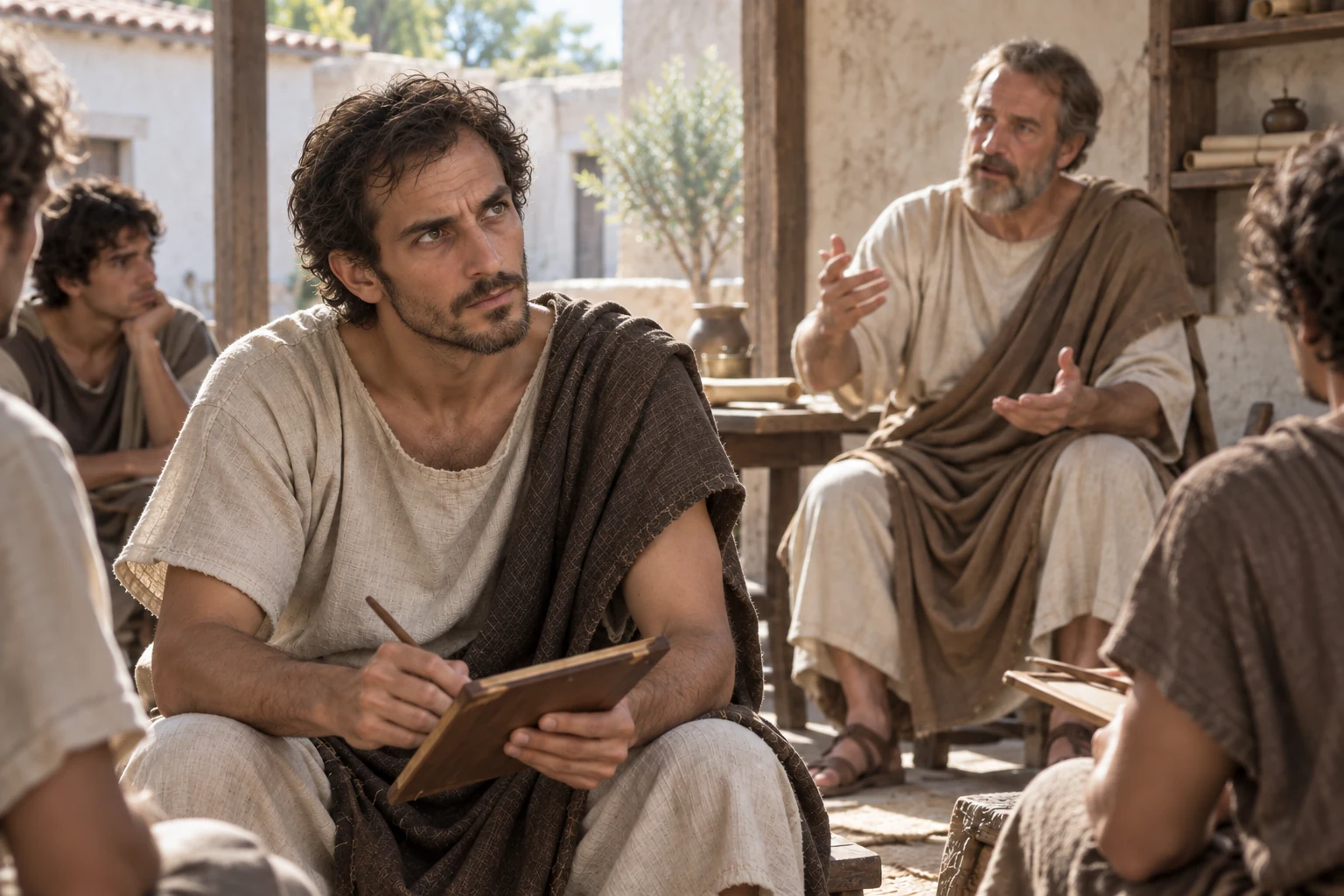
The Enchiridion takes shape in the early second century from Epictetus’ oral teaching recorded by Arrian. His school is at Nicopolis after Domitian’s expulsion of philosophers from Rome. The small book therefore preserves a taught practice, condensed to remain close at hand.
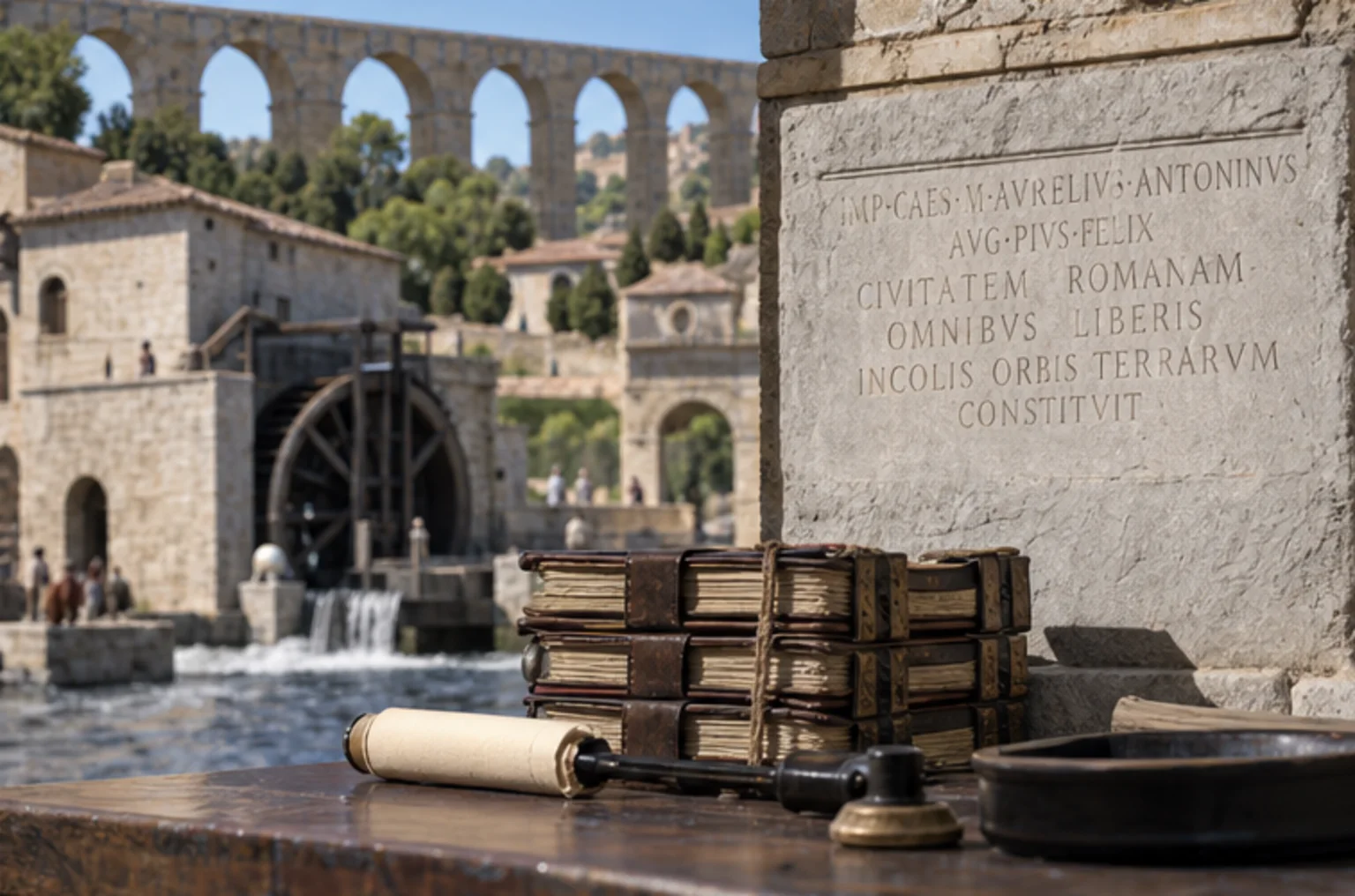
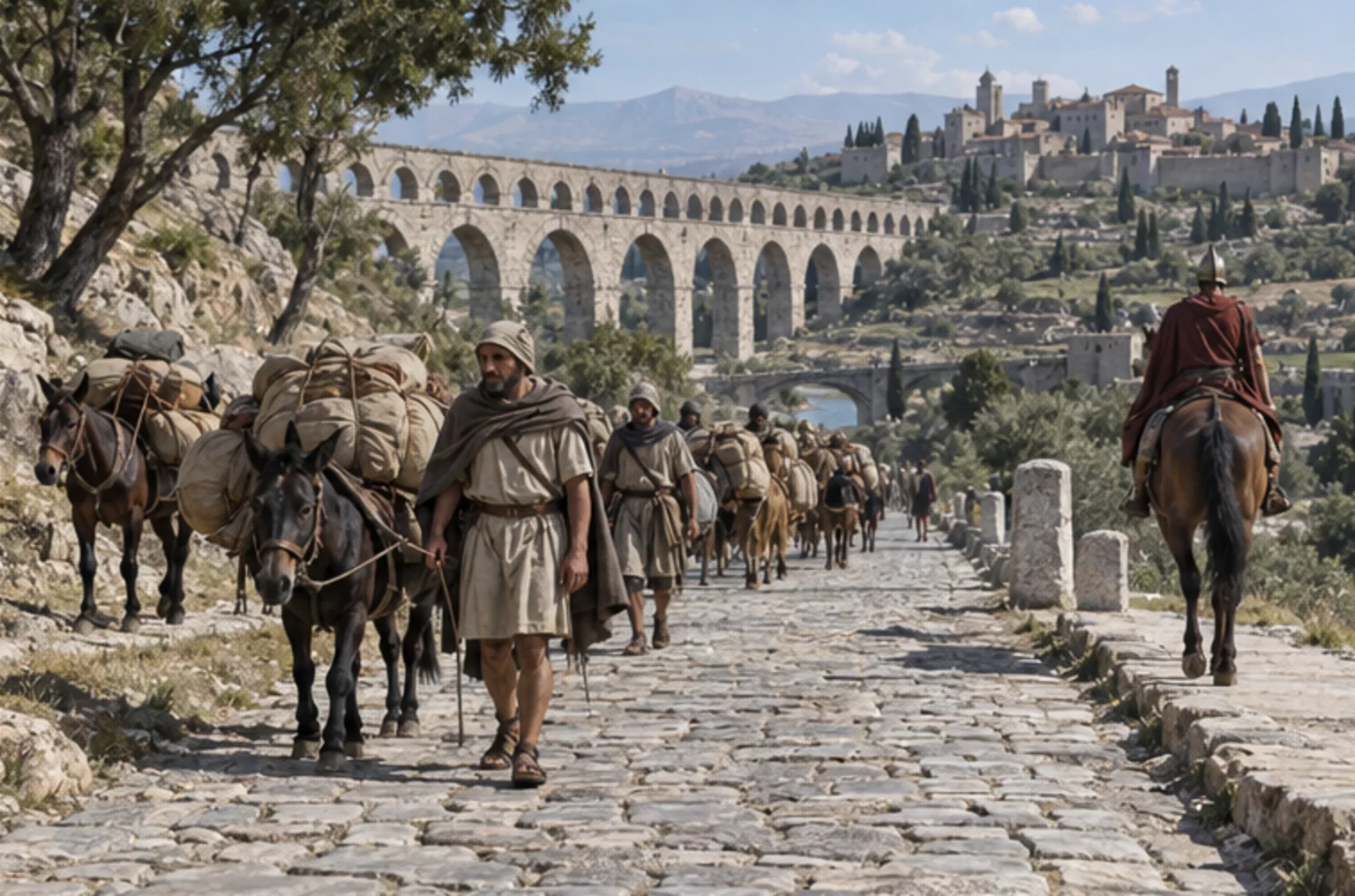
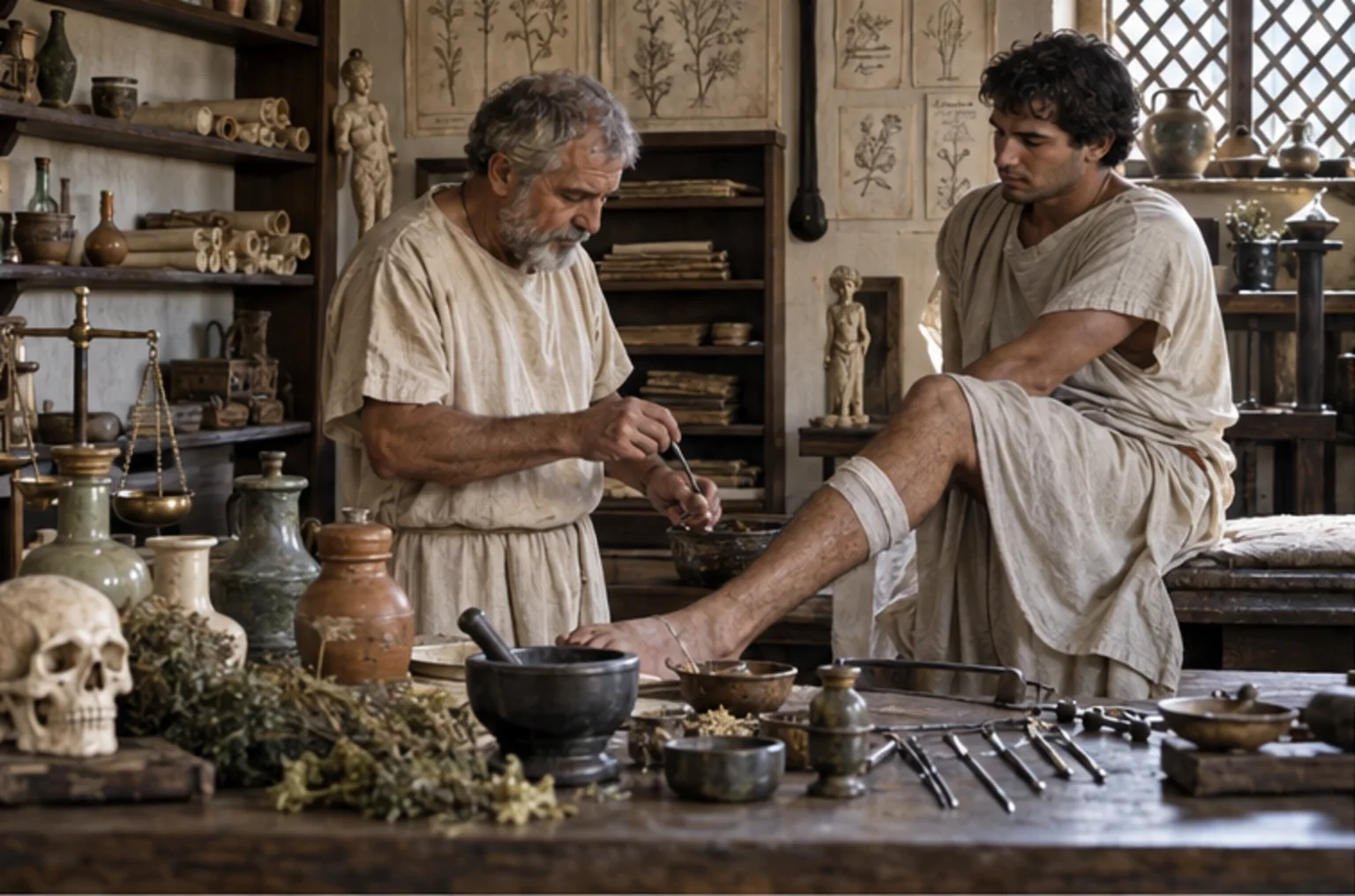
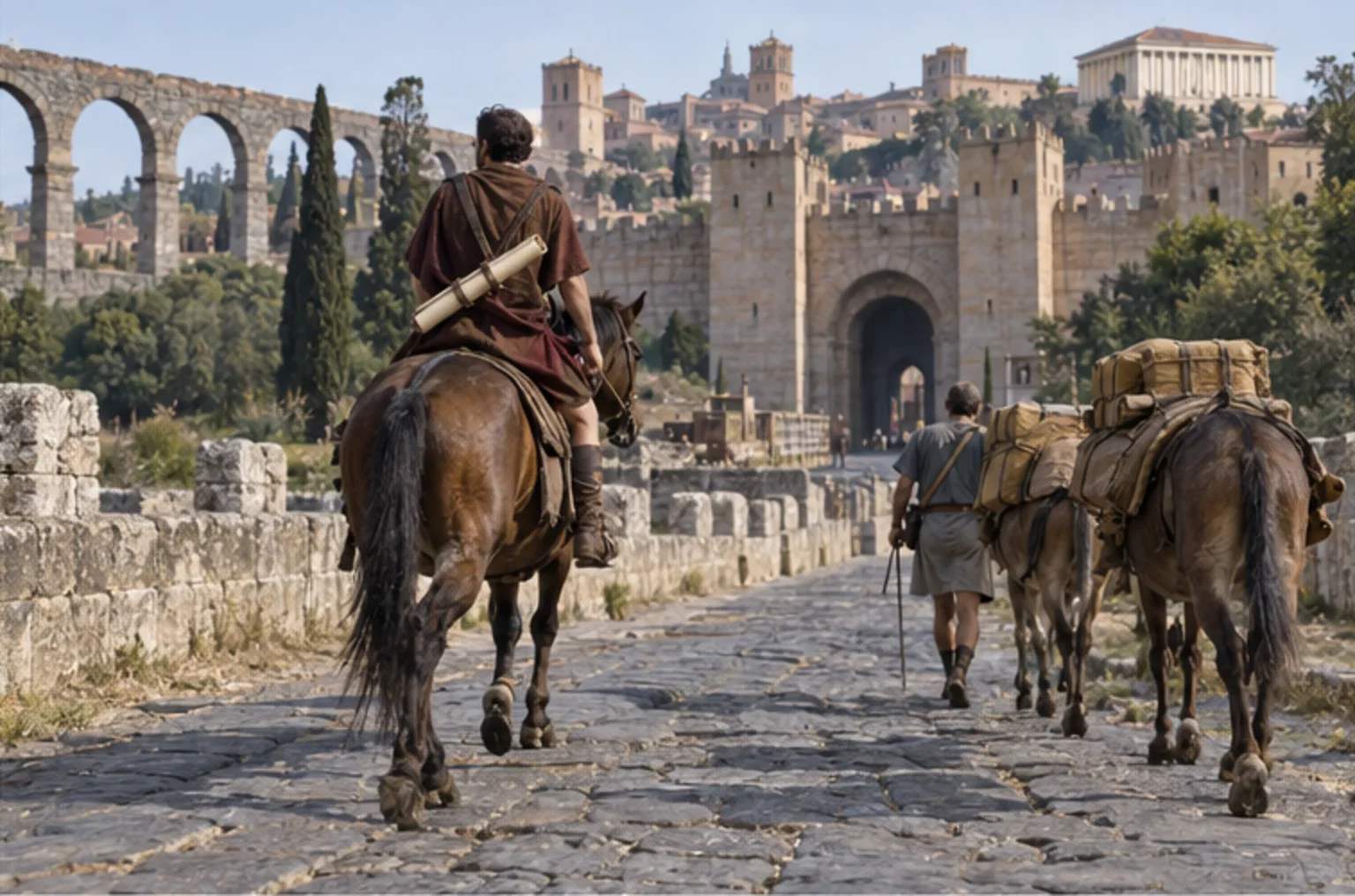
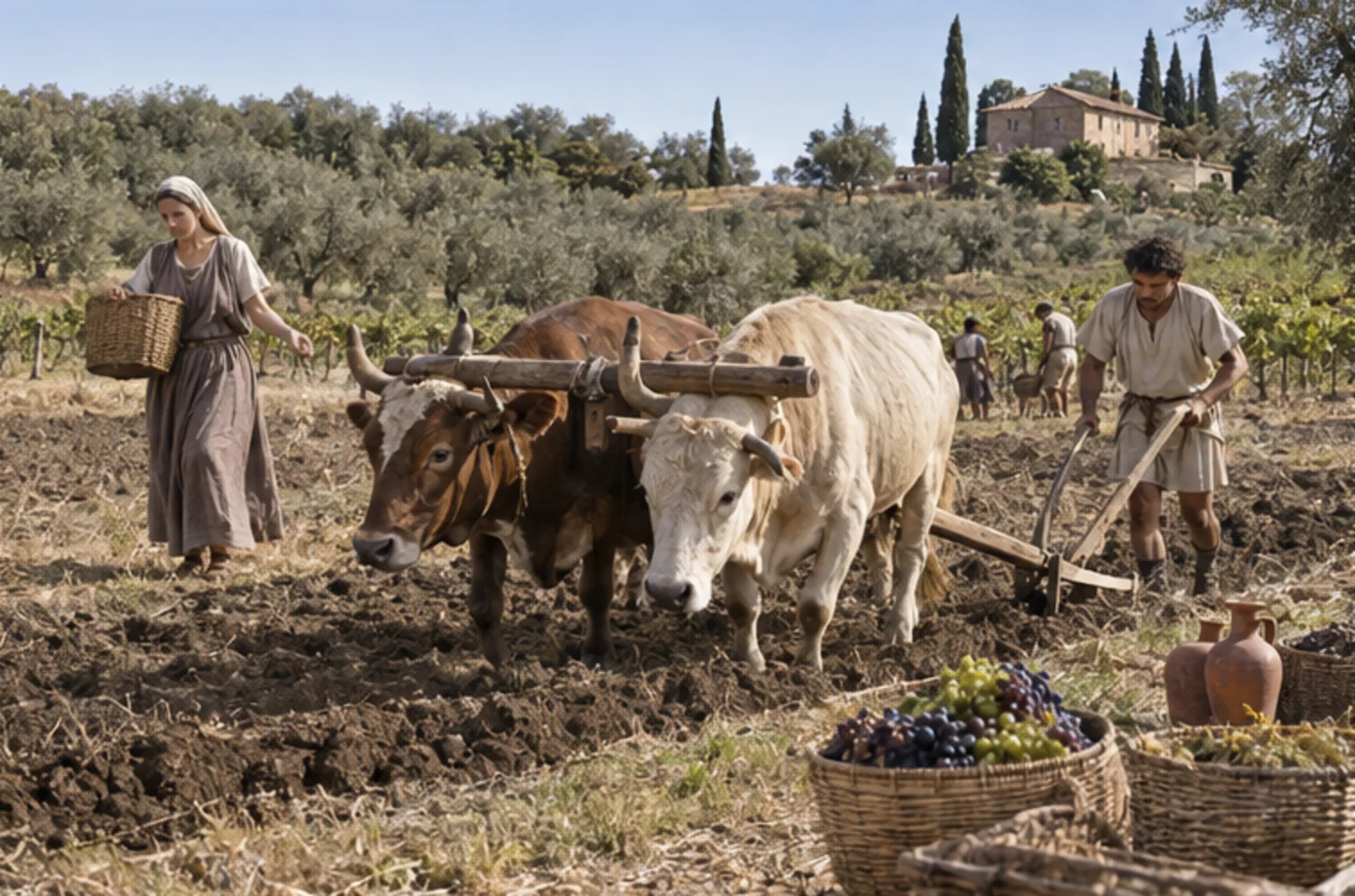
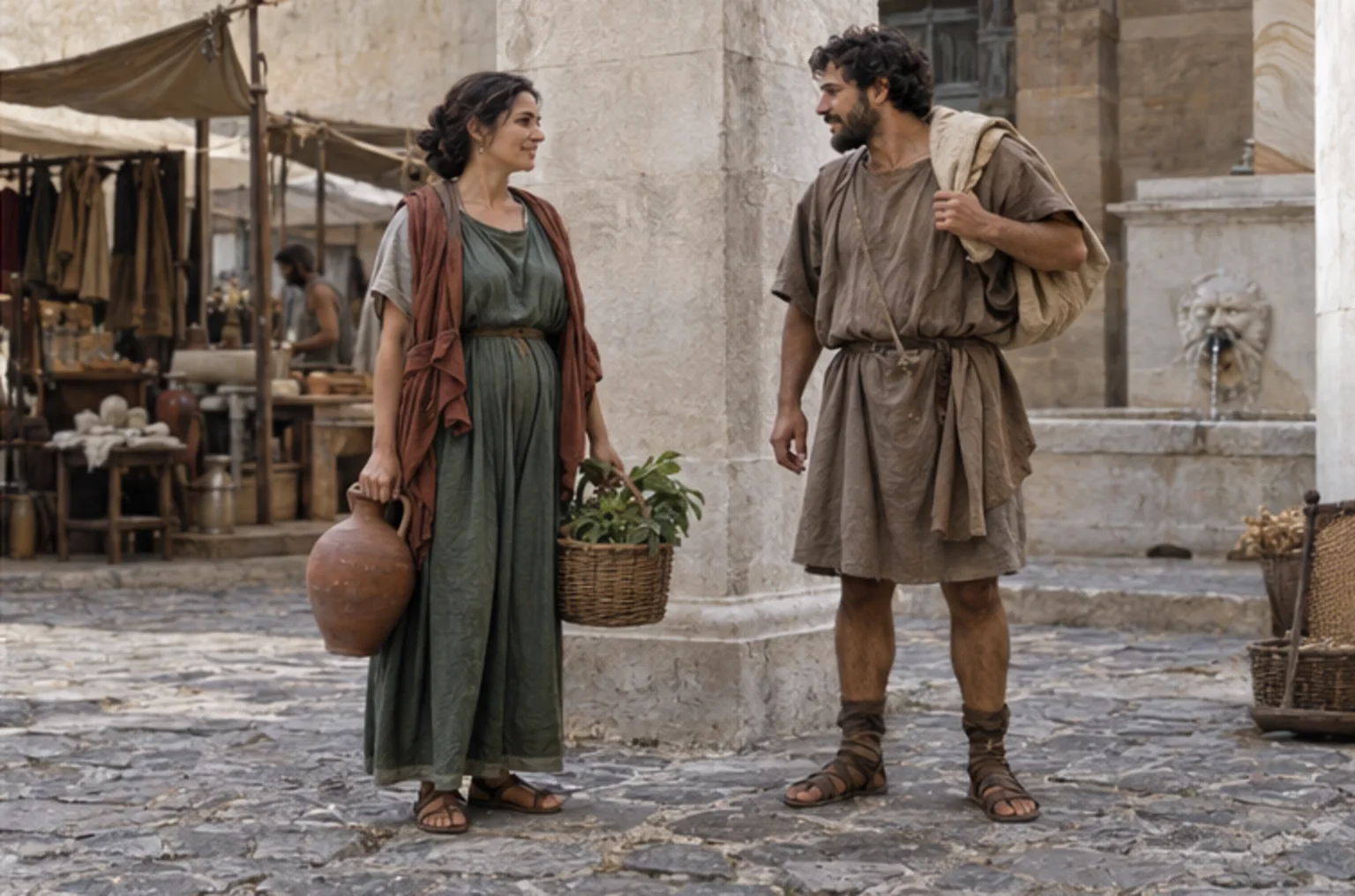
These are modern reconstructions. They situate a documented place, practice, or transmission and are not period documents.
What the world looked like
Roman world, 1st century BCE to 3rd century CE
- State of technology
- Paved roads, aqueducts, concrete, glassware, mills, and hypocaust heating equip some cities, but energy comes mainly from bodies, animals, water, and wood.
- Science and knowledge
- Astronomy, geometry, natural history, and engineering compile Greek, Egyptian, and Roman knowledge. Measurement exists without a modern laboratory.
- Medicine and care
- Physicians, midwives, baths, plants, and rudimentary surgery can help; reliable anaesthesia, antisepsis, and antibiotics do not exist.
- Transport
- On foot, horseback, cart, or ship, road and sea networks connect the Empire. Travel remains slow, costly, and risky.
- Agriculture and food
- Grain, vines, olives, pulses, and livestock supply cities and armies; estates, slavery, and tenancy organize part of the labour.
- Communication
- Imperial couriers, letters on papyrus or tablets, inscriptions, and oral proclamations spread information. Everything is copied by hand.
- Clothing and fashion
- Tunics and cloaks are common to both sexes; the stola, toga, footwear, colours, and jewellery mark citizenship, office, wealth, and origin.
Editions, translations, and provenance
The following carriers represent the text. They do not create new passage identities.
- Ancient Greekoriginal_carrier
- Englishhistorical_translation
- Frenchhistorical_translation
Source manifests: epictetus.enchiridion
Reader
Read page by page
Enchiridion of EpictetusEpictetus