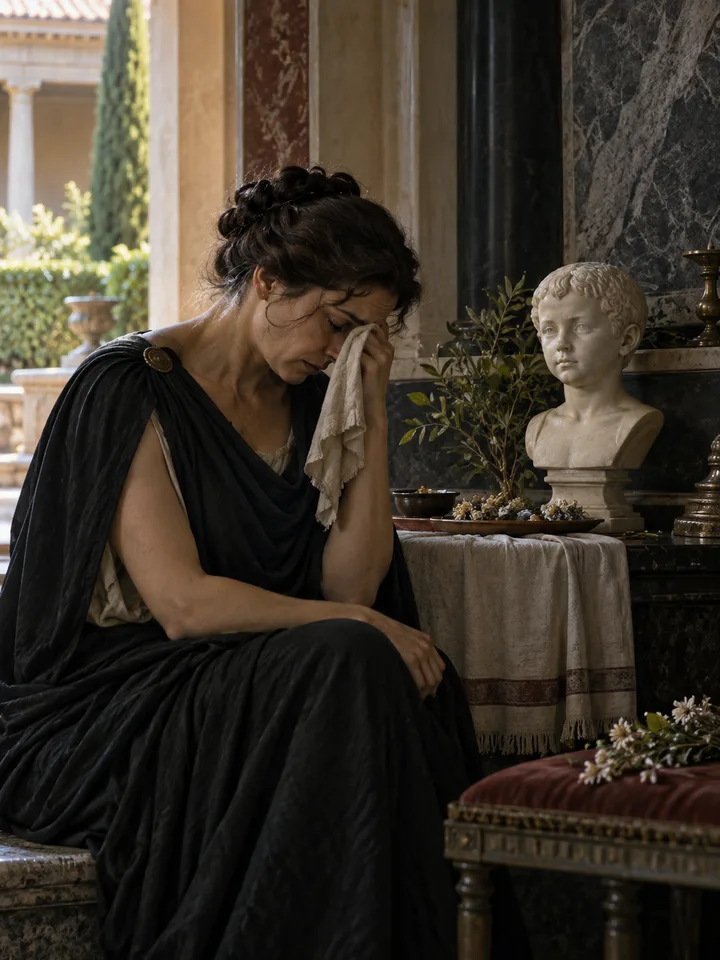
Symbolic illustration of Consolation to Marcia in the Prokopton42.com Library

Work

Consolation to Marcia

Seneca addresses Marcia, long overwhelmed by the death of her son. He contrasts models of mourning, recalls the vulnerability of every life, and seeks a memory that honours the dead without indefinitely sustaining the wound.

Composition
c. 39-40 CE
Sources and precision

The internal chronology remains disputed. This range is a qualified reference point, not a certain year.

Confidence C · probable range

Tradition
Stoicism
Period
Antiquity
Languages
Latin · English · French
Extent
26 passages · 14,991 words

Before reading

What you will learn

Compare ancient models of mourning, understand the provisional-gift argument, and analyze tension among care, moral prescription, and memory of the dead.

Short summary

Seneca addresses Marcia, long overwhelmed by the death of her son. He contrasts models of mourning, recalls the vulnerability of every life, and seeks a memory that honours the dead without indefinitely sustaining the wound.

Long summary

Octavia and Livia provide contrasting models of grief closed against the world and mourning returning to measure. Seneca evokes fortune’s instability, the provisional character of every gift, and the cosmic prospect of a released soul.

The text combines attention to a real person with the demanding rhetoric of ancient consolation. Its arguments may jar modern readers when they prescribe limits to grief. That tension belongs to the work and should be examined without reducing Marcia to an abstract example.

Inside this work

The table of contents follows the divisions actually carried by the corpus.

Work › Chapter

  1. Chapter 1
  2. Chapter 2
  3. Chapter 3
  4. Chapter 4
  5. Chapter 5
  6. Chapter 6
  7. Chapter 7
  8. Chapter 8
  9. Chapter 9
  10. Chapter 10
  11. Chapter 11
  12. Chapter 12
  13. Chapter 13
  14. Chapter 14
  15. Chapter 15
  16. Chapter 16
  17. Chapter 17
  18. Chapter 18
  19. Chapter 19
  20. Chapter 20
  21. Chapter 21
  22. Chapter 22
  23. Chapter 23
  24. Chapter 24
  25. Chapter 25
  26. Chapter 26

Concepts covered

Historical context

The world around the text

The corpus manifests do not yet establish the precise place and circumstances of composition. The images below document the author’s world or the text’s transmission. They do not claim to show the exact scene of writing.

These are modern reconstructions. They situate a documented place, practice, or transmission and are not period documents.
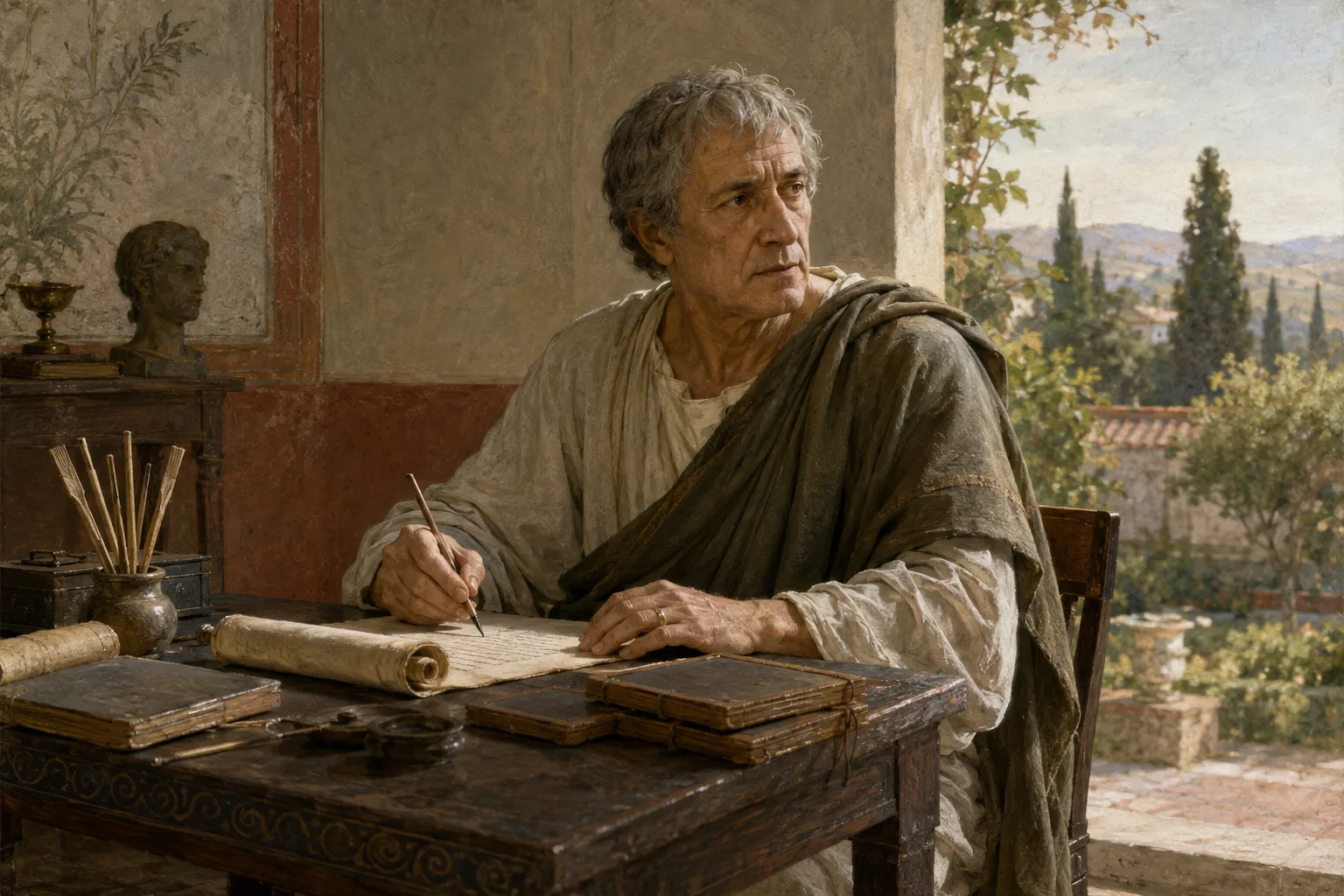
Modern reconstruction of Writing near Nomentum for Consolation to Marcia on Prokopton42.com
Writing near NomentumA modern interpretation of Seneca in the documented context titled “Writing near Nomentum”, set around c. 63 CE.Stanford Encyclopedia of Philosophy: Seneca
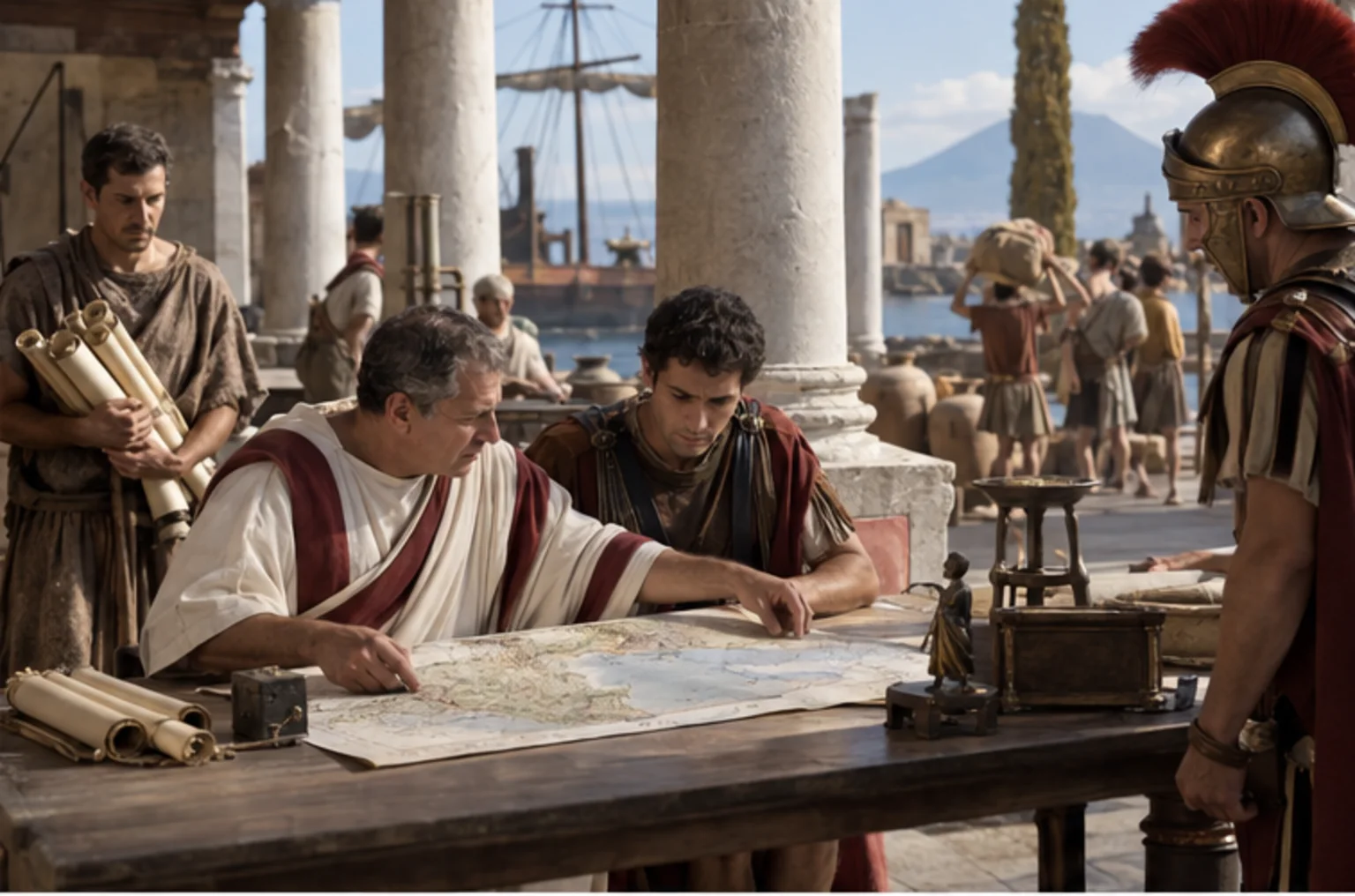
Modern reconstruction of Nearby historical landmark, 79 CE for Consolation to Marcia on Prokopton42.com
Nearby historical landmark, 79 CEVesuvius buries Pompeii and Herculaneum, preserving an abrupt cross-section of Roman life. The image situates Consolation to Marcia without claiming to show its scene of composition.
Modern reconstruction of Material world: technology, science, and care, 79 CE for Consolation to Marcia on Prokopton42.com
Material world: technology, science, and care, 79 CEVesuvius buries Pompeii and Herculaneum, preserving an abrupt cross-section of Roman life. The image situates Consolation to Marcia without claiming to show its scene of composition.

What the world looked like

Roman world, 1st century BCE to 3rd century CE
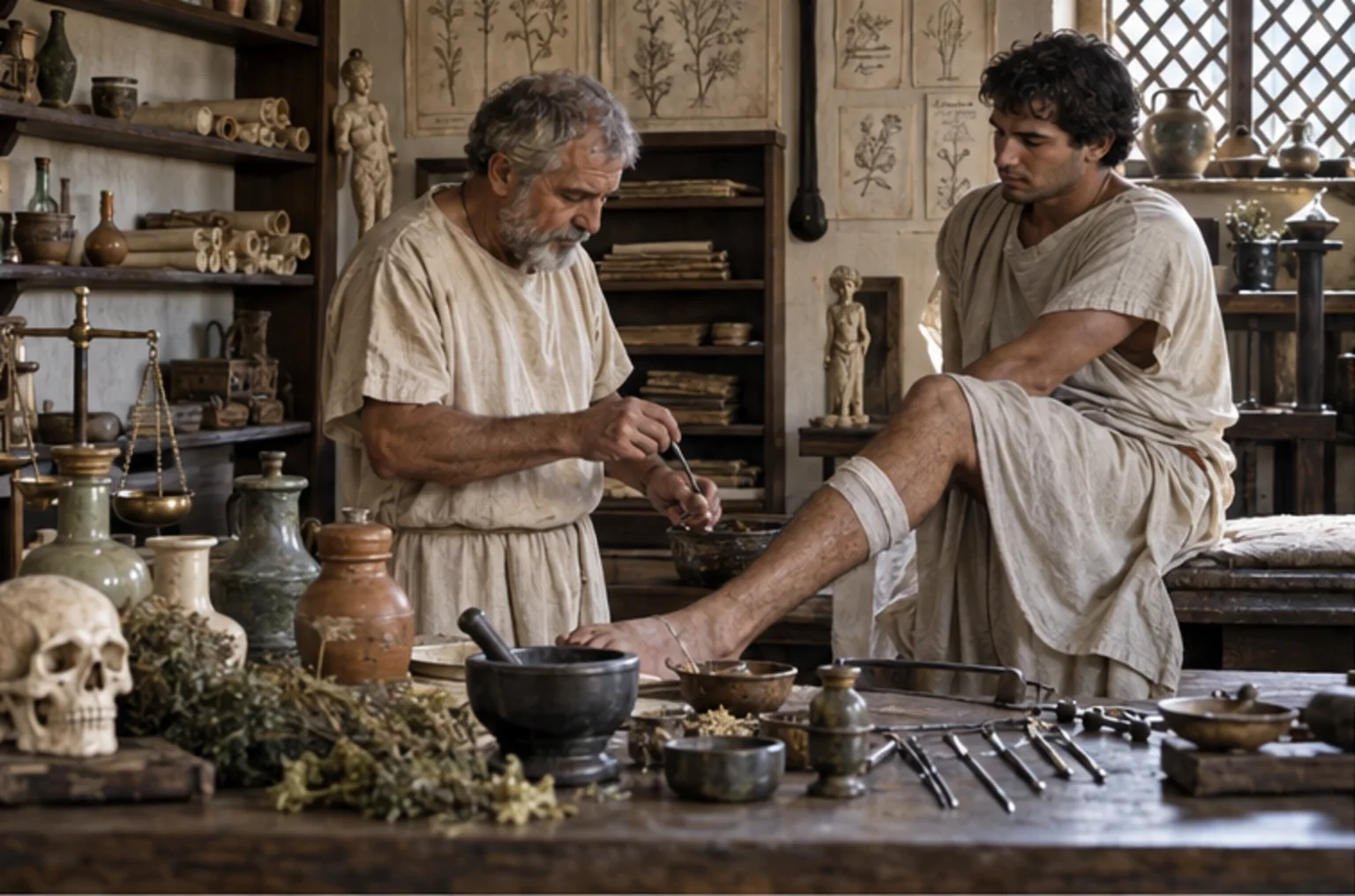
Modern reconstruction of the material world around Consolation to Marcia: Technology, science, and care
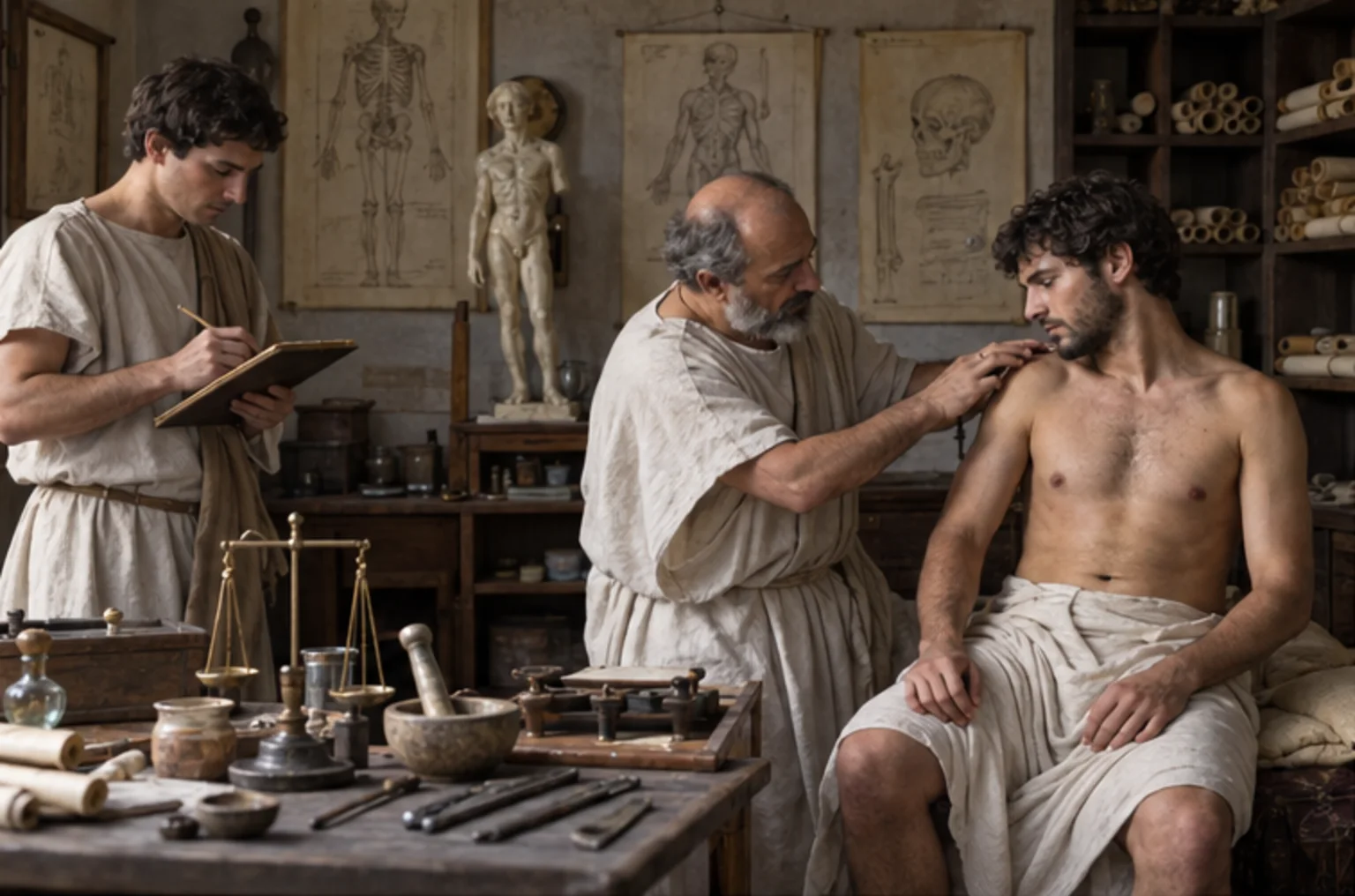
Technology, science, and carePaved roads, aqueducts, concrete, glassware, mills, and hypocaust heating equip some cities, but energy comes mainly from bodies, animals, water, and wood. Astronomy, geometry, natural history, and engineering compile Greek, Egyptian, and Roman knowledge. Measurement exists without a modern laboratory. Physicians, midwives, baths, plants, and rudimentary surgery can help; reliable anaesthesia, antisepsis, and antibiotics do not exist.
Modern reconstruction of the material world around Consolation to Marcia: Travel and communication
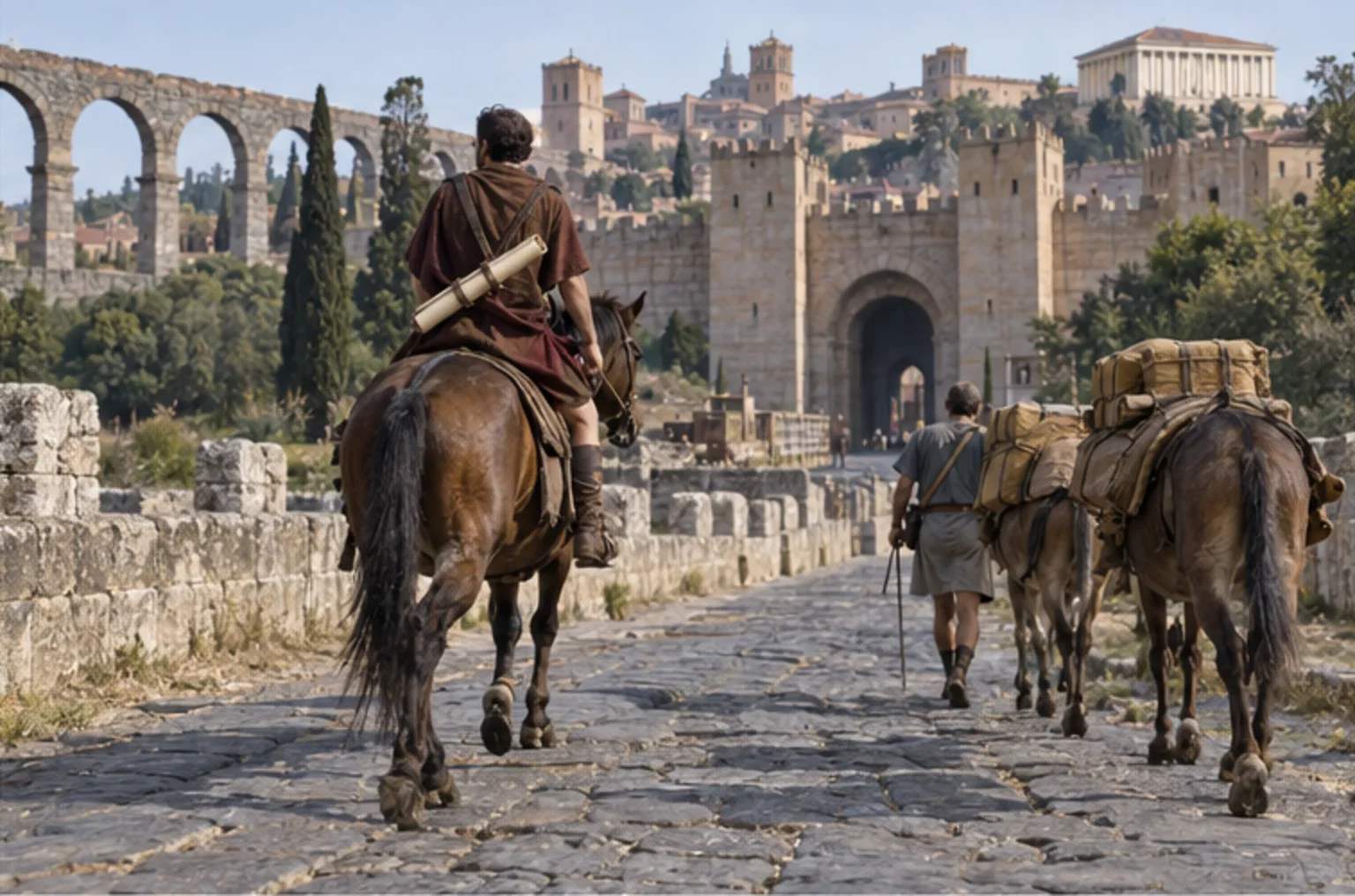
Travel and communicationOn foot, horseback, cart, or ship, road and sea networks connect the Empire. Travel remains slow, costly, and risky. Imperial couriers, letters on papyrus or tablets, inscriptions, and oral proclamations spread information. Everything is copied by hand.
Modern reconstruction of the material world around Consolation to Marcia: Farming and food
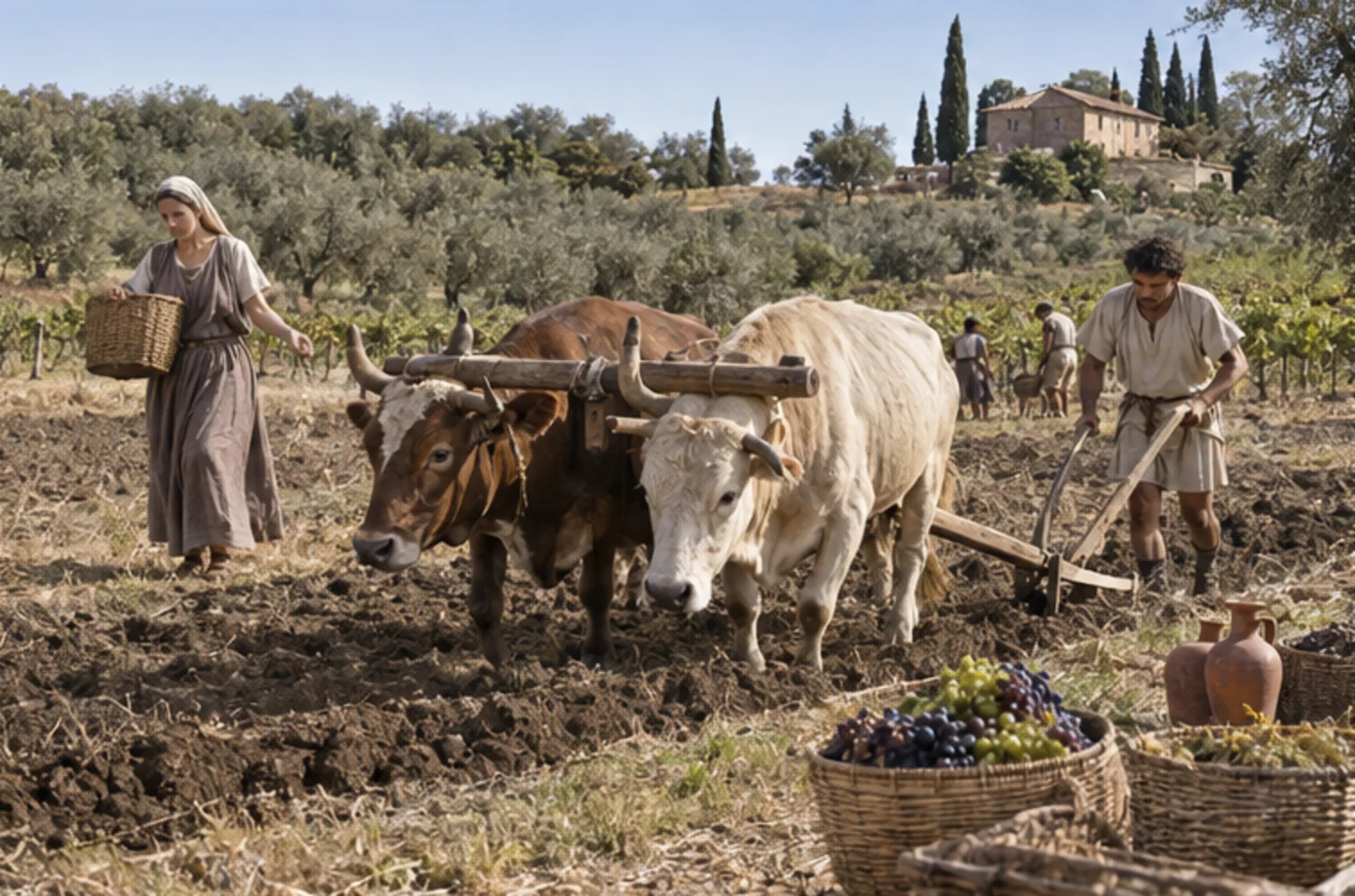
Farming and foodGrain, vines, olives, pulses, and livestock supply cities and armies; estates, slavery, and tenancy organize part of the labour.
Modern reconstruction of the material world around Consolation to Marcia: Clothing, women and men
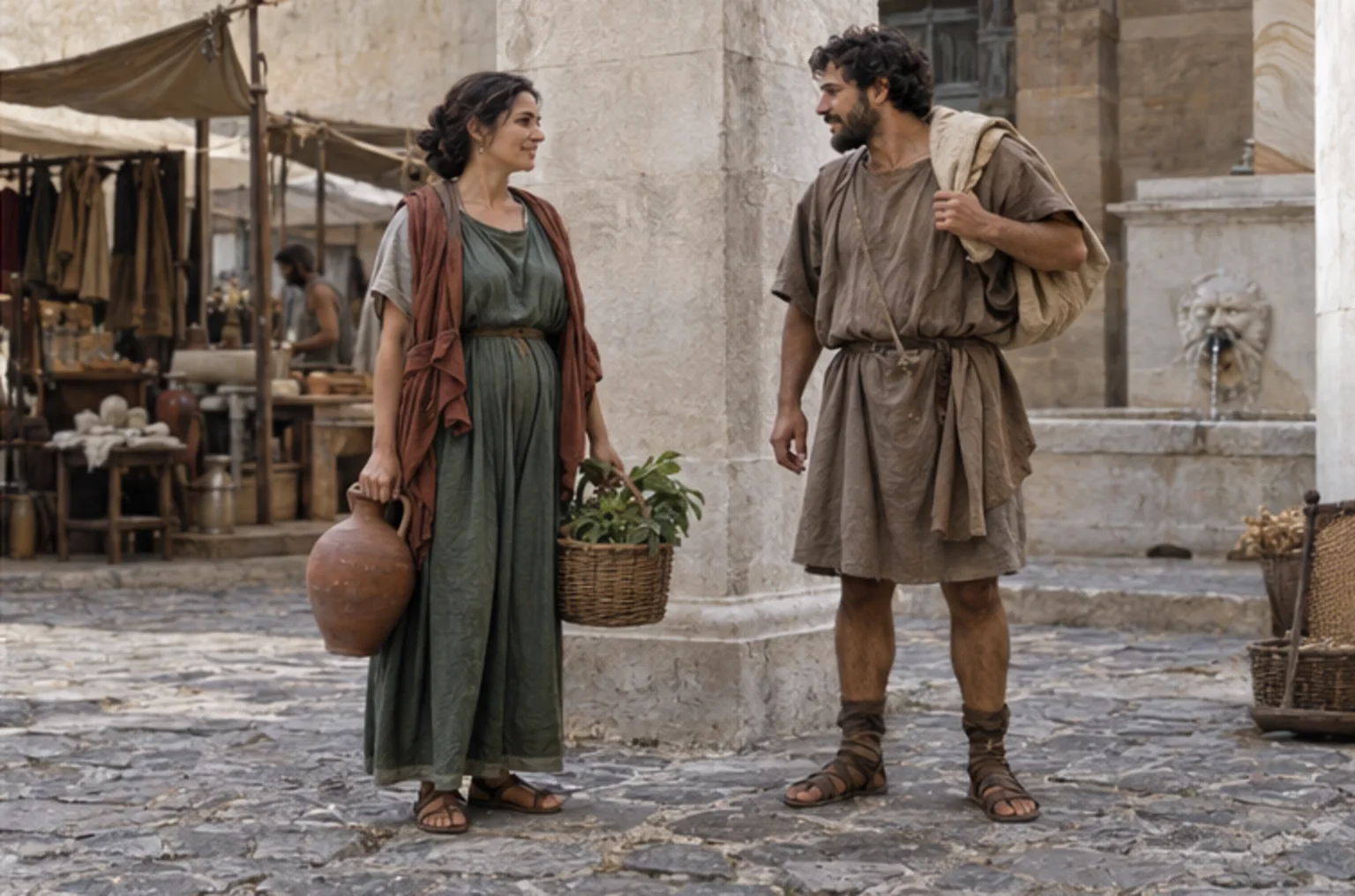
Clothing, women and menTunics and cloaks are common to both sexes; the stola, toga, footwear, colours, and jewellery mark citizenship, office, wealth, and origin.
State of technology
Paved roads, aqueducts, concrete, glassware, mills, and hypocaust heating equip some cities, but energy comes mainly from bodies, animals, water, and wood.
Science and knowledge
Astronomy, geometry, natural history, and engineering compile Greek, Egyptian, and Roman knowledge. Measurement exists without a modern laboratory.
Medicine and care
Physicians, midwives, baths, plants, and rudimentary surgery can help; reliable anaesthesia, antisepsis, and antibiotics do not exist.
Transport
On foot, horseback, cart, or ship, road and sea networks connect the Empire. Travel remains slow, costly, and risky.
Agriculture and food
Grain, vines, olives, pulses, and livestock supply cities and armies; estates, slavery, and tenancy organize part of the labour.
Communication
Imperial couriers, letters on papyrus or tablets, inscriptions, and oral proclamations spread information. Everything is copied by hand.
Clothing and fashion
Tunics and cloaks are common to both sexes; the stola, toga, footwear, colours, and jewellery mark citizenship, office, wealth, and origin.

Editions, translations, and provenance

The following carriers represent the text. They do not create new passage identities.

  • Latinoriginal
  • EnglishAubrey Stewart
  • FrenchJoseph Baillard

Source manifests: seneca.consolatio_ad_marciam

Reader

Read page by page

Consolation to MarciaSeneca

Before reading

What you will learn

Open the full record