Work
How One May Know One’s Progress in Virtue
How One May Know One’s Progress in Virtue observes character in action and tests moral rules against concrete situations.
- Composition
- late 1st to early 2nd century CE; internal order uncertain
Sources and precision
The range locates Plutarch’s literary activity without inventing a composition year for each work.
Confidence C · probable range
- Tradition
- Socratic and Platonic thought
- Period
- Antiquity
- Languages
- Ancient Greek · English · French
- Extent
- 17 passages · 9,684 words
Before reading
What you will learn
To read How One May Know One’s Progress in Virtue, isolate the decisive action, distinguish character from fortune, then compare its consequence with that of a neighboring course of conduct.
Short summary
How One May Know One’s Progress in Virtue observes character in action and tests moral rules against concrete situations.
Long summary
The essay connects philosophical examination with ordinary actions, relationships, and habits in which character becomes visible.
Canonical identity follows the critical Greek CTS divisions. The historical English translation and AI-generated French remain distinct, labeled manifestations. Progress appears through modest signs: continuity, less vanity, quicker admission, and less divided conduct.
Inside this work
The table of contents follows the divisions actually carried by the corpus.
Work › Section
Concepts covered
Historical context
The world around the text
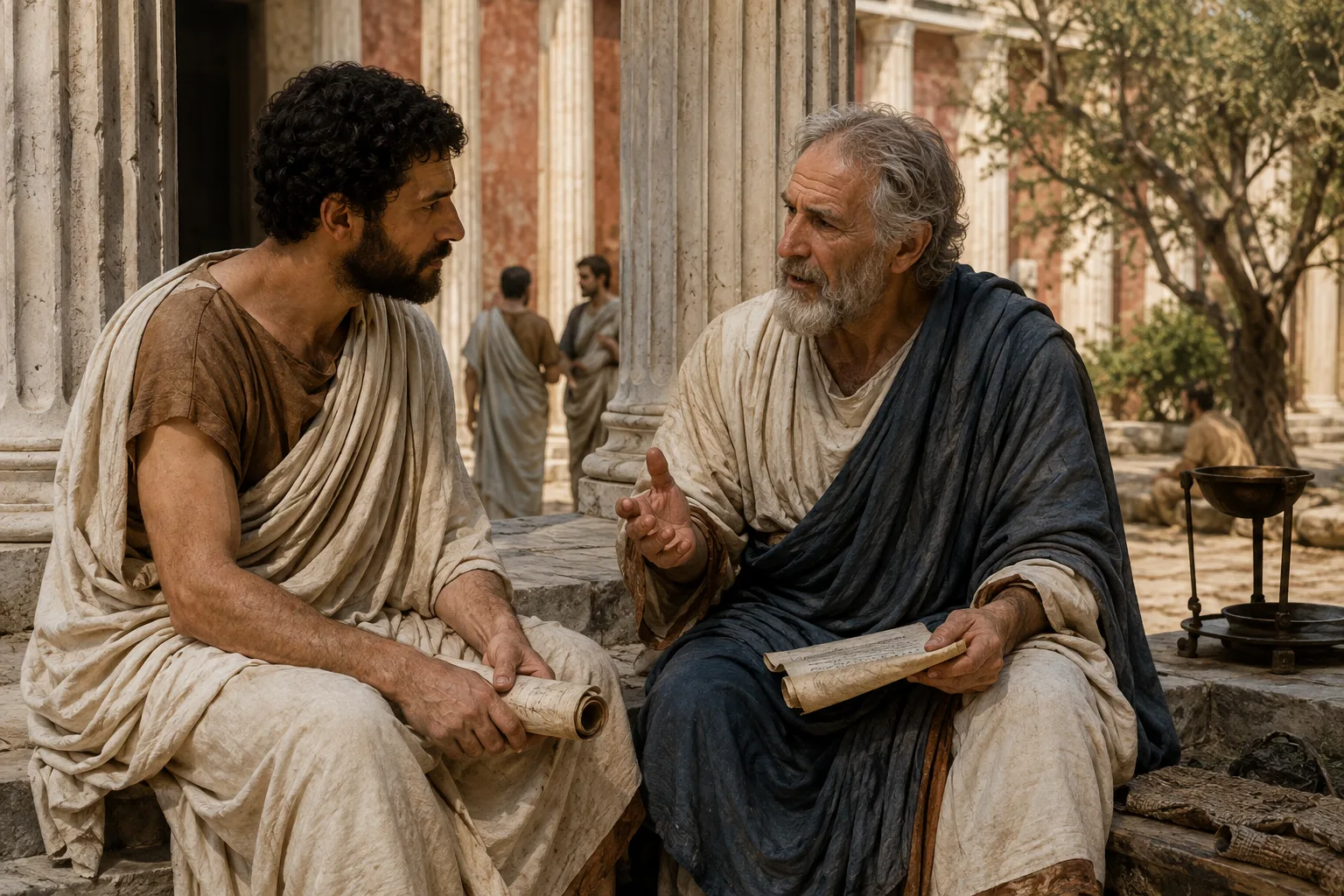
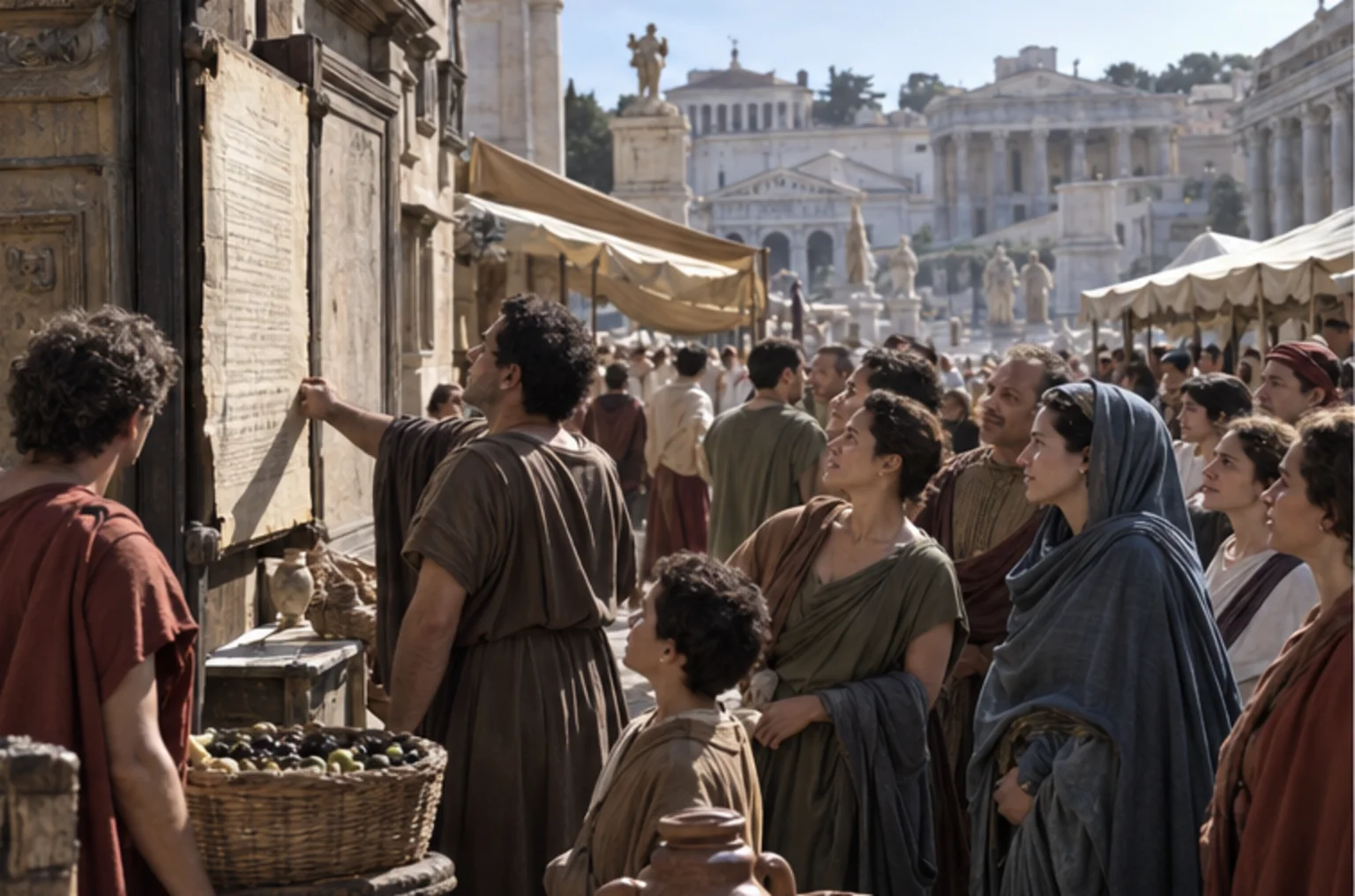
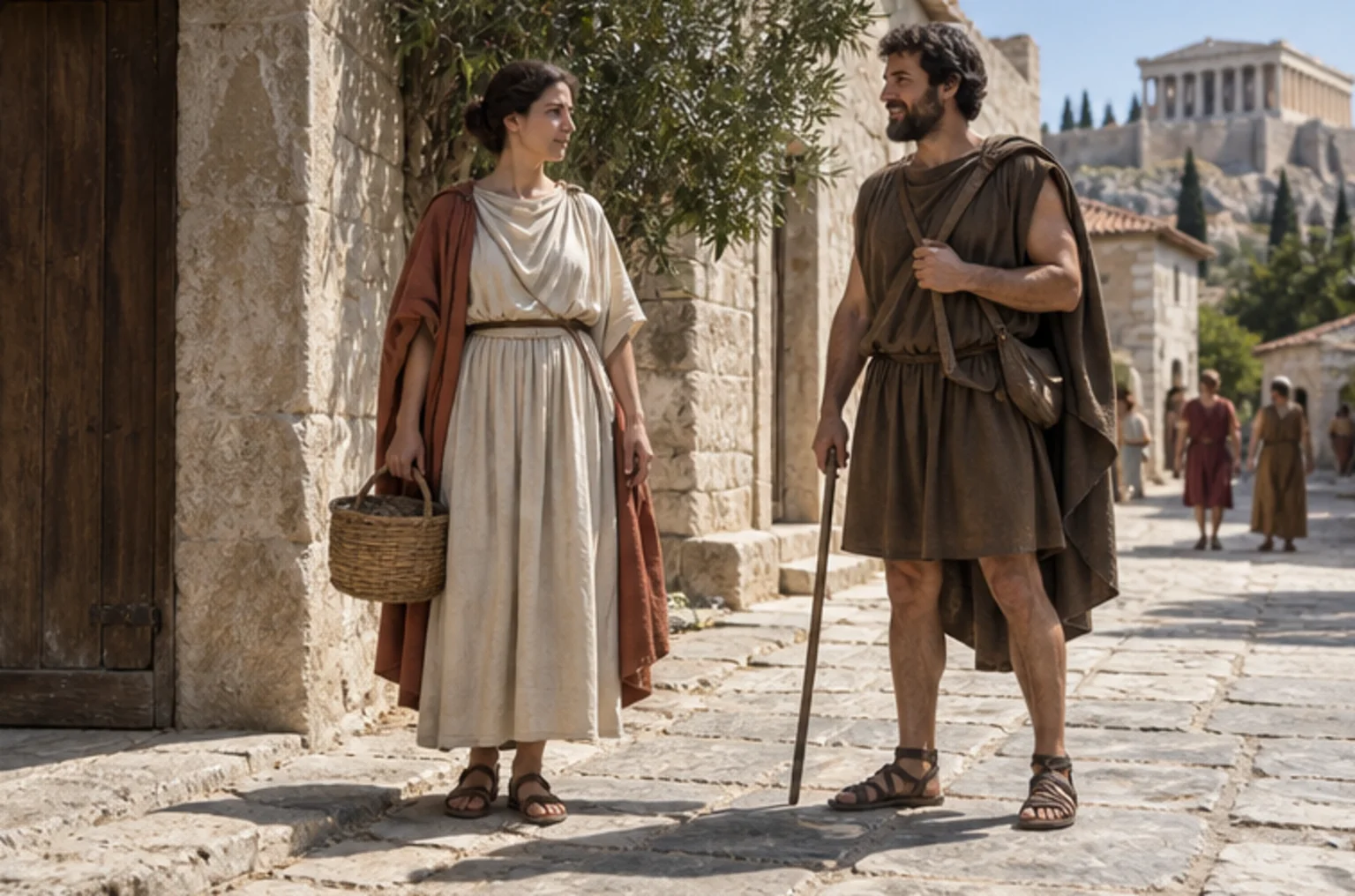
The corpus manifests do not yet establish the precise place and circumstances of composition. The images below document the author’s world or the text’s transmission. They do not claim to show the exact scene of writing.
These are modern reconstructions. They situate a documented place, practice, or transmission and are not period documents.
What the world looked like
World of 1989
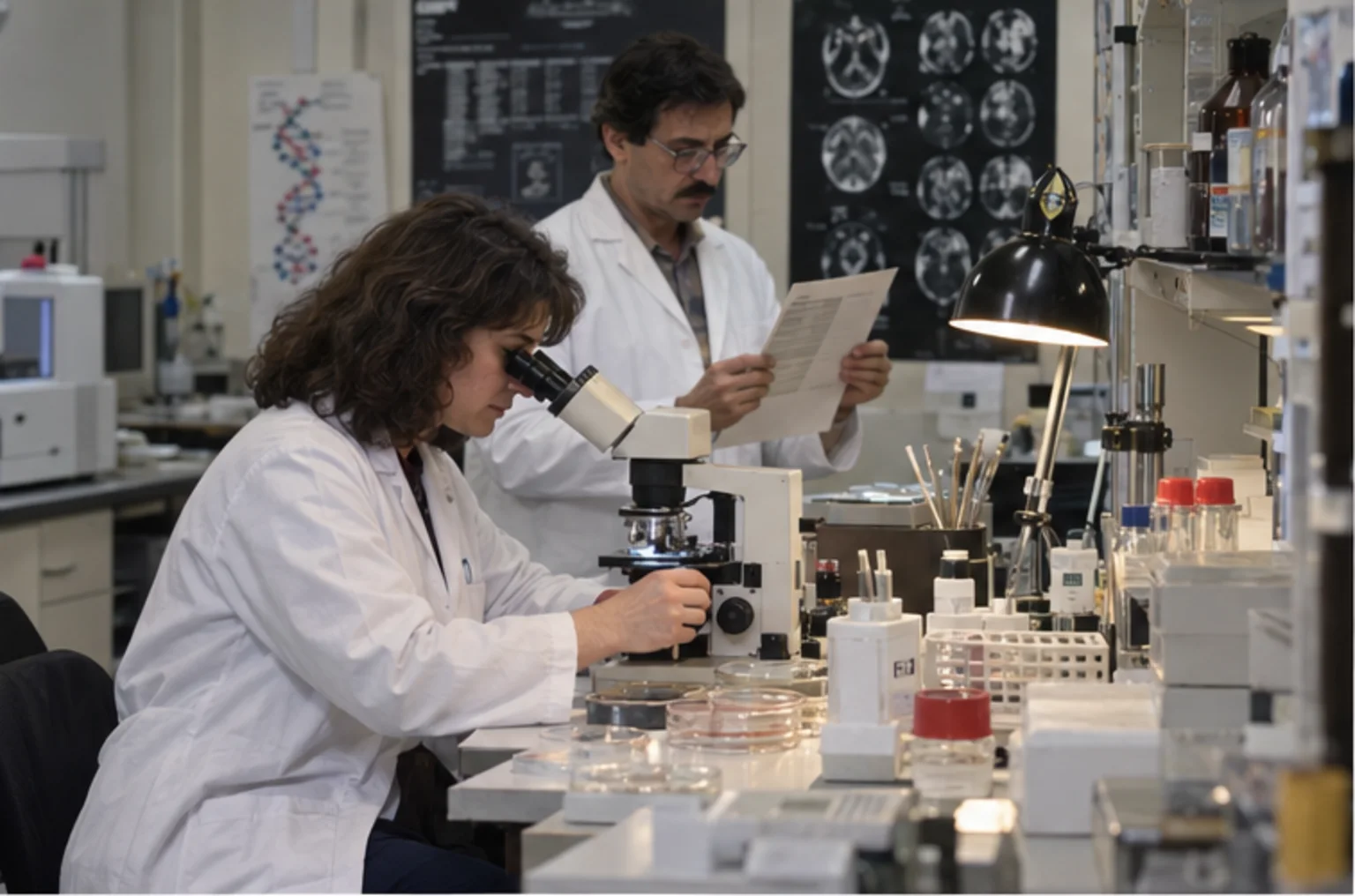

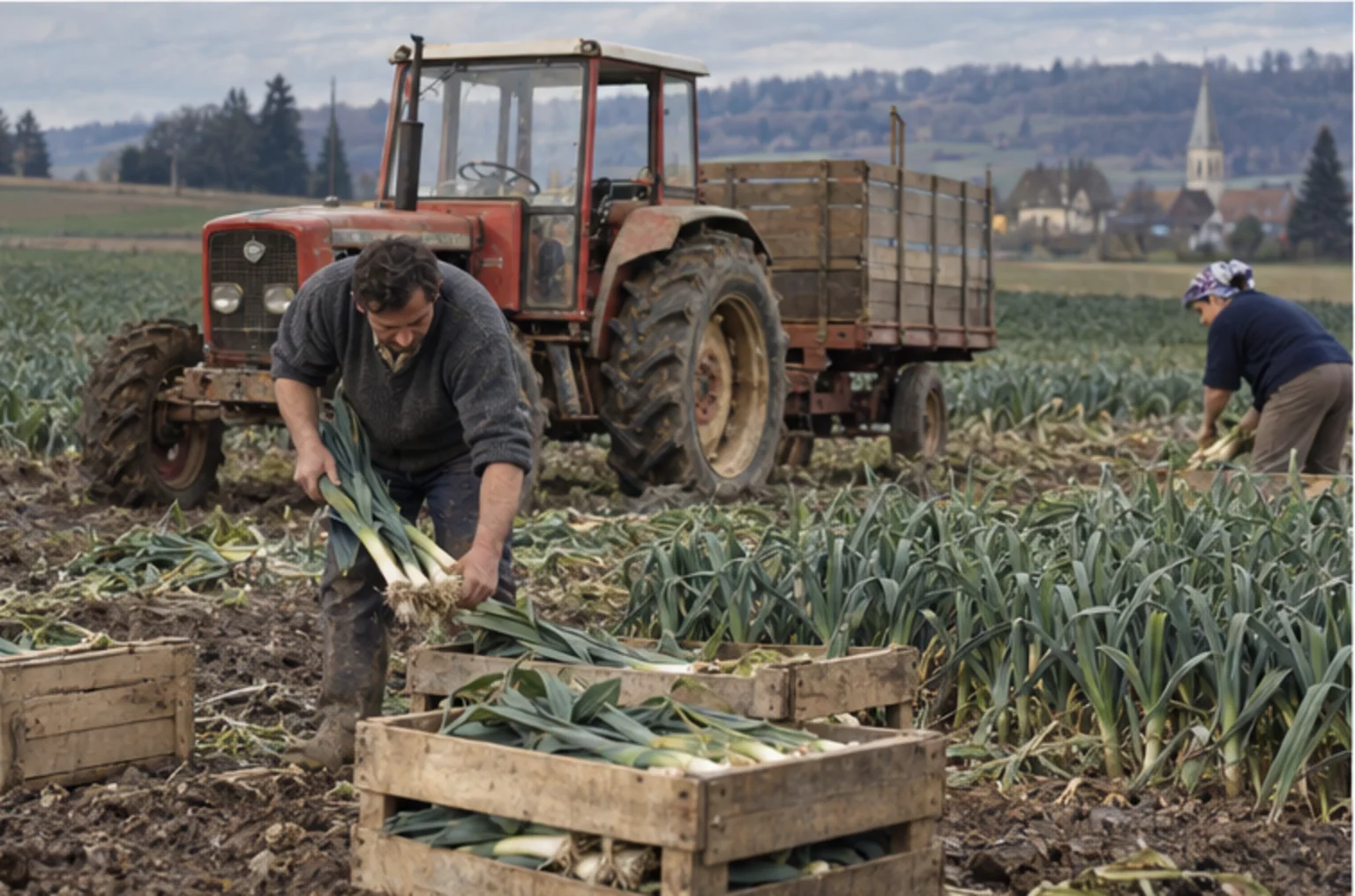
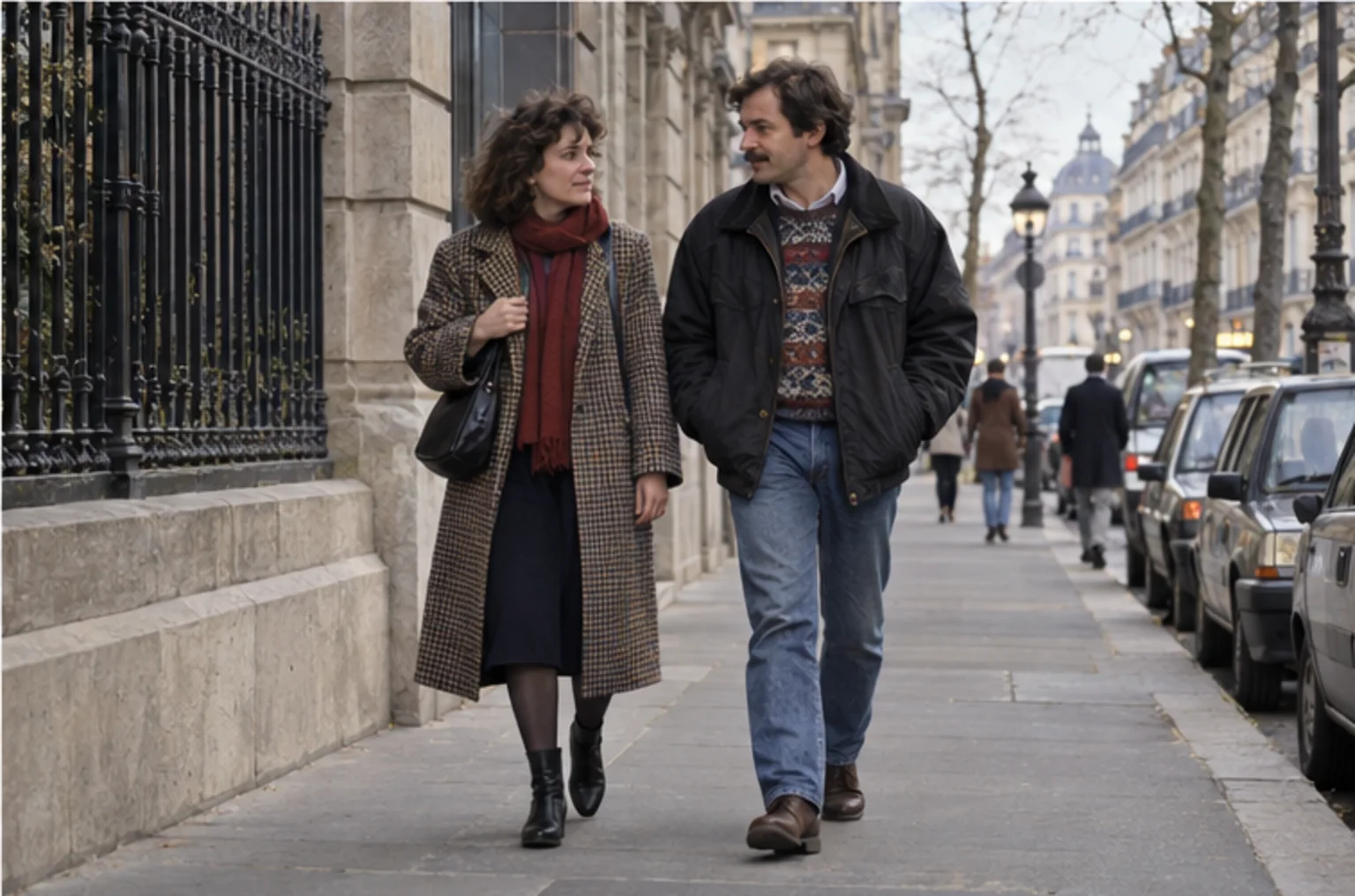
- State of technology
- Personal computers, satellites, video, industrial robots, and expensive mobile phones exist, but the public Web does not yet.
- Science and knowledge
- Computing, genetics, climate science, cosmology, and medical imaging produce growing data and international collaboration.
- Medicine and care
- CT, MRI, transplantation, vaccines, and intensive care advance; the AIDS epidemic exposes both medical capacity and its limits.
- Transport
- Cars, high-speed rail, metros, aircraft, and containers globalize people and goods.
- Agriculture and food
- Machinery, chemical inputs, breeding, and cold chains support high yields with increasingly debated social and environmental costs.
- Communication
- Fixed telephones, fax, television, radio, and newspapers predominate. Email and computer networks remain mainly professional or academic.
- Clothing and fashion
- Loose suits, jeans, trainers, women’s power suits, sportswear, and urban subcultures create highly varied silhouettes.
Editions, translations, and provenance
The following carriers represent the text. They do not create new passage identities.
- Ancient Greekcomplete_aligned_work
- Englishcomplete_aligned_work
- French AI-generated translation, non-officialCodex gpt-5.6-sol · Non-official working translation · 2026-09-13
Source manifests: plutarch.progress_in_virtue
Reader
Read page by page
My friend Sossius Senecio, Is it possible, do you think, that all the arguments in the world can make a man sensibly assured that he is a proficient in virtue, upon this supposition, that his proceedings do not in the least alleviate and abate his folly, but that the vice in him, weighing in equal balance against his good inclinations, holds him down, as Heavy lead pulls down the yielding net? In the study of music or grammar, I am sure, such a conclusion would be very absurd; for the scholar could never be certain that he had made any improvement in those sciences, if all the while he is a learning he did not exhaust by little and little his former ignorance about them, but remained during the whole progress of his application under the same degree of unskilfulness as at first setting out. The like may be said of those that are under the hands of a physician. According to this assertion, if the patient take physic which does not recruit his strength or give him ease by abating the severity of the distemper, it is absolutely impossible that he should discern any alteration in himself, before the contrary habit is perfectly and in the highest degree induced, and his body thoroughly sound and well. As in these instances you cannot say the persons have advanced any thing, so long as they perceive no sensible change in themselves by the abatement of the contrary weight, and do not find that their minds are elevated, as it were, in the opposite scale; just so, in truth, is it with those that profess philosophy. They cannot be assured of any progress or improvement, if the soul do not gradually advance and purge off the rest of its former imperfections, but still lie under the like equal pressure and grievance of pure, absolute, unmixed evil, till it have attained the state of perfect, supreme good; for the truth of it is, a wise man cannot in a moment of time change from the lowest degree of vice imaginable to the most heroic perfection of virtue, if he only make a brisk attempt to throw off vice all at once, and do not constantly and resolutely endeavor by little and little to lighten the burthen and dispossess the evil habit of it. You know very well how much trouble those give themselves who maintain this assertion, and what strange questions they raise with regard to it, - for instance, why a wise virtuous man should never perceive how he became such, but should either be quite ignorant, or at least doubt, that ever by little and little, now adding something, now subtracting and removing others, he advanced to the aggregate perfection of virtue. Now if (as they affirm) the change from bad to good were either so quick and sudden, as that he was extremely vicious in the morning may become eminently virtuous at night, or that any one going to bed wicked might chance to rise a virtuous man next morning, and, having all the former day’s errors and imperfections absolutely removed out of his mind, might say to them, as it is in the poet, Vain dreams ! farewell, like spectres haste away, At the new light of virtue’s glorious day; do you think that any one in the world could be ignorant of so extraordinary a conversion, and perfectly shut his eyes upon the beams of virtue and wisdom so fully and manifestly breaking in upon his soul? In my opinion, if any person should have Caeneus’s foolish wish, and be changed (as it is reported he was) from one sex to the other, it is more probable that such a one should be altogether ignorant of the metamorphosis, than that any should, from a lazy, unthinking, debauched fellow, commence a wise, prudent, and valiant hero, and from a sottish bestiality advance to the perfection of divine life, and yet know nothing at all of the change.