
Traceable Library

Explore the corpus of thinkers on prokopton42.com

We do not always look for a work, a text, or a passage in the same way. Browse by work as you would in a traditional library, travel through time, follow a semantic concept, or go straight to a precise excerpt. This Library exists to support practice and deeper study by bringing old texts into contact with daily experience and present questions.

Works
305
Authors
94
Passages
89,767
See more statistics
Corpus works
259
Private works
46
Private records
56
Private excerpts
20,006
Text representations
223,819
Editions and translations
849
Languages
17
Works in French and English
259
Multilingual works
259
Tracked concepts
9
Estimated sentences
1,456,557
Words
27,541,029

A representation is one language version of a canonical passage. Private excerpts come from source files. Sentence count is estimated from punctuation.

By work45
Moral accountability

Works

Books, collections and works from the Private collection share this shelf. Each card keeps its editions and sources.

Photorealistic editorial illustration of Abraham Lincoln Papers: Incoming and Contextual Documents in the Prokopton42.com Library Abraham Lincoln Papers: Incoming and Contextual DocumentsCorrespondents and archival record

Work

Abraham Lincoln Papers: Incoming and Contextual Documents

Incoming letters, petitions, and administrative records preserve the voices of people who petitioned, informed, or challenged Lincoln. The archive reveals the pressures of a wartime presidency without attributing his correspondents’ words to the president.

What you will learn
Composition
1833-1916
Editions / translations
2026
Languages
English · French
Extent
19,210 passages · 7,989,852 words
Photorealistic editorial illustration of Abraham Lincoln Papers: Lincoln-Authored Documents in the Prokopton42.com Library Abraham Lincoln Papers: Lincoln-Authored DocumentsAbraham Lincoln

Work

Abraham Lincoln Papers: Lincoln-Authored Documents

Letters, speeches, proclamations, and notes follow Lincoln from Illinois politics through the Civil War. They show his language of Union, slavery, emancipation, executive power, and reconciliation taking shape under pressure.

What you will learn
Composition
1833-1865
Editions / translations
Dates to be documented
Languages
English · French
Extent
982 passages · 326,103 words
Photorealistic editorial illustration of An Essay Concerning Human Understanding in the Prokopton42.com Library An Essay Concerning Human UnderstandingJohn Locke

Work

An Essay Concerning Human Understanding

The Essay examines the origin and composition of ideas, personal identity, and the limits of knowledge.

What you will learn
Composition
1689-1700; revised lifetime editions
Editions / translations
Dates to be documented
Languages
English · French
Extent
1,114 passages · 257,071 words
Photorealistic editorial illustration of Answers to Objections Concerning the Christian Religion, by Elizabeth Carter in the Prokopton42.com Library Answers to Objections Concerning the Christian Religion, by Elizabeth CarterElizabeth Carter

Work

Answers to Objections Concerning the Christian Religion, by Elizabeth Carter

Elizabeth Carter answers a friend’s doubts after a close rereading of the Gospels. She defends Christianity’s credibility while freely stating the moral and textual difficulties that, in her view, require reasoned answers.

What you will learn
Composition
before 1806; published posthumously in 1807
Editions / translations
Dates to be documented
Languages
English · French
Extent
69 passages · 18,442 words
Photorealistic editorial illustration of Brutus, or On Eminent Orators in the Prokopton42.com Library Brutus, or On Eminent OratorsCicero

Work

Brutus, or On Eminent Orators

Cicero traces the history of Roman eloquence through the speakers who shaped it. The dialogue combines criticism, portraiture, and an anxious reflection on public speech at a moment when the Republic is losing its freedom.

What you will learn
Composition
46 BCE
Editions / translations
Dates to be documented
Languages
Latin · English · French
Extent
334 passages · 79,995 words
Photorealistic editorial illustration of Cato the Younger in the Prokopton42.com Library Cato the YoungerPlutarch

Work

Cato the Younger

Cato the Younger observes character in action and tests moral rules against concrete situations.

What you will learn
Composition
late 1st to early 2nd century CE; internal order uncertain
Editions / translations
Dates to be documented
Languages
Ancient Greek · English · French
Extent
318 passages · 25,464 words
Photorealistic editorial illustration of Critias in the Prokopton42.com Library CritiasPlato

Work

Critias

Critias tells of ancient Athens and Atlantis, an island power whose initial order decays into desire for domination. The narrative continues the Timaeus but breaks off before the announced war and provides no completed conclusion.

What you will learn
Composition
c. 360-347 BCE
Editions / translations
Dates to be documented
Languages
Ancient Greek · English · French
Extent
16 passages · 7,257 words
Photorealistic editorial illustration of Discourses of Epictetus, Recorded by Arrian in the Prokopton42.com Library Discourses of Epictetus, Recorded by ArrianEpictetus

Work

Discourses of Epictetus, Recorded by Arrian

Arrian transmits Epictetus’ oral teaching as lively exchanges with students. The teacher confronts their ambitions, fears, and inconsistencies with a central demand: govern assent, desire, and action rather than claim command over events.

What you will learn
Composition
teaching recorded by Arrian, c. 108-125 CE
Editions / translations
Dates to be documented
Languages
Ancient Greek · English · French
Extent
95 passages · 118,661 words
Photorealistic editorial illustration of Discourses of Musonius Rufus Reported by Lucius in the Prokopton42.com Library Discourses of Musonius Rufus Reported by LuciusMusonius Rufus

Work

Discourses of Musonius Rufus Reported by Lucius

Lucius reports teachings in which Musonius applies philosophy to food, housing, marriage, education, and exile. Virtue is tested in ordinary habits and must be practised by women as well as men.

What you will learn
Composition
late 1st or early 2nd century CE
Editions / translations
Dates to be documented
Languages
Ancient Greek · English · French
Extent
21 passages · 21,330 words
Photorealistic editorial illustration of Epinomis, an Ancient Appendix to the Laws in the Prokopton42.com Library Epinomis, an Ancient Appendix to the LawsPlato

Work

Epinomis, an Ancient Appendix to the Laws

The Epinomis returns to the wisdom required by a legislator and directs it toward number, astronomy, and worship of the stars. Transmitted as a sequel to the Laws, it has an ancient but strongly disputed attribution to Plato.

What you will learn
Composition
after 347, c. 347-330 BCE
Editions / translations
Dates to be documented
Languages
Ancient Greek · English · French
Extent
20 passages · 9,251 words
Photorealistic editorial illustration of Ethics, Émile Saisset’s French Translation in the Prokopton42.com Library Ethics, Émile Saisset’s French TranslationBaruch Spinoza

Work

Ethics, Émile Saisset’s French Translation

Émile Saisset’s translation gives the demonstrative architecture of Spinoza’s Ethics in French. God identified with Nature, mind-body parallelism, analysis of passions, and intellectual blessedness unfold through nineteenth-century terminology.

What you will learn
Composition
composed c. 1661-1675; published in 1677
Editions / translations
Dates to be documented
Languages
French · English
Extent
300 passages · 92,036 words
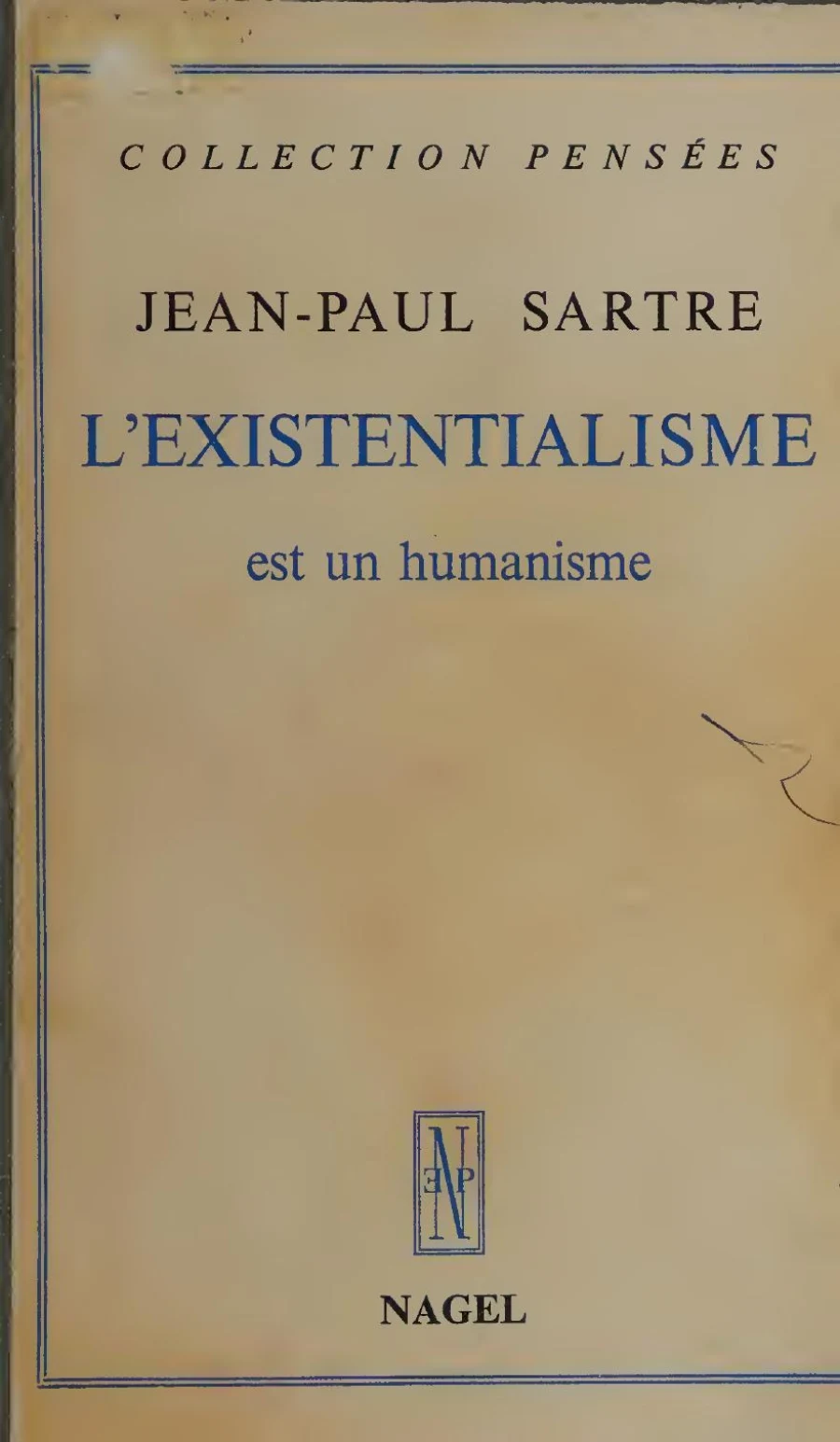
Photorealistic editorial illustration of Existentialism Is a Humanism in the Prokopton42.com Library Existentialism Is a HumanismJean-Paul Sartre

Work

Existentialism Is a Humanism

Sartre defends existentialism against quietism and despair: a person defines themselves through acts, within a situation they did not wholly choose.

What you will learn
Composition
October 1945 lecture; 1966 Nagel manifestation
Editions / translations
1966
Languages
French · English
Extent
20 passages · 11,542 words
Photorealistic editorial illustration of Laws in the Prokopton42.com Library LawsPlato

Work

Laws

An Athenian, a Cretan, and a Spartan design institutions for a new city. Without Socrates, the dialogue examines legislation, education, worship, property, family, and punishment, asking how law can form citizens rather than merely constrain them.

What you will learn
Composition
c. 360-347 BCE; late work left unfinished
Editions / translations
Dates to be documented
Languages
Ancient Greek · English · French
Extent
327 passages · 148,152 words
Photorealistic editorial illustration of Letters Attributed to Plato in the Prokopton42.com Library Letters Attributed to PlatoPlato

Fragments or testimony

Letters Attributed to Plato

Letters transmitted under Plato’s name discuss Syracuse, political counsel, friendship, and life around the Academy. Authenticity is debated item by item; the collection should not be read as uniformly secure personal correspondence.

What you will learn
Composition
4th-3rd centuries BCE; authenticity varies by letter
Editions / translations
Dates to be documented
Languages
Ancient Greek · English · French
Extent
55 passages · 23,675 words
Photorealistic editorial illustration of Letters from Elizabeth Carter to Catherine Talbot in the Prokopton42.com Library Letters from Elizabeth Carter to Catherine TalbotElizabeth Carter

Fragments or testimony

Letters from Elizabeth Carter to Catherine Talbot

Carter’s letters to Catherine Talbot follow an intellectual friendship shaped by reading, health, faith, work, and daily news. Private conversation becomes a place for testing scholarly vocation, social duty, and female independence.

What you will learn
Composition
correspondence, 1741-1770
Editions / translations
Dates to be documented
Languages
English · French
Extent
139 passages · 109,330 words
Photorealistic editorial illustration of Letters from Elizabeth Carter to Elizabeth Montagu in the Prokopton42.com Library Letters from Elizabeth Carter to Elizabeth MontaguElizabeth Carter

Fragments or testimony

Letters from Elizabeth Carter to Elizabeth Montagu

In letters to Elizabeth Montagu, Carter combines friendship, social observation, and literary life. Publications, travel, bereavement, and networks of sociability show two women negotiating intellectual authority, reputation, and mutual support.

What you will learn
Composition
correspondence, 1758-1805
Editions / translations
Dates to be documented
Languages
English · French
Extent
232 passages · 227,104 words
Photorealistic editorial illustration of Letter to Herodotus in the Prokopton42.com Library Letter to HerodotusEpicurus

Fragments or testimony

Letter to Herodotus

Epicurus condenses for Herodotus the principles of his physics: atoms and void, formation of worlds, perception, soul, and language. This memorable outline offers a coherent view of nature able to dispel mythical explanations that generate fear.

What you will learn
Composition
late 4th or early 3rd century BCE
Editions / translations
Dates to be documented
Languages
Ancient Greek · English · French
Extent
1 passage · 6,463 words
Photorealistic editorial illustration of Letter to Pythocles in the Prokopton42.com Library Letter to PythoclesEpicurus

Fragments or testimony

Letter to Pythocles

The Letter to Pythocles offers several possible natural explanations for celestial and meteorological phenomena. Epicurus does not always seek one cause; he aims to exclude threatening divine stories when several mechanisms remain compatible with experience.

What you will learn
Composition
late 4th or early 3rd century BCE
Editions / translations
Dates to be documented
Languages
Ancient Greek · English · French
Extent
1 passage · 4,286 words

Before reading

What you will learn

Open the full record