
Traceable Library

Explore the corpus of thinkers on prokopton42.com

We do not always look for a work, a text, or a passage in the same way. Browse by work as you would in a traditional library, travel through time, follow a semantic concept, or go straight to a precise excerpt. This Library exists to support practice and deeper study by bringing old texts into contact with daily experience and present questions.

Works
305
Authors
94
Passages
89,767
See more statistics
Corpus works
259
Private works
46
Private records
56
Private excerpts
20,006
Text representations
223,819
Editions and translations
849
Languages
17
Works in French and English
259
Multilingual works
259
Tracked concepts
9
Estimated sentences
1,456,557
Words
27,541,029

A representation is one language version of a canonical passage. Private excerpts come from source files. Sentence count is estimated from punctuation.

By work26
Learning and repeated practice

Works

Books, collections and works from the Private collection share this shelf. Each card keeps its editions and sources.

Photorealistic editorial illustration of Abraham Lincoln Papers: Incoming and Contextual Documents in the Prokopton42.com Library Abraham Lincoln Papers: Incoming and Contextual DocumentsCorrespondents and archival record

Work

Abraham Lincoln Papers: Incoming and Contextual Documents

Incoming letters, petitions, and administrative records preserve the voices of people who petitioned, informed, or challenged Lincoln. The archive reveals the pressures of a wartime presidency without attributing his correspondents’ words to the president.

What you will learn
Composition
1833-1916
Editions / translations
2026
Languages
English · French
Extent
19,210 passages · 7,989,852 words
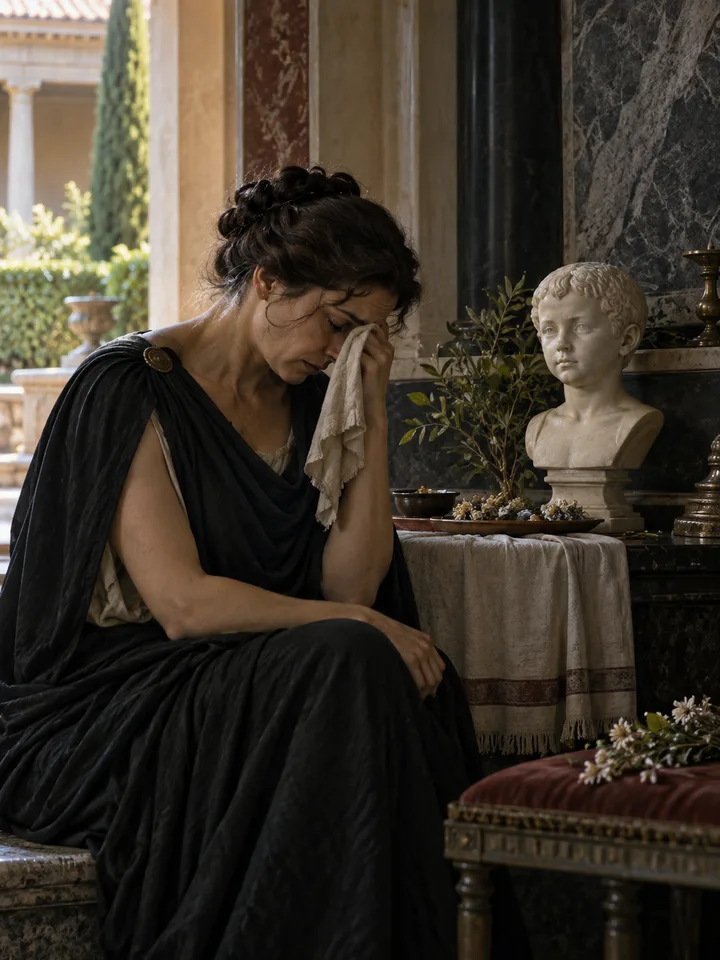
Photorealistic editorial illustration of Consolation to Marcia in the Prokopton42.com Library Consolation to MarciaSeneca

Work

Consolation to Marcia

Seneca addresses Marcia, long overwhelmed by the death of her son. He contrasts models of mourning, recalls the vulnerability of every life, and seeks a memory that honours the dead without indefinitely sustaining the wound.

What you will learn
Composition
c. 39-40 CE
Editions / translations
Dates to be documented
Languages
Latin · English · French
Extent
26 passages · 14,991 words
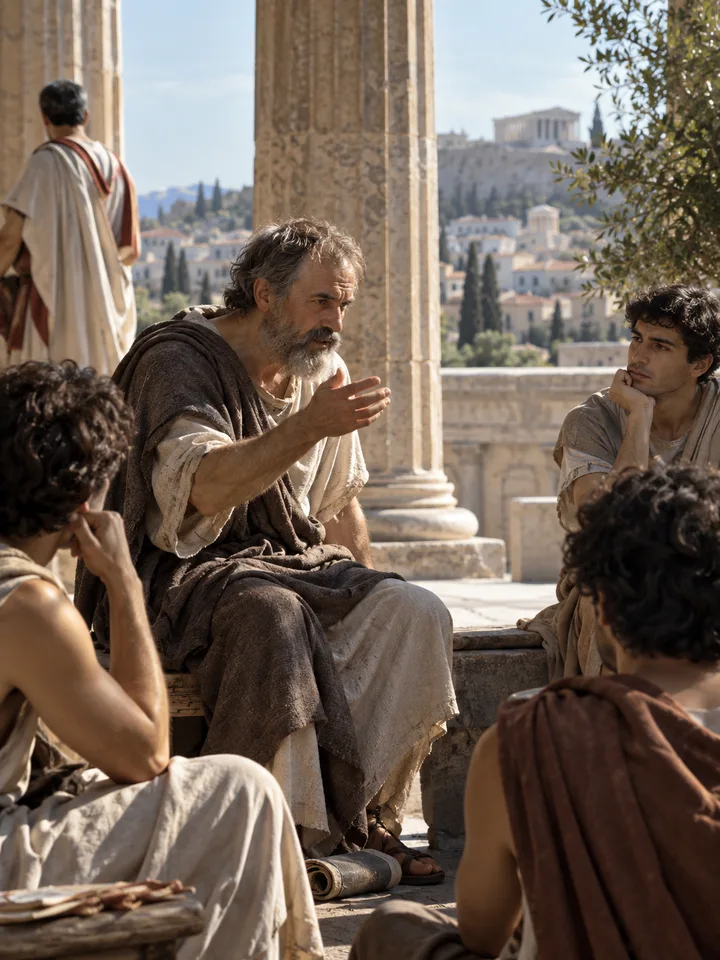
Photorealistic editorial illustration of Discourses of Epictetus, Recorded by Arrian in the Prokopton42.com Library Discourses of Epictetus, Recorded by ArrianEpictetus

Work

Discourses of Epictetus, Recorded by Arrian

Arrian transmits Epictetus’ oral teaching as lively exchanges with students. The teacher confronts their ambitions, fears, and inconsistencies with a central demand: govern assent, desire, and action rather than claim command over events.

What you will learn
Composition
teaching recorded by Arrian, c. 108-125 CE
Editions / translations
Dates to be documented
Languages
Ancient Greek · English · French
Extent
95 passages · 118,661 words
Photorealistic editorial illustration of Dīgha Nikāya: Collection of Long Discourses in the Prokopton42.com Library Dīgha Nikāya: Collection of Long DiscoursesSiddhartha Gautama / Buddha

Work

Dīgha Nikāya: Collection of Long Discourses

The Dīgha Nikāya contains extended teachings in which the Buddha and his interlocutors examine ritual, rival doctrines, ethics, meditation, and human destiny. Several narratives also portray the Buddhist community and preserve memories of the teacher’s final days.

What you will learn
Composition
oral strata, late 5th to 3rd centuries BCE; later Pali organization
Editions / translations
Dates to be documented
Languages
English · Pali · French
Extent
34 passages · 188,836 words
Photorealistic editorial illustration of Epinomis, an Ancient Appendix to the Laws in the Prokopton42.com Library Epinomis, an Ancient Appendix to the LawsPlato

Work

Epinomis, an Ancient Appendix to the Laws

The Epinomis returns to the wisdom required by a legislator and directs it toward number, astronomy, and worship of the stars. Transmitted as a sequel to the Laws, it has an ancient but strongly disputed attribution to Plato.

What you will learn
Composition
after 347, c. 347-330 BCE
Editions / translations
Dates to be documented
Languages
Ancient Greek · English · French
Extent
20 passages · 9,251 words
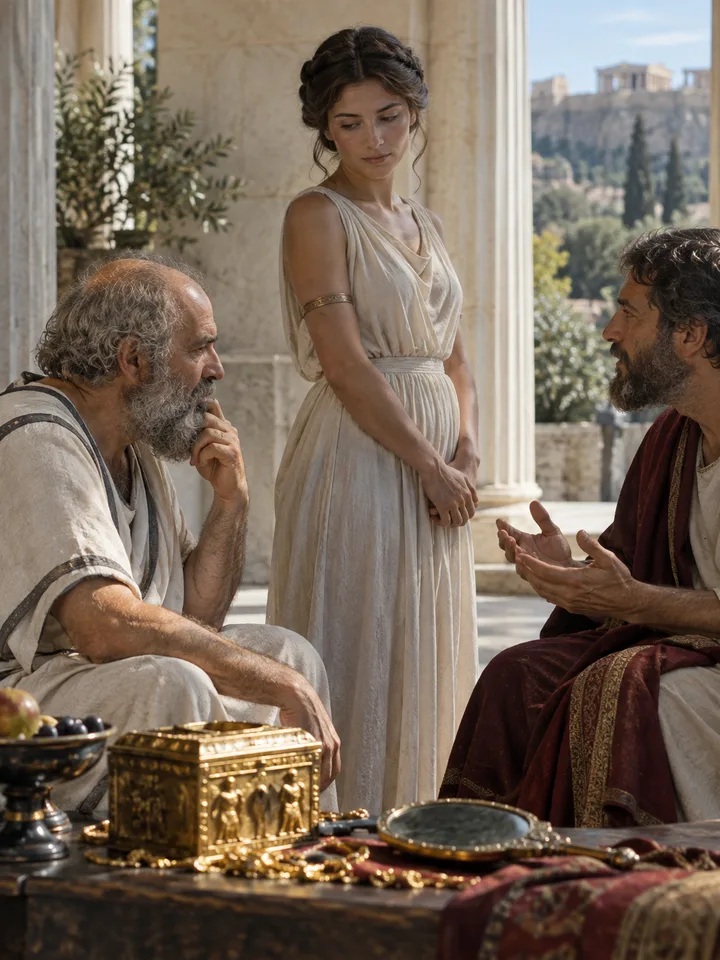
Photorealistic editorial illustration of Hippias Major in the Prokopton42.com Library Hippias MajorPlato

Work

Hippias Major

Socrates asks the sophist Hippias not which things are beautiful but what beauty itself is. A young woman, gold, appropriateness, utility, and sensory pleasure each fail to provide a definition without counterexample.

What you will learn
Composition
4th century BCE; authenticity disputed
Editions / translations
Dates to be documented
Languages
Ancient Greek · English · French
Extent
24 passages · 11,859 words
Photorealistic editorial illustration of How a Young Man Should Study Poetry in the Prokopton42.com Library How a Young Man Should Study PoetryPlutarch

Work

How a Young Man Should Study Poetry

How a Young Man Should Study Poetry observes character in action and tests moral rules against concrete situations.

What you will learn
Composition
late 1st to early 2nd century CE; internal order uncertain
Editions / translations
Dates to be documented
Languages
Ancient Greek · English · French
Extent
14 passages · 16,252 words
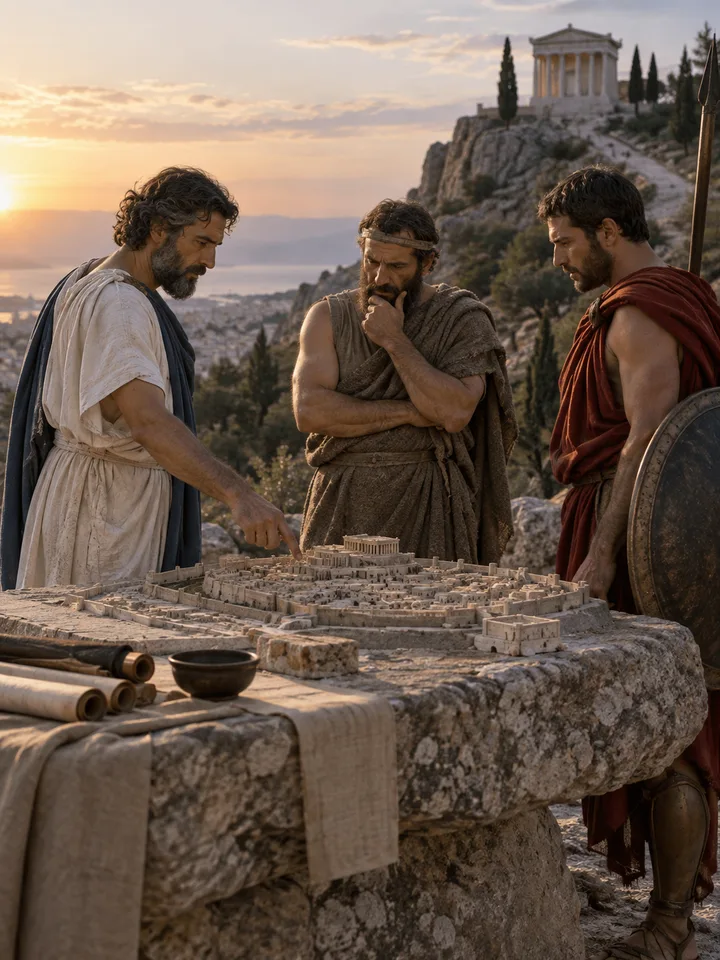
Photorealistic editorial illustration of Laws in the Prokopton42.com Library LawsPlato

Work

Laws

An Athenian, a Cretan, and a Spartan design institutions for a new city. Without Socrates, the dialogue examines legislation, education, worship, property, family, and punishment, asking how law can form citizens rather than merely constrain them.

What you will learn
Composition
c. 360-347 BCE; late work left unfinished
Editions / translations
Dates to be documented
Languages
Ancient Greek · English · French
Extent
327 passages · 148,152 words
Photorealistic editorial illustration of Letters Attributed to Plato in the Prokopton42.com Library Letters Attributed to PlatoPlato

Fragments or testimony

Letters Attributed to Plato

Letters transmitted under Plato’s name discuss Syracuse, political counsel, friendship, and life around the Academy. Authenticity is debated item by item; the collection should not be read as uniformly secure personal correspondence.

What you will learn
Composition
4th-3rd centuries BCE; authenticity varies by letter
Editions / translations
Dates to be documented
Languages
Ancient Greek · English · French
Extent
55 passages · 23,675 words
Photorealistic editorial illustration of Letters to Friends in the Prokopton42.com Library Letters to FriendsCicero

Fragments or testimony

Letters to Friends

The Letters to Friends gather Cicero’s exchanges with magistrates, allies, relatives, and protégés. Recommendations, intelligence, and political appeals reveal the Republic as a fabric of personal obligations, negotiation, and fragile loyalties.

What you will learn
Composition
62-43 BCE
Editions / translations
Dates to be documented
Languages
Latin · English · French
Extent
1,342 passages · 225,910 words
Photorealistic editorial illustration of Metaphysics in the Prokopton42.com Library MetaphysicsAristotle

Work

Metaphysics

Metaphysics proceeds through distinctions, objections, and causal inquiry. The surviving text has the density of a school treatise, not a transcribed conversation.

What you will learn
Composition
4th century BCE; transmitted as a layered collection
Editions / translations
Dates to be documented
Languages
Ancient Greek · English · French
Extent
142 passages · 109,138 words
Photorealistic editorial illustration of On the E at Delphi in the Prokopton42.com Library On the E at DelphiPlutarch

Work

On the E at Delphi

On the E at Delphi observes character in action and tests moral rules against concrete situations.

What you will learn
Composition
late 1st to early 2nd century CE; internal order uncertain
Editions / translations
Dates to be documented
Languages
Ancient Greek · English · French
Extent
21 passages · 6,799 words
Photorealistic editorial illustration of On Tranquillity of Mind, Plutarch in the Prokopton42.com Library On Tranquillity of Mind, PlutarchPlutarch

Work

On Tranquillity of Mind, Plutarch

On Tranquillity of Mind observes character in action and tests moral rules against concrete situations.

What you will learn
Composition
late 1st to early 2nd century CE; internal order uncertain
Editions / translations
Dates to be documented
Languages
Ancient Greek · English · French
Extent
20 passages · 10,529 words
Photorealistic editorial illustration of Outlines of Pyrrhonism in the Prokopton42.com Library Outlines of PyrrhonismSextus Empiricus

Work

Outlines of Pyrrhonism

Sextus presents Pyrrhonian scepticism as an ability to oppose appearances and arguments until judgement is suspended. Tranquillity then follows without affirming a doctrine about the real nature of things.

What you will learn
Composition
c. 180-220 CE
Editions / translations
Dates to be documented
Languages
Ancient Greek · English · French
Extent
3 passages · 68,840 words
Photorealistic editorial illustration of Poetics in the Prokopton42.com Library PoeticsAristotle

Work

Poetics

Poetics proceeds through distinctions, objections, and causal inquiry. The surviving text has the density of a school treatise, not a transcribed conversation.

What you will learn
Composition
4th century BCE; internal chronology disputed
Editions / translations
Dates to be documented
Languages
Ancient Greek · English · French
Extent
26 passages · 13,689 words
Photorealistic editorial illustration of Politics in the Prokopton42.com Library PoliticsAristotle

Work

Politics

Politics proceeds through distinctions, objections, and causal inquiry. The surviving text has the density of a school treatise, not a transcribed conversation.

What you will learn
Composition
work attested c. 335-323 BCE; earlier layers possible
Editions / translations
Dates to be documented
Languages
Ancient Greek · English · French
Extent
189 passages · 98,973 words
Photorealistic editorial illustration of Socrates in Plato’s Gorgias in the Prokopton42.com Library Socrates in Plato’s GorgiasPlato

Work

Socrates in Plato’s Gorgias

Facing three defenders of rhetoric and power, Plato’s Socrates argues that speech without knowledge of justice is flattery. He prefers suffering injustice to deforming his soul by committing it.

What you will learn
Composition
c. 390-380 BCE
Editions / translations
Dates to be documented
Languages
Ancient Greek · English · French
Extent
81 passages · 42,811 words
Photorealistic editorial illustration of Socrates in Xenophon’s Apology in the Prokopton42.com Library Socrates in Xenophon’s ApologyXenophon

Work

Socrates in Xenophon’s Apology

Xenophon explains Socrates’ proud courtroom manner through his conviction that timely death is preferable to decline in old age. The divine sign and deliberate choice not to prepare persuasive defence structure a portrait distinct from Plato’s.

What you will learn
Composition
c. 390-360 BCE
Editions / translations
Dates to be documented
Languages
Ancient Greek · English · French
Extent
34 passages · 2,999 words

Before reading

What you will learn

Open the full record