Work
Daodejing, Book of the Way and Virtue
The Daodejing explores a Way that cannot be possessed by names and an action that avoids needless force. Its compressed sayings join government, simplicity, withdrawal, and the power of what appears weak.
- Composition
- layered composition, 4th-3rd centuries BCE
Sources and precision
The range describes formation of the collection. Individual units may have different dates.
Confidence D · disputed range
- Tradition
- Early Chinese thought
- Period
- Antiquity
- Languages
- Classical Chinese · English · French
- Extent
- 81 passages · 10,432 words
Before reading
What you will learn
Interpret non-action without confusing it with passivity, follow reversals of weak and strong, and understand the limits placed on language.
Short summary
The Daodejing explores a Way that cannot be possessed by names and an action that avoids needless force. Its compressed sayings join government, simplicity, withdrawal, and the power of what appears weak.
Long summary
The short chapters set speech against silence, fullness against emptiness, and domination against flexibility. Non-action does not command passivity; it names a way of avoiding unnecessary control, especially in political conduct.
The work has a layered history of composition and transmission, and the name Laozi does not guarantee one individual author. Paradoxes and images of water, valley, or uncarved wood require relational reading rather than immediate conversion into slogans.
Inside this work
The table of contents follows the divisions actually carried by the corpus.
Work › Received chapter
- Chapter 1
- Chapter 2
- Chapter 3
- Chapter 4
- Chapter 5
- Chapter 6
- Chapter 7
- Chapter 8
- Chapter 9
- Chapter 10
- Chapter 11
- Chapter 12
- Chapter 13
- Chapter 14
- Chapter 15
- Chapter 16
- Chapter 17
- Chapter 18
- Chapter 19
- Chapter 20
- Chapter 21
- Chapter 22
- Chapter 23
- Chapter 24
- Chapter 25
- Chapter 26
- Chapter 27
- Chapter 28
- Chapter 29
- Chapter 30
- Chapter 31
- Chapter 32
- Chapter 33
- Chapter 34
- Chapter 35
- Chapter 36
- Chapter 37
- Chapter 38
- Chapter 39
- Chapter 40
- Chapter 41
- Chapter 42
- Chapter 43
- Chapter 44
- Chapter 45
- Chapter 46
- Chapter 47
- Chapter 48
- Chapter 49
- Chapter 50
- Chapter 51
- Chapter 52
- Chapter 53
- Chapter 54
- Chapter 55
- Chapter 56
- Chapter 57
- Chapter 58
- Chapter 59
- Chapter 60
- Chapter 61
- Chapter 62
- Chapter 63
- Chapter 64
- Chapter 65
- Chapter 66
- Chapter 67
- Chapter 68
- Chapter 69
- Chapter 70
- Chapter 71
- Chapter 72
- Chapter 73
- Chapter 74
- Chapter 75
- Chapter 76
- Chapter 77
- Chapter 78
- Chapter 79
- Chapter 80
- Chapter 81
Concepts covered
Historical context
The world around the text
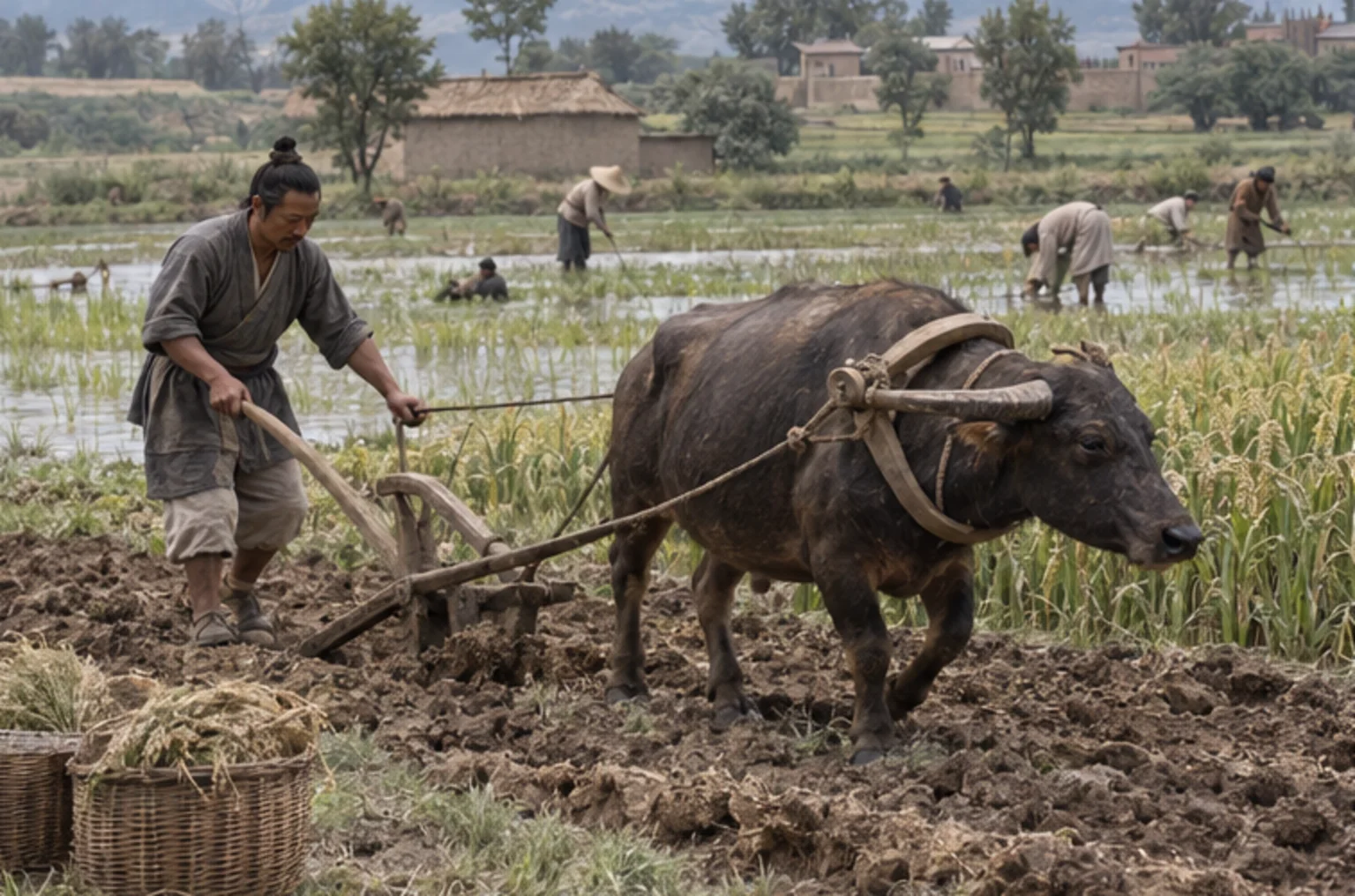
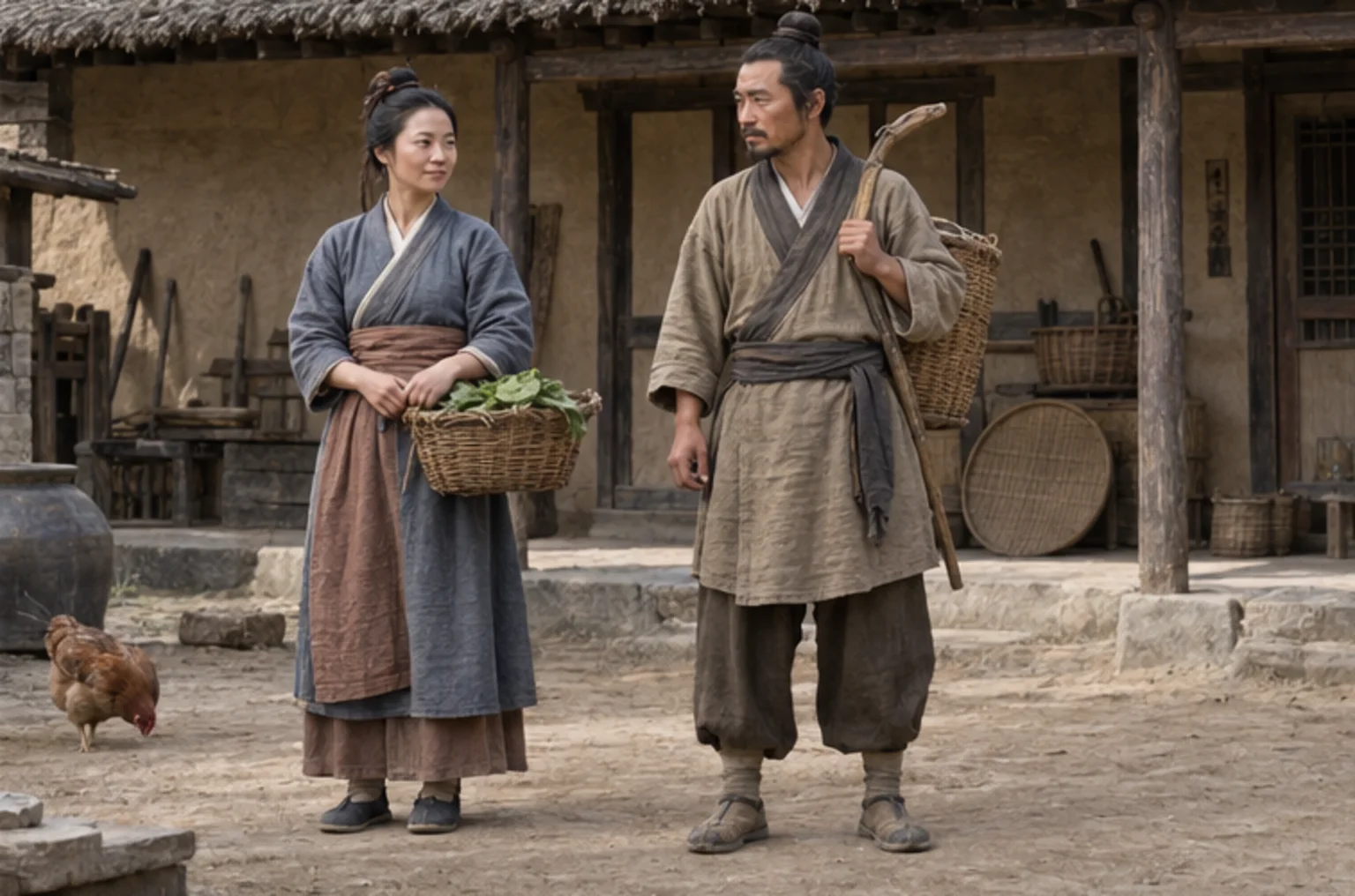
The Daodejing is generally situated in an age of competing states and intense political experiment. Its chapters have a layered history of composition and transmission. The scenes evoke a world of courts, roads, and withdrawal without claiming to reconstruct one author at work.
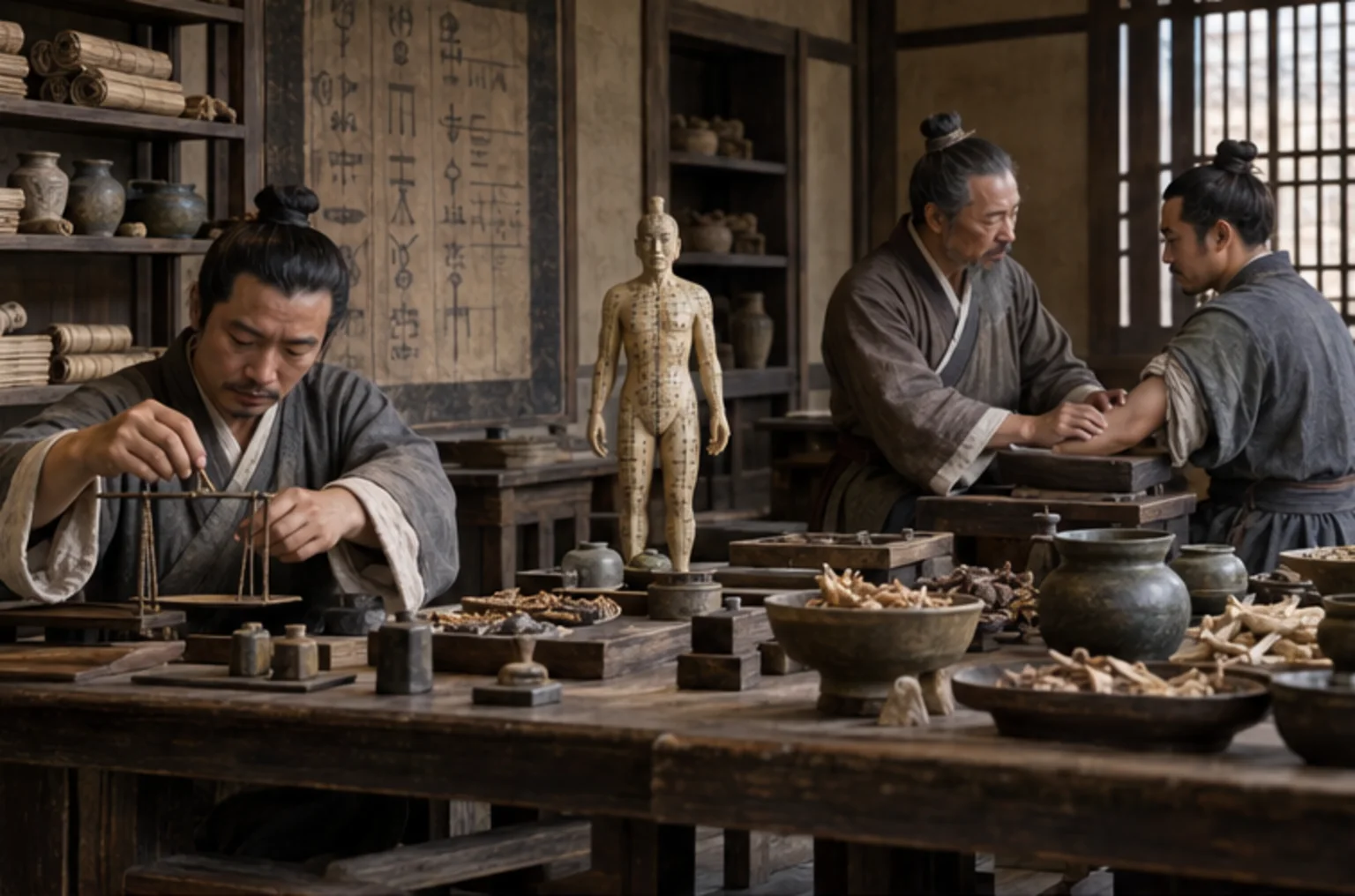
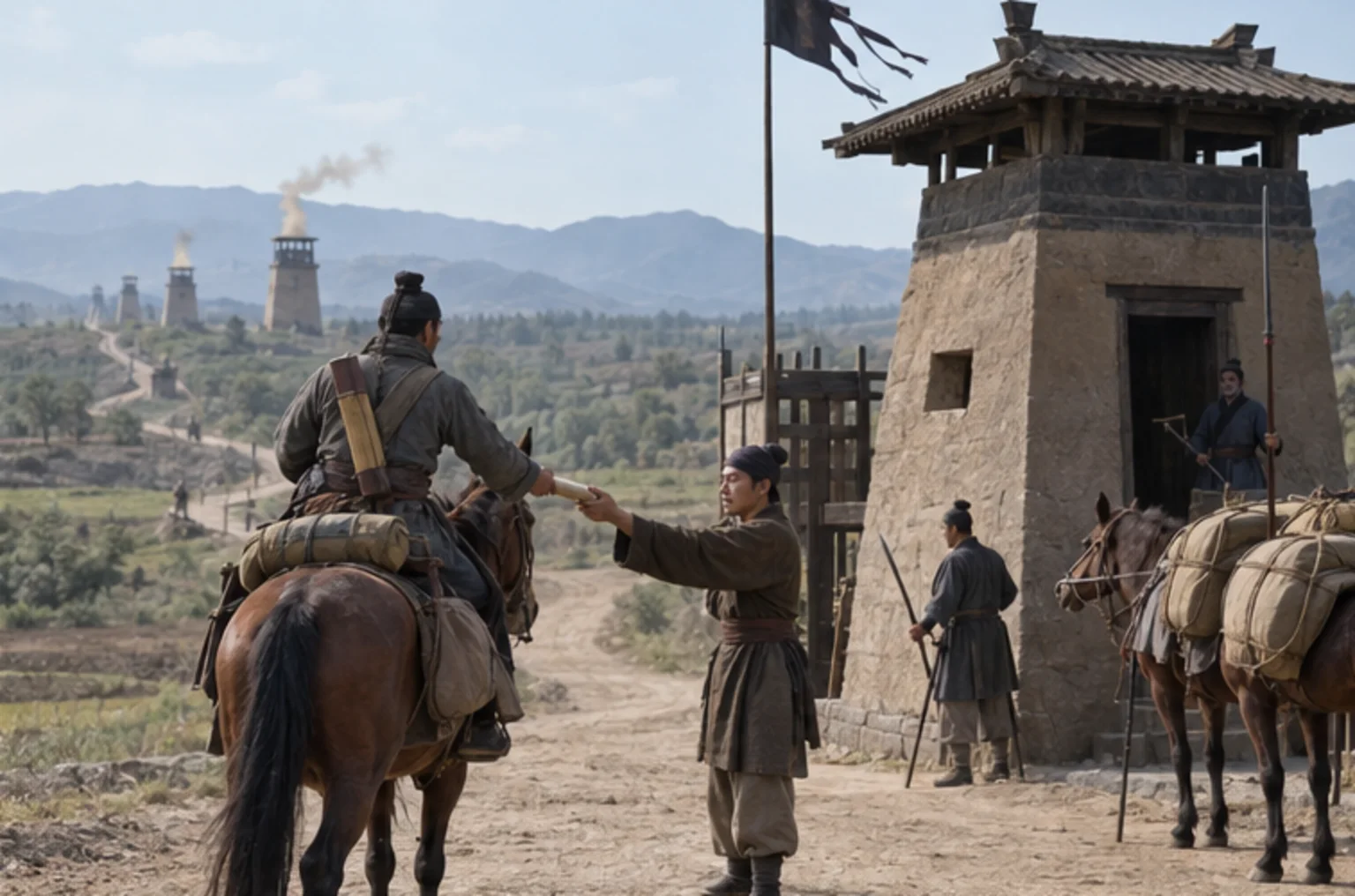
These are modern reconstructions. They situate a documented place, practice, or transmission and are not period documents.


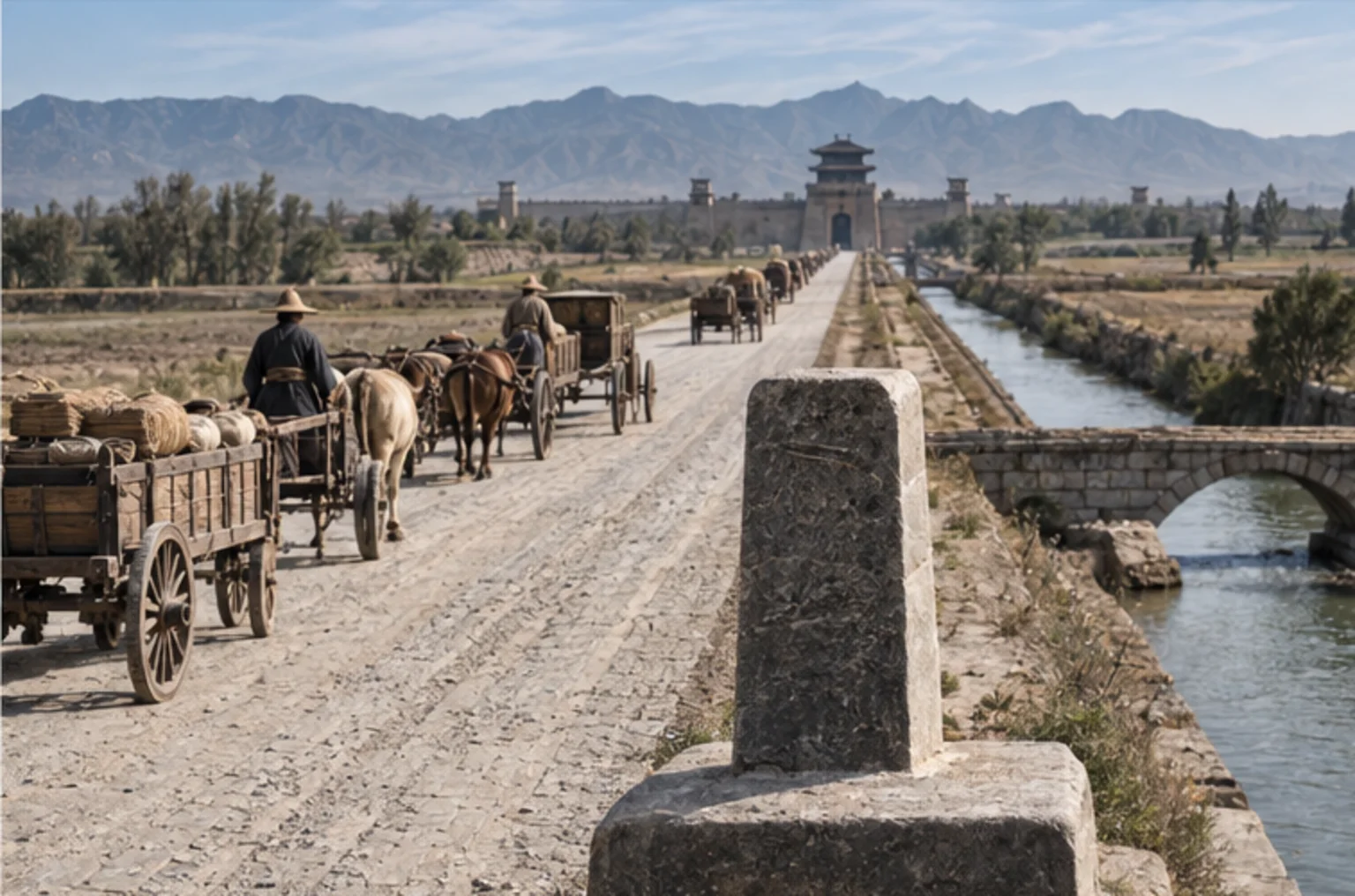
What the world looked like
Eastern Zhou and Qin China
- State of technology
- Cast iron, crossbows, roads, canals, and standardization let states mobilize people and resources on a large scale.
- Science and knowledge
- Calendars, court astronomy, administrative mathematics, and agricultural observation produce precise knowledge tied to government.
- Medicine and care
- Herbs, diet, cautery, and traditions of breath coexist. Diagnosis relies on observation without microbiology.
- Transport
- Walking, chariots, carts, cavalry, and river craft use networks that rulers seek to standardize.
- Agriculture and food
- Millet, rice, wheat, livestock, and irrigation feed rural populations subject to taxes and labour service.
- Communication
- Messengers, bells, drums, bamboo-slip documents, and administrative scripts carry orders and texts.
- Clothing and fashion
- Cross-collared robes, tunics, trousers for some riders, hairstyles, and ornaments vary by rank, gender, and region.
Editions, translations, and provenance
The following carriers represent the text. They do not create new passage identities.
- Classical Chinesereceived_original
- Englishhistorical_translation · 1891
- Frenchhistorical_translation · 1842
Source manifests: laozi.daodejing
Reader
Read page by page
Daodejing, Book of the Way and VirtueLaozi