Traceable Library

Explore the corpus of thinkers on prokopton42.com

We do not always look for a work, a text, or a passage in the same way. Browse by work as you would in a traditional library, travel through time, follow a semantic concept, or go straight to a precise excerpt. This Library exists to support practice and deeper study by bringing old texts into contact with daily experience and present questions.

Works
305
Authors
94
Passages
89,767
See more statistics
Corpus works
259
Private works
46
Private records
56
Private excerpts
20,006
Text representations
223,819
Editions and translations
849
Languages
17
Works in French and English
259
Multilingual works
259
Tracked concepts
9
Estimated sentences
1,456,557
Words
27,541,029

A representation is one language version of a canonical passage. Private excerpts come from source files. Sentence count is estimated from punctuation.

By work80
Moral decorum

Works

Books, collections and works from the Private collection share this shelf. Each card keeps its editions and sources.

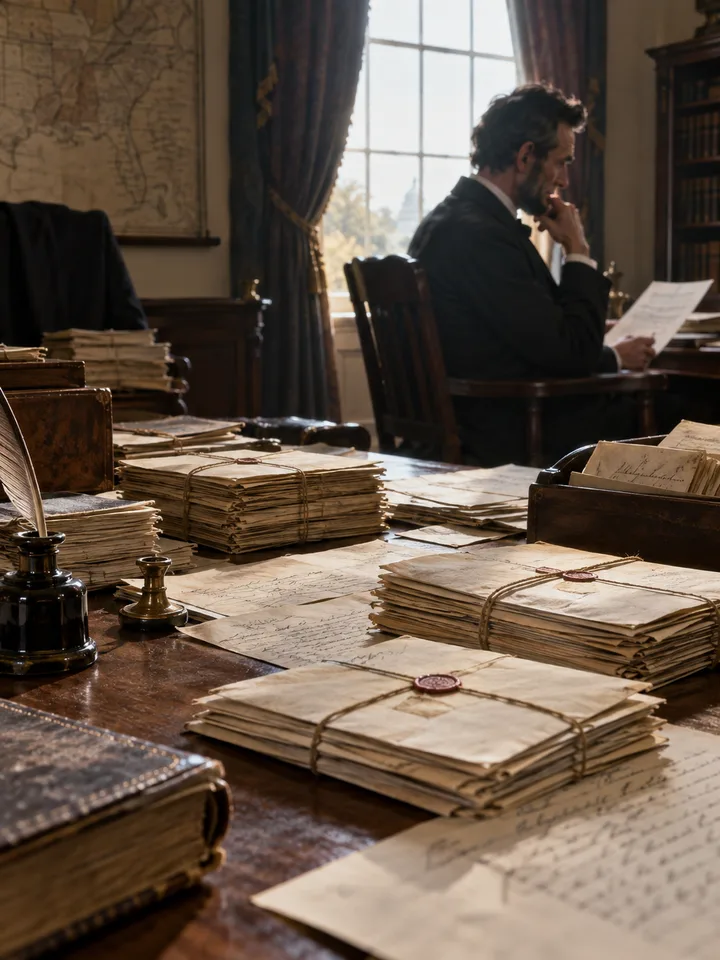
Photorealistic editorial illustration of Abraham Lincoln Papers: Incoming and Contextual Documents in the Prokopton42.com Library Abraham Lincoln Papers: Incoming and Contextual DocumentsCorrespondents and archival record

Work

Abraham Lincoln Papers: Incoming and Contextual Documents

Incoming letters, petitions, and administrative records preserve the voices of people who petitioned, informed, or challenged Lincoln. The archive reveals the pressures of a wartime presidency without attributing his correspondents’ words to the president.

What you will learn
Composition
1833-1916
Editions / translations
2026
Languages
English · French
Extent
19,210 passages · 7,989,852 words
Photorealistic editorial illustration of Academica in the Prokopton42.com Library AcademicaCicero

Work

Academica

In the surviving fragments of the Academica, Cicero stages the conflict between dogmatic certainty and sceptical inquiry. He asks what criterion can identify a true impression and how action remains possible when secure knowledge is disputed.

What you will learn
Composition
45 BCE
Editions / translations
Dates to be documented
Languages
Latin · English · French
Extent
69 passages · 215,055 words
Photorealistic editorial illustration of Ancient testimonia on Carneades in the Prokopton42.com Library Ancient testimonia on CarneadesCarneades

Fragments or testimony

Ancient testimonia on Carneades

One hundred carrier passages follow Carneades from criticism of certain apprehension to probable judgment without inventing a book for him.

What you will learn
Composition
carriers from the 1st century BCE to the 3rd century CE; testimonia on Carneades
Editions / translations
Dates to be documented
Languages
Ancient Greek · Latin · French · English
Extent
100 passages · 35,730 words
Photorealistic editorial illustration of An Essay Concerning Human Understanding in the Prokopton42.com Library An Essay Concerning Human UnderstandingJohn Locke

Work

An Essay Concerning Human Understanding

The Essay examines the origin and composition of ideas, personal identity, and the limits of knowledge.

What you will learn
Composition
1689-1700; revised lifetime editions
Editions / translations
Dates to be documented
Languages
English · French
Extent
1,114 passages · 257,071 words
Photorealistic editorial illustration of Aṅguttara Nikāya: Numerical Discourses in the Prokopton42.com Library Aṅguttara Nikāya: Numerical DiscoursesSiddhartha Gautama / Buddha

Work

Aṅguttara Nikāya: Numerical Discourses

The Aṅguttara Nikāya arranges teachings attributed to the Buddha in ascending numbered sets, from one item to eleven. Its mnemonic structure brings together conduct, mental training, communal life, and stages of awakening.

What you will learn
Composition
oral strata, late 5th to 3rd centuries BCE; later Pali organization
Editions / translations
Dates to be documented
Languages
English · French · Pali
Extent
1,408 passages · 443,916 words
Photorealistic editorial illustration of Brutus, or On Eminent Orators in the Prokopton42.com Library Brutus, or On Eminent OratorsCicero

Work

Brutus, or On Eminent Orators

Cicero traces the history of Roman eloquence through the speakers who shaped it. The dialogue combines criticism, portraiture, and an anxious reflection on public speech at a moment when the Republic is losing its freedom.

What you will learn
Composition
46 BCE
Editions / translations
Dates to be documented
Languages
Latin · English · French
Extent
334 passages · 79,995 words
Photorealistic editorial illustration of Cato the Younger in the Prokopton42.com Library Cato the YoungerPlutarch

Work

Cato the Younger

Cato the Younger observes character in action and tests moral rules against concrete situations.

What you will learn
Composition
late 1st to early 2nd century CE; internal order uncertain
Editions / translations
Dates to be documented
Languages
Ancient Greek · English · French
Extent
318 passages · 25,464 words
Photorealistic editorial illustration of Collected Papers on Analytical Psychology in the Prokopton42.com Library Collected Papers on Analytical PsychologyCarl Gustav Jung

Work

Collected Papers on Analytical Psychology

These essays by the early Jung trace the emergence of analytical psychology through word association, complexes, dreams, and the therapeutic relationship. Their collection shows a field in formation, still near Freud yet already developing its own distinctions.

What you will learn
Composition
collected papers, c. 1902-1916
Editions / translations
Dates to be documented
Languages
English · French
Extent
508 passages · 156,362 words
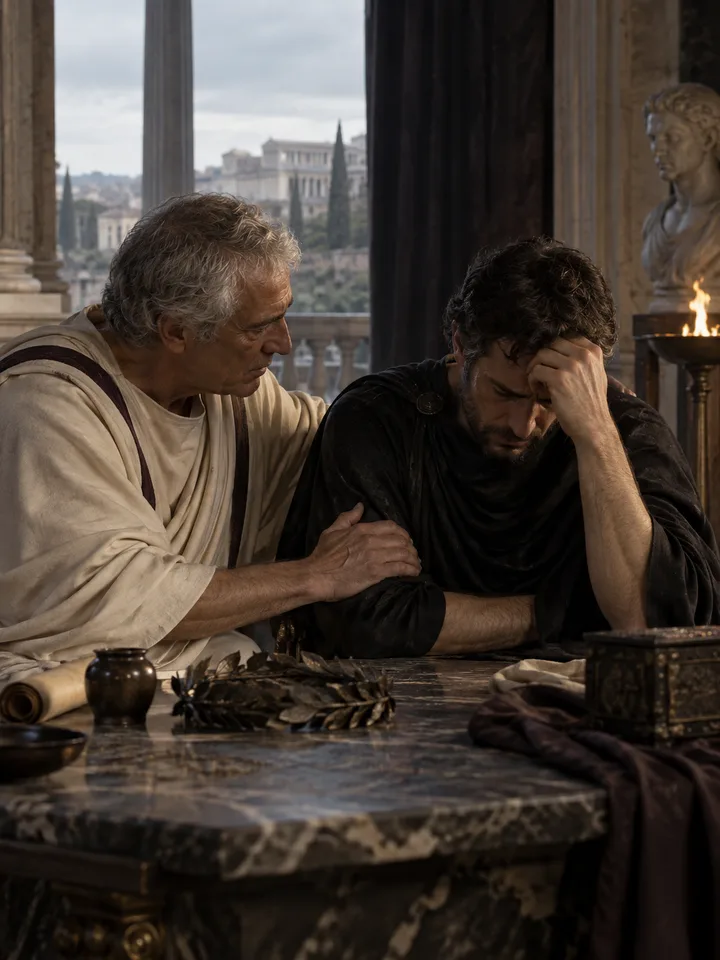
Photorealistic editorial illustration of Consolation to Polybius in the Prokopton42.com Library Consolation to PolybiusSeneca

Work

Consolation to Polybius

Seneca consoles Polybius after his brother’s death while indirectly seeking Emperor Claudius’ clemency. Reflection on grief and courtly praise mingle in a text where the exile also seeks conditions for his return.

What you will learn
Composition
c. 43-44 CE
Editions / translations
Dates to be documented
Languages
Latin · English · French
Extent
18 passages · 9,564 words
Photorealistic editorial illustration of Deuteronomy in the Prokopton42.com Library DeuteronomyMoses

Work

Deuteronomy

Speeches of memory and law on the plains of Moab before entry into the promised land.

What you will learn
Composition
traditional Mosaic attribution; received composition and redaction across several centuries
Editions / translations
2020 · 2022 · 2025
Languages
Hebrew · French · English
Extent
34 passages · 28,325 words
Photorealistic editorial illustration of Discourses of Epictetus, Recorded by Arrian in the Prokopton42.com Library Discourses of Epictetus, Recorded by ArrianEpictetus

Work

Discourses of Epictetus, Recorded by Arrian

Arrian transmits Epictetus’ oral teaching as lively exchanges with students. The teacher confronts their ambitions, fears, and inconsistencies with a central demand: govern assent, desire, and action rather than claim command over events.

What you will learn
Composition
teaching recorded by Arrian, c. 108-125 CE
Editions / translations
Dates to be documented
Languages
Ancient Greek · English · French
Extent
95 passages · 118,661 words
Photorealistic editorial illustration of Discourses of Musonius Rufus Reported by Lucius in the Prokopton42.com Library Discourses of Musonius Rufus Reported by LuciusMusonius Rufus

Work

Discourses of Musonius Rufus Reported by Lucius

Lucius reports teachings in which Musonius applies philosophy to food, housing, marriage, education, and exile. Virtue is tested in ordinary habits and must be practised by women as well as men.

What you will learn
Composition
late 1st or early 2nd century CE
Editions / translations
Dates to be documented
Languages
Ancient Greek · English · French
Extent
21 passages · 21,330 words
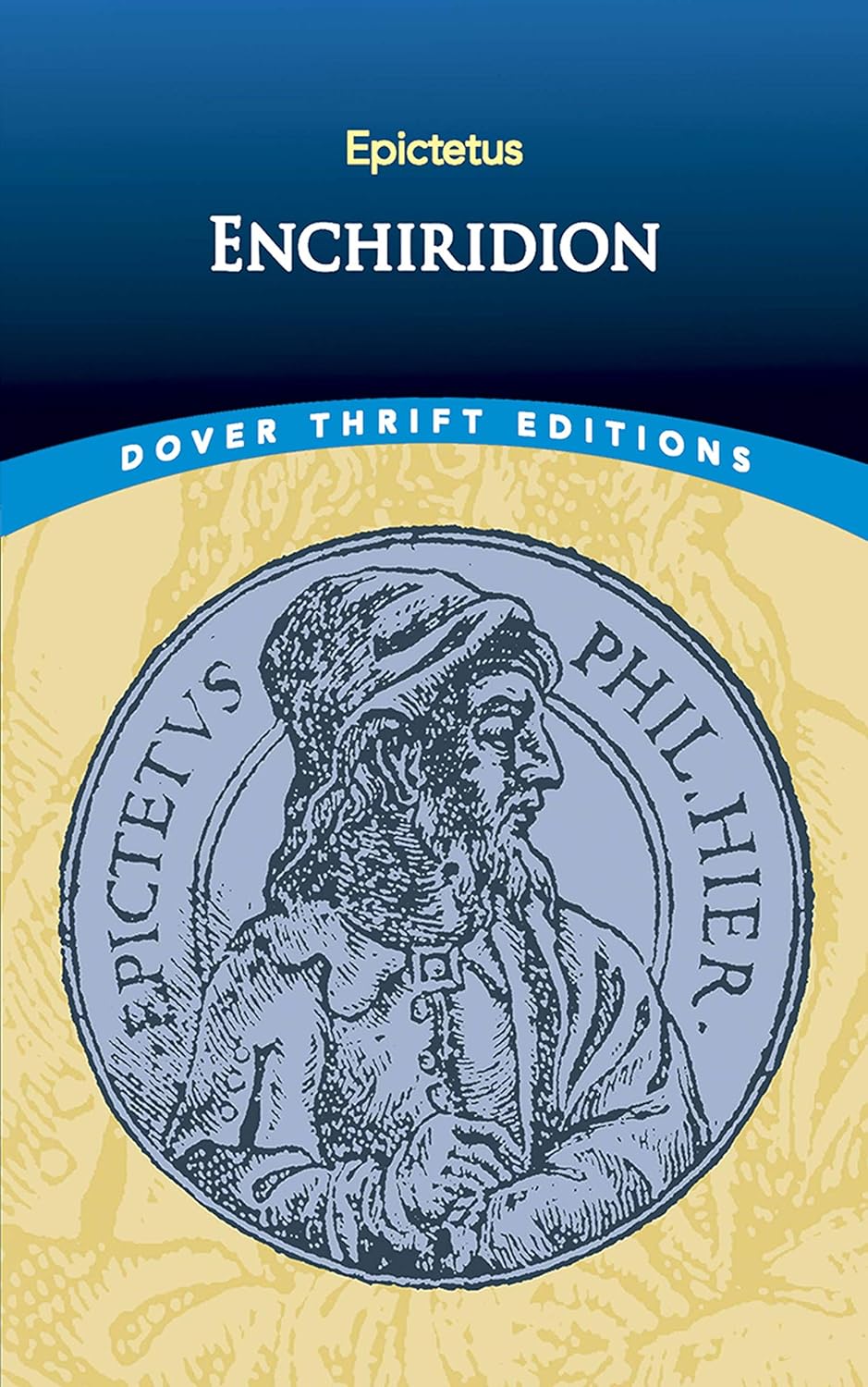
Published edition cover of Enchiridion of Epictetus Enchiridion of EpictetusEpictetus

Work

Enchiridion of Epictetus

The Enchiridion condenses Epictetus’ teaching into rules of discernment and exercise. Its opening distinction is sharp: some things are up to us and others are not.

What you will learn
Composition
early 2nd century CE
Editions / translations
Dates to be documented
Languages
Ancient Greek · English · French
Extent
53 passages · 8,138 words
Photorealistic editorial illustration of Epinomis, an Ancient Appendix to the Laws in the Prokopton42.com Library Epinomis, an Ancient Appendix to the LawsPlato

Work

Epinomis, an Ancient Appendix to the Laws

The Epinomis returns to the wisdom required by a legislator and directs it toward number, astronomy, and worship of the stars. Transmitted as a sequel to the Laws, it has an ancient but strongly disputed attribution to Plato.

What you will learn
Composition
after 347, c. 347-330 BCE
Editions / translations
Dates to be documented
Languages
Ancient Greek · English · French
Extent
20 passages · 9,251 words
Photorealistic editorial illustration of Ethics, Émile Saisset’s French Translation in the Prokopton42.com Library Ethics, Émile Saisset’s French TranslationBaruch Spinoza

Work

Ethics, Émile Saisset’s French Translation

Émile Saisset’s translation gives the demonstrative architecture of Spinoza’s Ethics in French. God identified with Nature, mind-body parallelism, analysis of passions, and intellectual blessedness unfold through nineteenth-century terminology.

What you will learn
Composition
composed c. 1661-1675; published in 1677
Editions / translations
Dates to be documented
Languages
French · English
Extent
300 passages · 92,036 words
Photorealistic editorial illustration of Euthydemus in the Prokopton42.com Library EuthydemusPlato

Work

Euthydemus

Socrates recounts an encounter in which Euthydemus and Dionysodorus overwhelm a young man with verbal refutations. The dialogue opposes eristic victory to an educational search for knowledge capable of making life flourish.

What you will learn
Composition
c. 390-370 BCE
Editions / translations
Dates to be documented
Languages
Ancient Greek · English · French
Extent
37 passages · 17,127 words
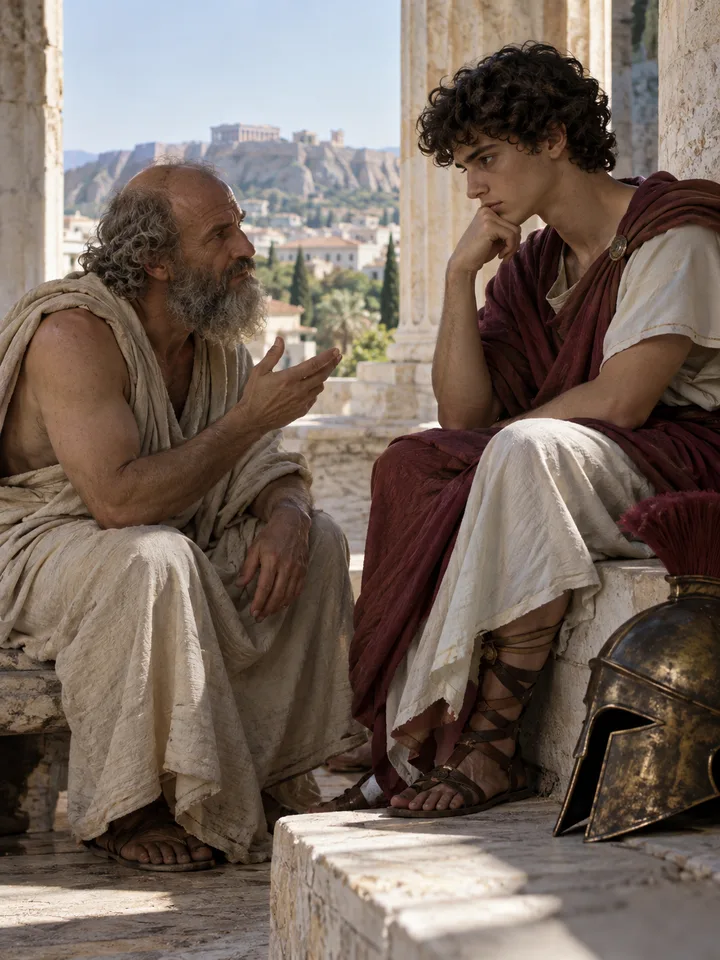
Photorealistic editorial illustration of First Alcibiades in the Prokopton42.com Library First AlcibiadesPlato

Work

First Alcibiades

Socrates questions the young Alcibiades as he prepares to enter Athenian politics. The dialogue turns political confidence into self-examination: how can one advise a city without knowing justice, common interest, and the self requiring formation?

What you will learn
Composition
c. 350-330 BCE
Editions / translations
Dates to be documented
Languages
Ancient Greek · English · French
Extent
33 passages · 15,272 words
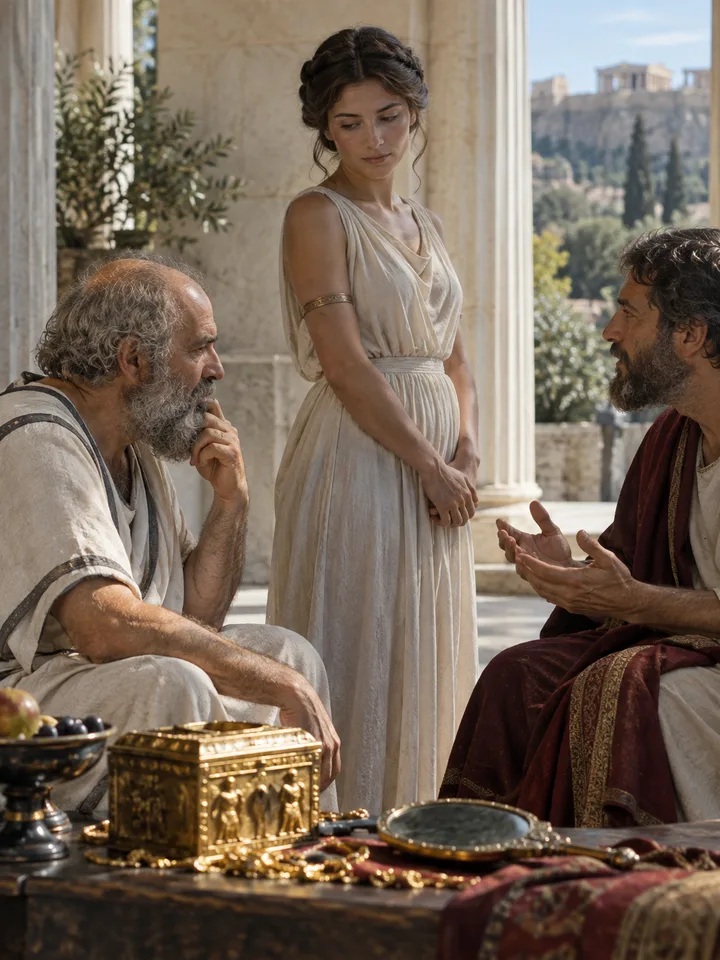
Photorealistic editorial illustration of Hippias Major in the Prokopton42.com Library Hippias MajorPlato

Work

Hippias Major

Socrates asks the sophist Hippias not which things are beautiful but what beauty itself is. A young woman, gold, appropriateness, utility, and sensory pleasure each fail to provide a definition without counterexample.

What you will learn
Composition
4th century BCE; authenticity disputed
Editions / translations
Dates to be documented
Languages
Ancient Greek · English · French
Extent
24 passages · 11,859 words

Before reading

What you will learn

Open the full record