
Work
Saṃyutta Nikāya: Connected Discourses
The Saṃyutta Nikāya groups discourses connected by a theme, figure, or setting. Aggregates, the senses, dependent arising, awakening, and encounters with deities recur in concise series that vary a single question.
- Composition
- oral strata, late 5th to 3rd centuries BCE; later Pali organization
Sources and precision
The range describes formation of the collection. Individual units may have different dates.
Confidence D · disputed range
- Tradition
- Buddhism
- Period
- Antiquity
- Languages
- English · French · Pali
- Extent
- 1,819 passages · 370,517 words
Before reading
What you will learn
Read variations on a recurring motif, connect dependent arising with analysis of experience, and use thematic organization to refine the meaning of key terms.
Short summary
The Saṃyutta Nikāya groups discourses connected by a theme, figure, or setting. Aggregates, the senses, dependent arising, awakening, and encounters with deities recur in concise series that vary a single question.
Long summary
Arrangement in connected groups lets a concept be observed through several formulations. Very short exchanges stand beside technical expositions; repetitions alter an example, list, or interlocutor to reveal the exact conditions of an error and its cessation.
This networked organization differs from linear progression. It invites reading across a cluster to understand a term’s range, especially when causality, impermanence, or not-self is applied to different aspects of experience.
Inside this work
The table of contents follows the divisions actually carried by the corpus.
Work › Canonical text
- Text 1
- Text 2
- Text 3
- Text 4
- Text 5
- Text 6
- Text 7
- Text 8
- Text 9
- Text 10
- Text 11
- Text 12
- Text 13
- Text 14
- Text 15
- Text 16
- Text 17
- Text 18
- Text 19
- Text 20
- Text 21
- Text 22
- Text 23
- Text 24
- Text 25
- Text 26
- Text 27
- Text 28
- Text 29
- Text 30
- Text 31
- Text 32
- Text 33
- Text 34
- Text 35
- Text 36
- Text 37
- Text 38
- Text 39
- Text 40
- Text 41
- Text 42
- Text 43
- Text 44
- Text 45
- Text 46
- Text 47
- Text 48
- Text 49
- Text 50
- Text 51
- Text 52
- Text 53
- Text 54
- Text 55
- Text 56
- Text 57
- Text 58
- Text 59
- Text 60
- Text 61
- Text 62
- Text 63
- Text 64
- Text 65
- Text 66
- Text 67
- Text 68
- Text 69
- Text 70
- Text 71
- Text 72
- Text 73
- Text 74
- Text 75
- Text 76
- Text 77
- Text 78
- Text 79
- Text 80
- Text 81
- Text 1
- Text 2
- Text 3
- Text 4
- Text 5
- Text 6
- Text 7
- Text 8
- Text 9
- Text 10
- Text 11
- Text 12
- Text 13
- Text 14
- Text 15
- Text 16
- Text 17
- Text 18
- Text 19
- Text 20
- Text 21
- Text 22
- Text 23
- Text 24
- Text 25
- Text 26
- Text 27
- Text 28
- Text 29
- Text 30
- Text 1
- Text 2
- Text 3
- Text 4
- Text 5
- Text 6
- Text 7
- Text 8
- Text 9
- Text 10
- Text 11
- Text 12
- Text 13
- Text 14
- Text 15
- Text 16
- Text 17
- Text 18
- Text 19
- Text 20
- Text 21
- Text 22
- Text 23
- Text 24
- Text 25
- Text 1
- Text 2
- Text 3
- Text 4
- Text 5
- Text 6
- Text 7
- Text 8
- Text 9
- Text 10
- Text 11
- Text 12
- Text 13
- Text 14
- Text 15
- Text 16
- Text 17
- Text 18
- Text 19
- Text 20
- Text 21
- Text 22
- Text 23
- Text 24
- Text 25
- Text 1
- Text 2
- Text 3
- Text 4
- Text 5
- Text 6
- Text 7
- Text 8
- Text 9
- Text 10
- Text 1
- Text 2
- Text 3
- Text 4
- Text 5
- Text 6
- Text 7
- Text 8
- Text 9
- Text 10
- Text 11
- Text 12
- Text 13
- Text 14
- Text 15
- Text 1
- Text 2
- Text 3
- Text 4
- Text 5
- Text 6
- Text 7
- Text 8
- Text 9
- Text 10
- Text 11
- Text 12
- Text 13
- Text 14
- Text 15
- Text 16
- Text 17
- Text 18
- Text 19
- Text 20
- Text 21
- Text 22
- Text 1
- Text 2
- Text 3
- Text 4
- Text 5
- Text 6
- Text 7
- Text 8
- Text 9
- Text 10
- Text 11
- Text 12
- Text 1
- Text 2
- Text 3
- Text 4
- Text 5
- Text 6
- Text 7
- Text 8
- Text 9
- Text 10
- Text 11
- Text 12
- Text 13
- Text 14
- Text 1
- Text 2
- Text 3
- Text 4
- Text 5
- Text 6
All 1,819 references remain accessible through the reader and search. This table shows the first 240 to remain manageable.
Concepts covered
Historical context
The world around the text
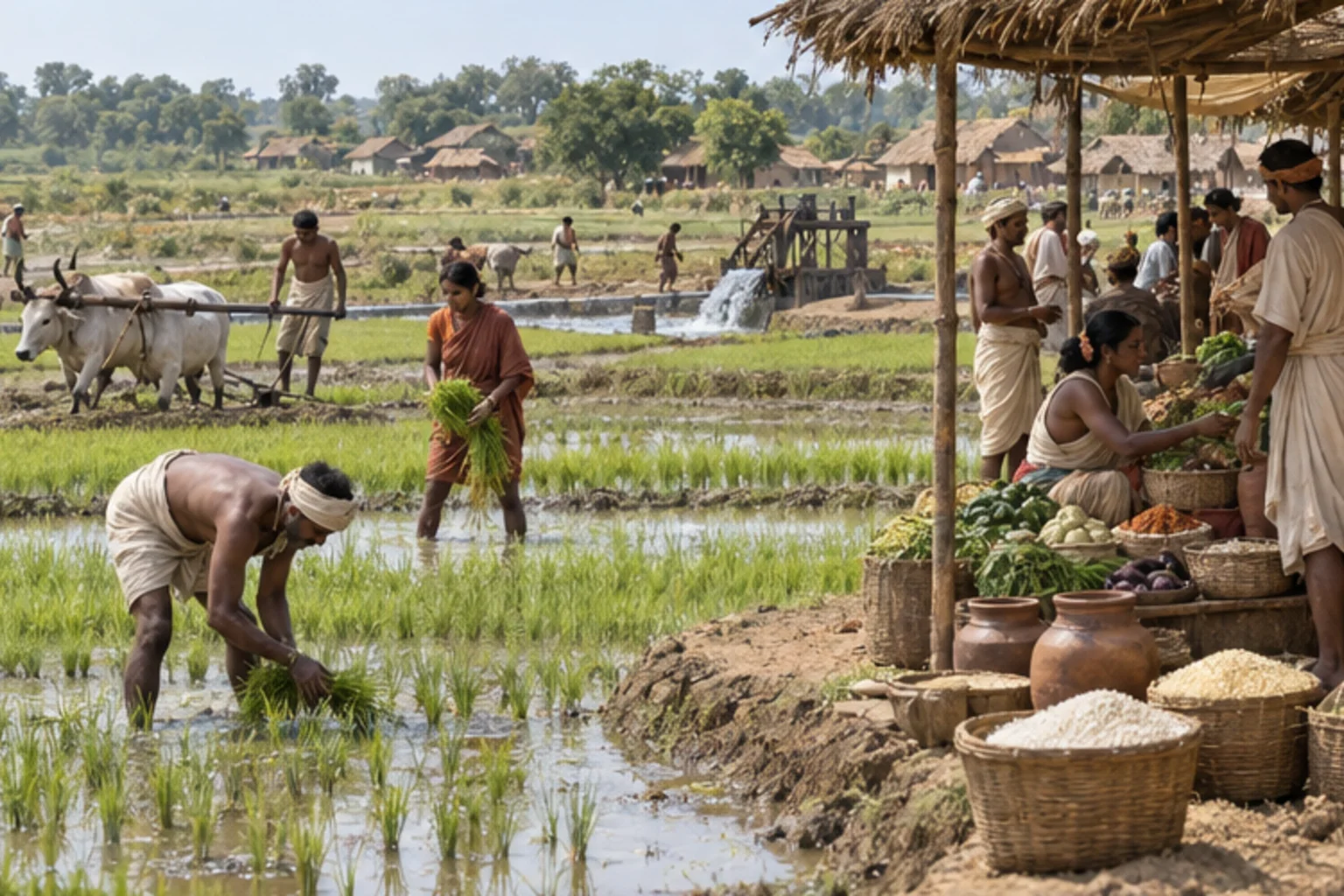
The corpus manifests do not yet establish the precise place and circumstances of composition. The images below document the author’s world or the text’s transmission. They do not claim to show the exact scene of writing.
These are modern reconstructions. They situate a documented place, practice, or transmission and are not period documents.
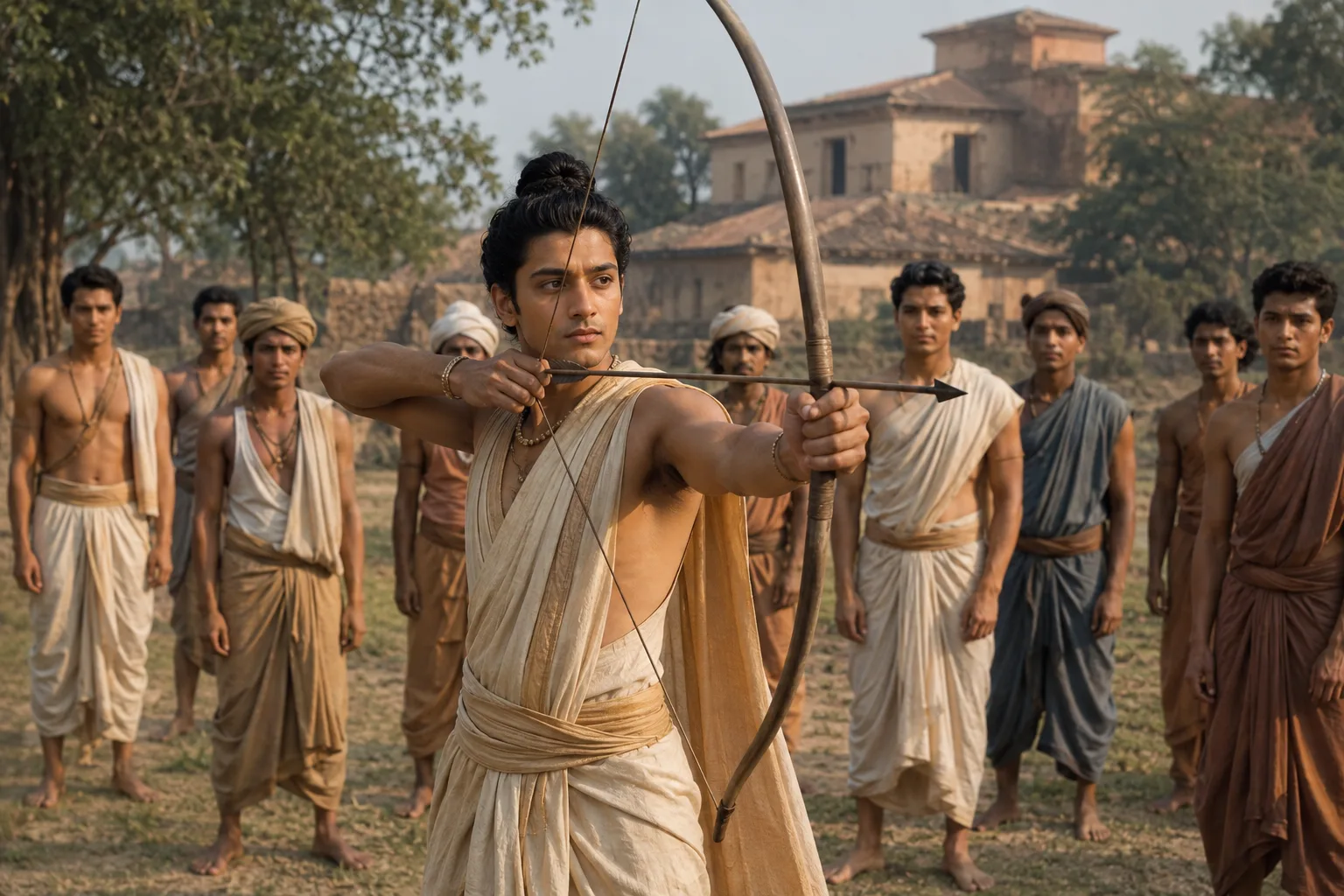
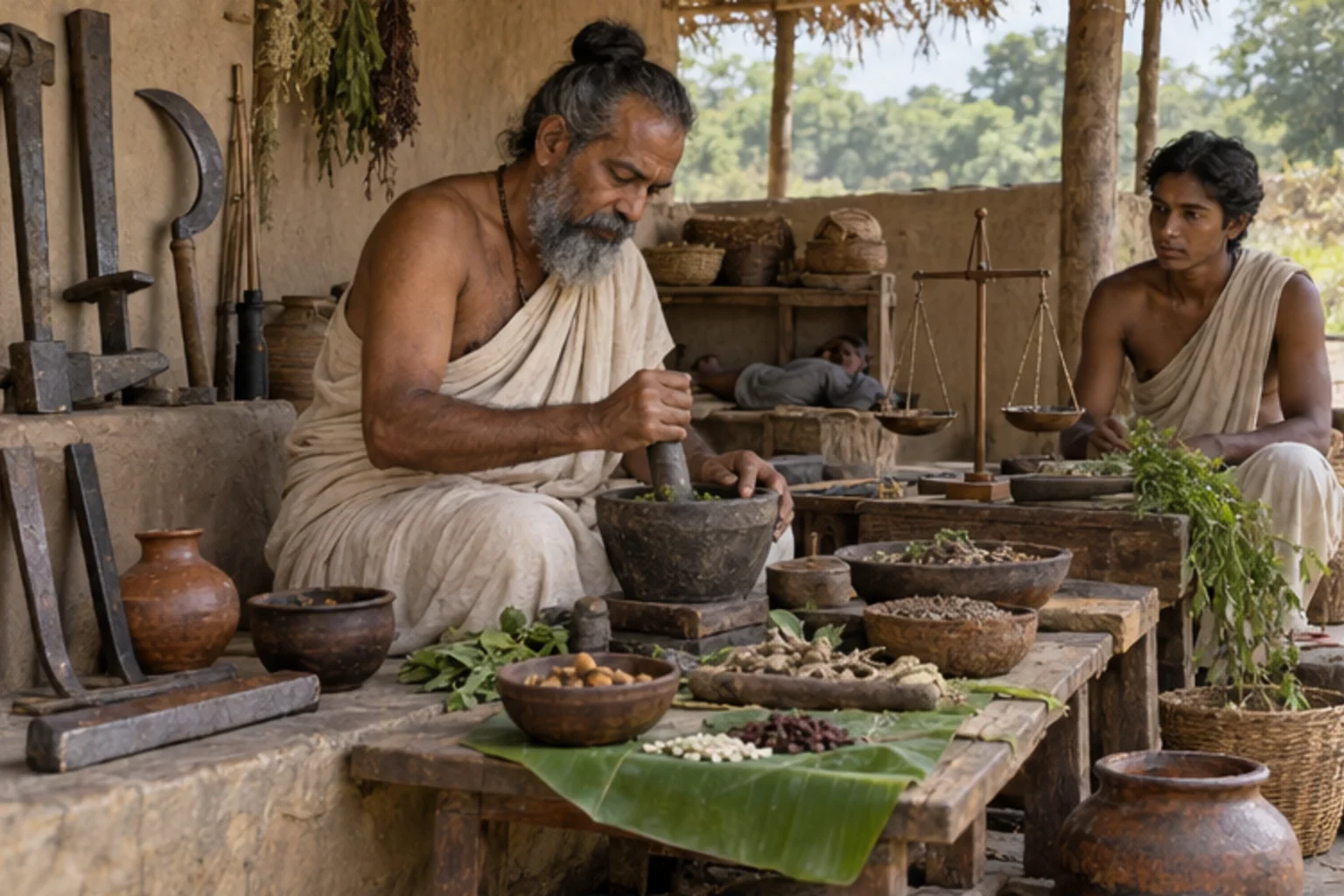
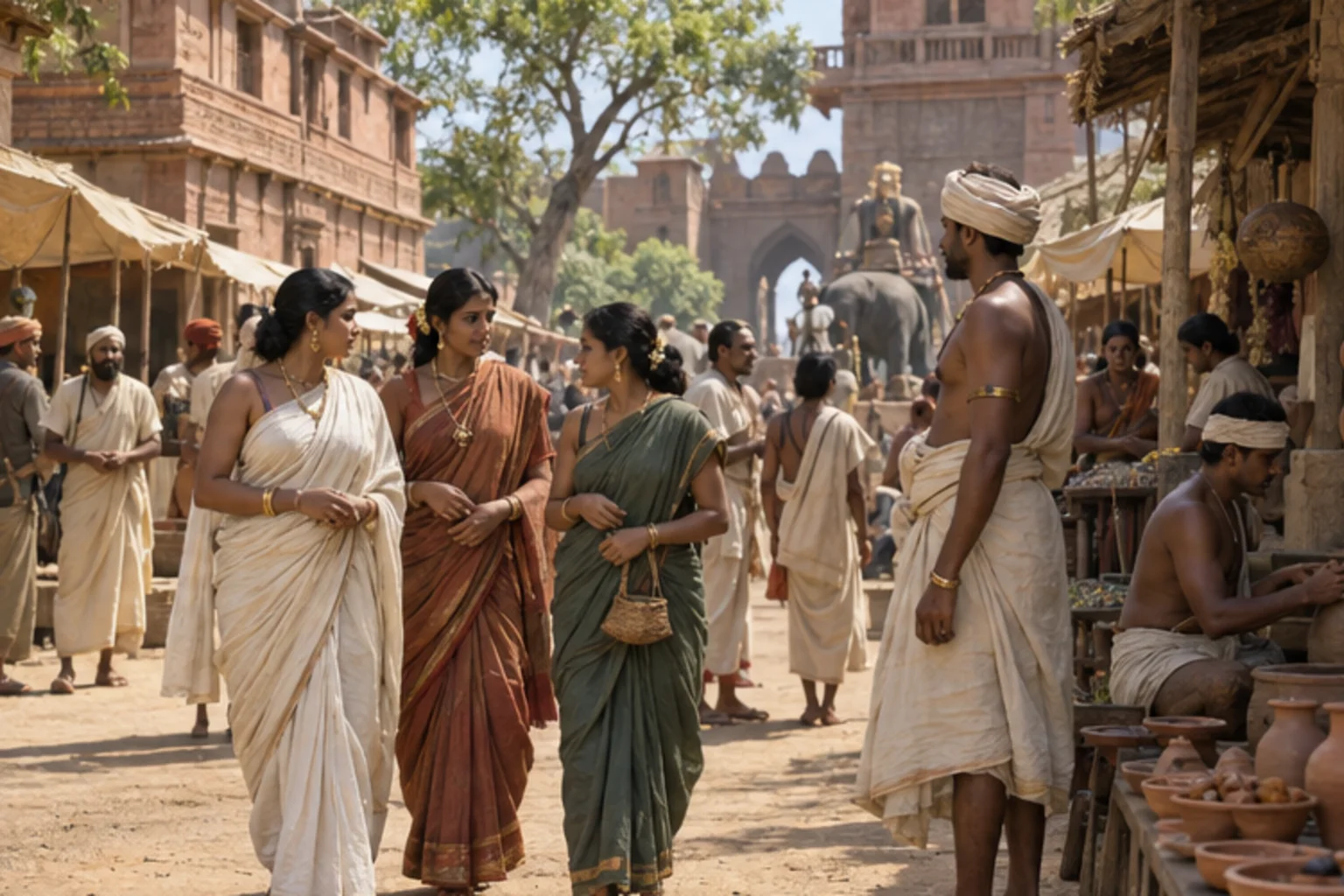
What the world looked like
Northern India, 5th-4th centuries BCE
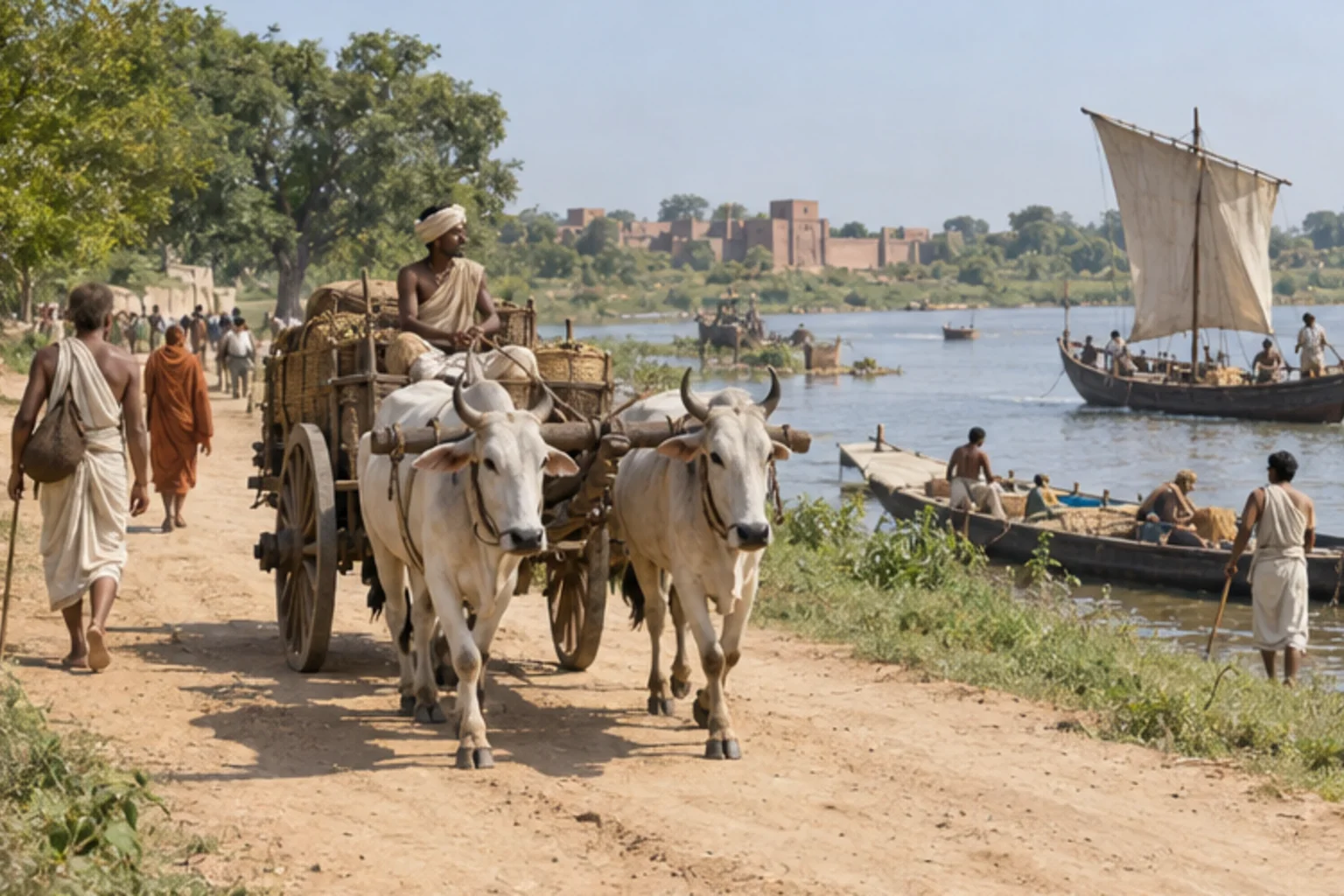
- State of technology
- Iron tools, pottery, carpentry, weaving, and water works support towns, villages, and trade routes.
- Science and knowledge
- Calendars, calculation, observation of the sky, grammar, and debates on nature circulate in scholarly and religious settings that remain chiefly oral.
- Medicine and care
- Plants, diets, massage, cautery, and surgical procedures form traditions of care without germ theory.
- Transport
- Walking, chariots, ox carts, horses, and river craft connect kingdoms, markets, and itinerant communities.
- Agriculture and food
- Rice, millet, barley, pulses, livestock, and irrigation feed dense regions through largely manual labour.
- Communication
- Oral teaching, recitation, messengers, and early regional uses of writing carry doctrines and decisions.
- Clothing and fashion
- Women and men wear draped cotton or wool cloth, belts, shawls, and ornaments whose form varies by region and status.
Editions, translations, and provenance
The following carriers represent the text. They do not create new passage identities.
- Englishpublished_canonical_carrier
- Frenchpublished_canonical_carrier
- Palipublished_canonical_carrier
- French AI-generated translation, non-officialCodex gpt-5.6-sol · Non-official working translation · 2026-09-11
Source manifests: buddha.samyutta_nikaya
Reader
Read page by page
Saṃyutta Nikāya: Connected DiscoursesSiddhartha Gautama / Buddha